UPDATE: What will the European Union and Australia export to each other without tariffs? – Economy
In breaking news, the following story has emerged from the international scene.
The community bloc and the island country sealed a free trade agreement after eight years of negotiations, which intensified after Donald Trump imposed higher tariffs on almost all of its trading partners.
From French wine to Australian hydrogen, they will be traded freely between the European Union and Australia when the Free Trade Agreement comes into force, the final text of which was approved this Tuesday, March 24, 2026, in Canberra.
Negotiations began in 2018 but stalled two years ago over Australian demands for greater access to the red meat market and complaints about Australian products labeled with traditionally European names, such as prosecco.
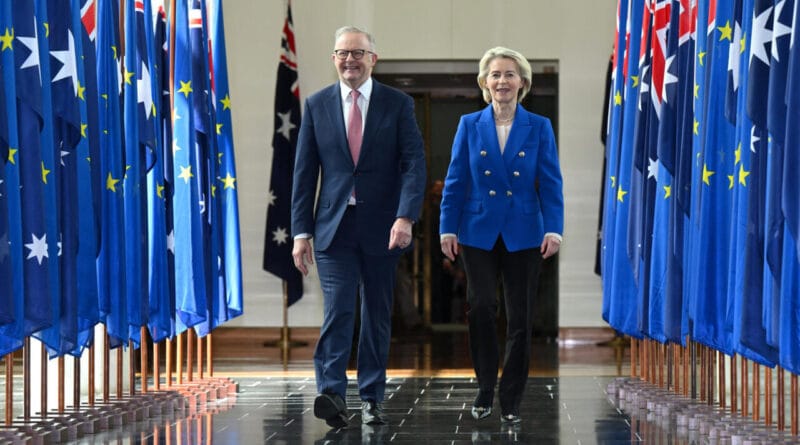
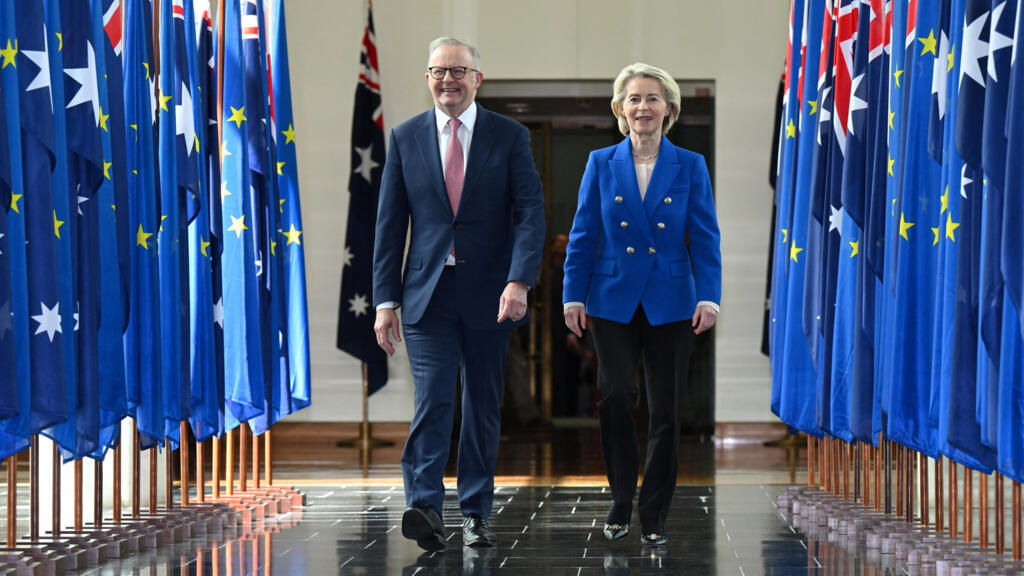
European Commission President Ursula von der Leyen and Australian Prime Minister Anthony Albanese signed the agreement in the Australian Parliament.
“This shows that both the European Union and Australia reaffirm their belief in free and fair trade, that they understand that trade drives prosperity for both parties involved, and that it is in our interest to see this happen,” Albanese said.
A win-win at a crucial moment
This advance occurs at a time when both the bloc of 27 and Australia seek to diversify their trade networks and reduce their economic dependence on China, in addition to their exposure to the uncertainty of US tariffs.
The pact will remove European tariffs on key Australian exports such as wine, seafood such as shellfish, nuts, fruit and vegetables, honey, olive oil, most dairy products, wheat, and barley.
The European Union, meanwhile, will benefit from the supply of critical raw materials, such as lithium, tungsten, or hydrogen. And some fruits and vegetables will enter Australia duty-free, including preparations and juices, chocolate, sugar, confectionery, and ice cream, as well as processed agricultural products.
Australian tariffs on cheese, meanwhile, will be reduced to zero within three years, while the European Union will open two tariff quotas totaling 30,600 metric tons for Australian red meat, with 55% duty-free.
Australian farmers criticized the pact for offering what they considered “insufficient” access to the bloc, while French farmers argued the quotas were too generous. Australia will also make the import of EU vehicles more flexible, with the exception of some tariff items for trucks, whose tariffs will be gradually eliminated over a short period.
Designation of origin agreements
Australian producers of prosecco, a traditional sparkling wine from northern Italy, will be prohibited from using that name in their exports ten years after the pact comes into force. For other products, such as feta cheese or Gruyère, Australian users who have used the term continuously for at least five years may retain the right to use it, as long as the origin of the product is clearly indicated.
EU companies exported €37 billion worth of goods to Australia in 2025. The EU was Australia’s third largest bilateral trading partner in 2024 and its sixth largest export destination, as well as its second largest source of foreign investment.
With Reuters and AP
Analysis and Perspective:
Understanding these events is crucial for anyone following international affairs closely.
This is part of a broader trend that has been reshaping the geopolitical landscape in recent months.
What are your thoughts on this development? Share your views in the comments below.
Source: This article was originally published in another language by France 24 – Noticias y actualidad internacional en vivo and has been translated and adapted for our global English-speaking audience. Read the original article here.