UPDATE: Iran attacks Washington interests in Bahrain in response to the latest US bombing | International
International Briefing:
Governments, analysts, and media outlets are continuing to follow this situation closely as additional details become available.
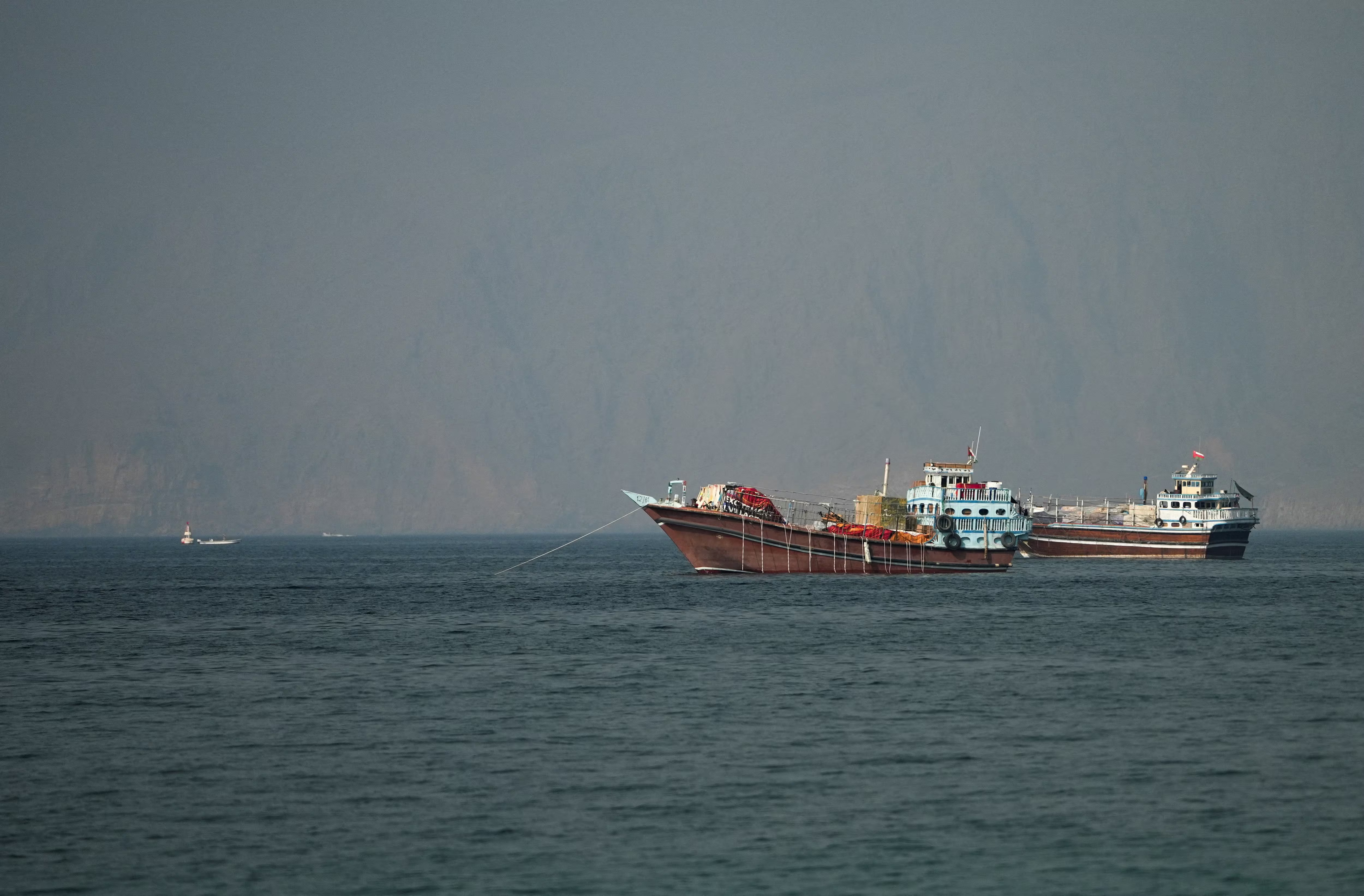
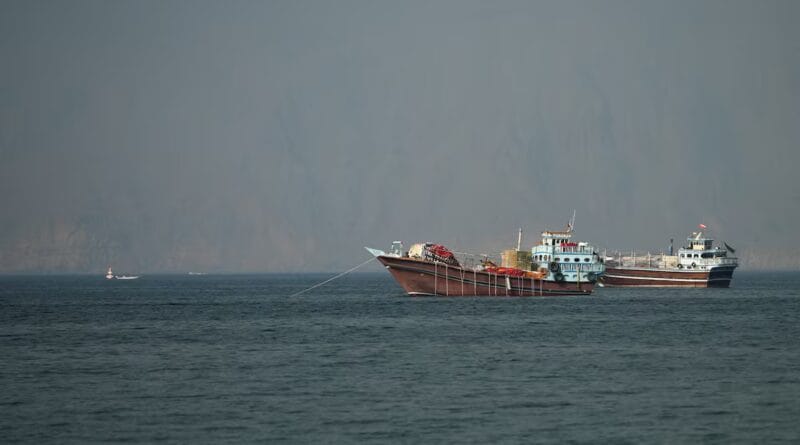
Tension in the Strait of Hormuz has escalated in the last 48 hours with constant attacks and reprisals that threaten to break the ceasefire agreement signed by the United States and Iran and that had allowed fuel and other products to flow again through this crucial route for global trade. The Ministry of Foreign Affairs of Bahrain reported this Saturday that at dawn its territory was “attacked by a number of Iranian drones.” “The continued attacks by the Iranian regime, at a time when regional and international efforts are moving towards de-escalation, place sole responsibility on Tehran for undermining peace efforts,” criticized the Bahraini statement. The attack was carried out with two kamikaze drones, according to a senior US official cited by The New York Times. One of the drones was shot down by a ground-launched air defense system, the person consulted said, while the other landed harmlessly in a remote area of an airfield. Shortly before, Iran had announced that its Armed Forces had launched “defensive” strikes against “U.S.-linked targets” and warned its neighbors in the southern Persian Gulf that they should not allow the use of their territory for U.S. attacks against Iran. Bahrain, for example, hosts an important command base of the US Fifth Fleet. Iran’s attack is a response to the bombing of its missile and radar systems carried out by the US during the night of Friday to Saturday, a blow that Tehran described as a “violation” of the ceasefire agreement signed on June 17. But the US military action is in turn a reaction to the Iranian drone attack on ships using the southern route of the Strait of Hormuz, one of which hit a Singapore-flagged freighter last Thursday, causing minor damage to the bridge. Precisely this Saturday, the UKMTO (acronym for United Kingdom Maritime Trade Operations, an organization linked to the British Royal Navy that functions as a maritime emergency center) reported that a tanker ship was hit in the morning by an “unidentified projectile”, which caused damage to the bridge, although the crew is safe. Several analysts consider that both Iran and the United States are trying to establish their control over the Strait of Hormuz. Iran, which knows that its ability to negotiate with Washington depends on keeping the key to the spigot in its hands, maintains that Article 5 of the memorandum of understanding signed by Donald Trump leaves the coordination of strait traffic in the hands of Tehran (the text says that Iran will make “the necessary arrangements to guarantee safe passage” through Hormuz). More hydrocarbons to lower prices For the Trump Administration, the important thing is that as many hydrocarbons as possible come out so that fuel prices can drop. And, until now, the southern route of the strait, which runs through Omani waters and has military support from the US fleet, was being a success with daily increases in the number of ships that used it. So much so that this Saturday, the US Joint Maritime Information Center has announced that it is widening the coordinates of this southern route to “accommodate simultaneous traffic” in the east direction (towards the Persian Gulf) and west (towards the Gulf of Oman). In the United States, meanwhile, the controversy continues around the advantages that Iran obtains with an agreement that Trump achieved after many tugs of war. Those most critical of the pact – which has yet to become a definitive peace agreement within 60 days – assure that it will bring new funds to Tehran that will allow the regime to rebuild its army and renew support for the so-called Axis of Resistance, a group of allies that are now very deteriorated that includes groups such as the Lebanese Shiite militia Hezbollah or the Houthi rebels of Yemen. The Trump Administration says it will require Iran to spend part of the assets it will have access to under the deal on importing American food. But Tehran’s oil revenues will not have the same requirements. The change in tone in Washington is, for now, evident. Trump has gone from threatening to exterminate an ancient civilization to describing Iranians as “strong people, intelligent people.” The White House asks critics for patience. He argues that the agreement signed with the regime led by Mojtaba Khamenei will have to be given time to see if it is fulfilled, and that the economic incentives that Iran demands are negotiable as long as the conditions demanded by the United States are met; The most important of all is the full operability of the Strait of Hormuz. But the attacks of the last few hours call into question this crucial aspect for the global economy. “Iran needs an agreement with the United States to achieve its long-term economic goals,” a senior administration official told The Washington Post, speaking on condition of anonymity. “If Iran does not comply with its commitments, we can simply revoke the exemptions and restore pressure. The exemption does not diminish our ability to exert pressure, but rather reinforces it,” the source said.
What Happens Next:
Analysts believe this development may influence future diplomatic, political, or economic discussions internationally.
Additional reactions from governments and international institutions are expected as the situation evolves.
Follow our coverage for more global news and international analysis.
Source: This article was originally published by Internacional en EL PAÍS and adapted for our international English-speaking audience.
Read the original article here.