BREAKING: US and Israeli bombings on Iran damage world heritage architectural jewels | International
According to recent reports, the following story has emerged from the international scene.
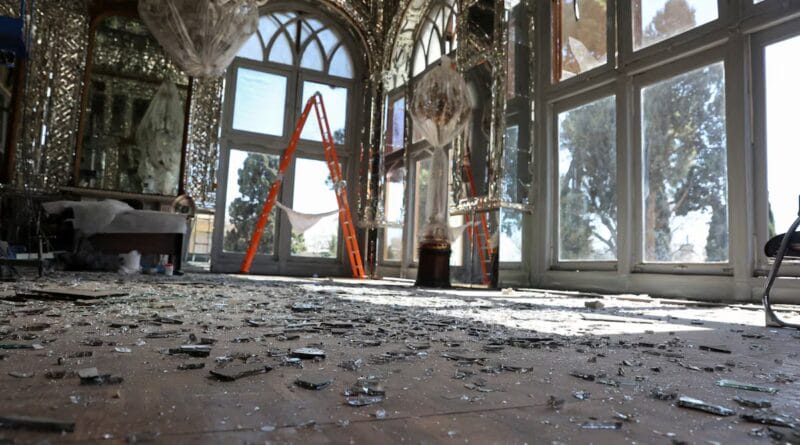
Tehran’s Saadabad Palace is a royal residence built in the 19th century and expanded during the overthrown Pahlavi dynasty. The grandfather of the former prince Reza Pahlavi renovated it and made the luxurious rooms his residence.
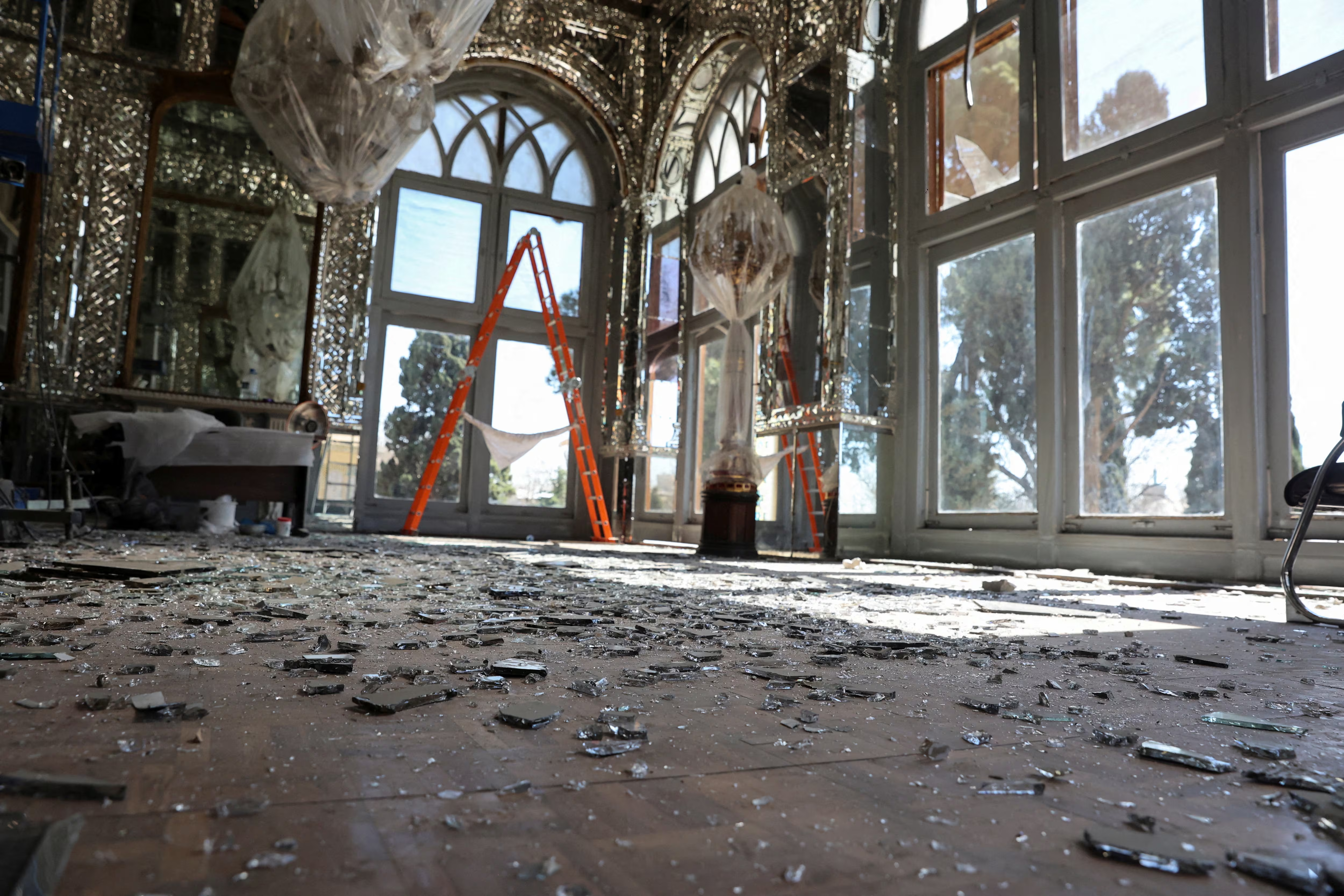
Last Thursday, official Iranian agencies released photographs of the building showing serious damage from an American or Israeli bombardment: wooden doors torn off, a monumental staircase covered in rubble, and interior ceilings partially destroyed. The structure of the palace has been affected by the shock wave of explosions in its vicinity, according to the Ministry of Cultural Heritage, Tourism and Crafts of Iran.
Iran is not only a country of majestic landscapes. It is also considered one of the nations in the world with the oldest state identity, which Iranian and foreign historians trace back to the Achaemenid Empire, 2,500 years ago. Its rich cultural and architectural heritage is the trace of that history of more than two millennia—or even more, according to other sources.
This heritage is now at risk due to Israeli and American bombings, which have already damaged several of its jewels, inscribed in the emotional memory of Iranians—a nationalist people very attached to their history and, in some cases, also listed as World Heritage Sites by the United Nations Educational, Scientific and Cultural Organization (UNESCO).
Saadabad Palace, part of a complex of monumental buildings and gardens in Tehran, is just the latest of the country’s architectural sites to be affected by the war. In the first two weeks of the bombings against Iran, which began on February 28, the Ali Qapu Palace and the Chehel Sotoun Garden in Isfahan, dating back to the Safavid dynasty of the 17th century, also suffered serious damage from nearby attacks, according to videos spread on social networks and verified by media such as the American newspaper The New York Times.
Another bombing removed some of the characteristic turquoise tiles from the beautiful Aljama Mosque, or Great Mosque of Isfahan, one of Iran’s monumental cities in the center of the country. That temple, whose origin dates back to the year 711 during the Abbasid Caliphate, has been registered as a World Heritage Site since 2012.
In previous days, the Golestan Palace in Tehran was also damaged when several missiles hit a nearby police station in the center of the capital, according to Iranian authorities. Also a World Heritage Site, this palace is known as “the Persian Versailles”—with one difference: the Iranian palace is older than the French one, which began to be built in the 17th century, while the Persian one dates back to the 14th century. Its famous Hall of Mirrors appears in photos released by authorities with the pavement covered in broken glass.
On March 14, Iran’s Ministry of Cultural Heritage and Tourism estimated that 56 museums and historical sites across the country were affected by the bombings. Most are in Tehran, the most affected city, as it houses the main headquarters of government and state institutions. The day before, UNESCO had expressed in a statement its alarm at the risk to this invaluable heritage, now under an avalanche of bombs, missiles, and drones.
“When human lives are at stake, caring about culture and artistic sites can seem trivial. We already heard something similar during the ISIS attacks to the sites in northern Iraq,” explains Iranian historian Arash Azizi via WhatsApp messages from the United States. However, he clarifies: “This is not the correct way to approach the issue. Human beings are not abstractions. They are sustained by their culture and their context, and the destruction [of this heritage] will have a disastrous effect on Iranians.”
“These historical monuments allow us to feel Iranian, part of a rich and ancient civilization. They help us position ourselves as a nation with a long history and allow us to be interlocutors with other cultures and nations. For this reason, they create links not only between us Iranians, but also with other nations. In this sense, they contribute greatly to the construction of identity ties,” adds Iranian journalist and researcher Mojtaba Najafi from Paris.
Blue Flags
Videos spread on social networks have shown in recent days how workers installed blue flags on the roofs of monuments in Iran to indicate to Israeli and American planes that these are protected places that should not be attacked, according to international humanitarian law. The UNESCO statement of March 13 also recalled that ban.
Those blue flags, which should have prevented damage, do not seem to be deterring the United States and Israel from attacking in the vicinity of places like Naqsh-e Jahan Square, where the Abbasid Mosque is located, in Isfahan. This square, of almost 90,000 square meters, was built in 1598 and is surrounded not only by the mosque but also by imposing palaces.
Even older is Shapur Khast Castle, also known as Falakolaflak Castle, an impressive historical fortress located in Khorramabad, in the heart of the Iranian province of Lorestan, in the west. This brick and stone castle, dating back to the 3rd century, has suffered serious damage in an air attack, according to the country’s Ministry of Culture and Tourism.
“The attack on Iran’s cultural heritage is one of the most painful experiences of the war. We Iranians, despite the many differences, are united by the pride we feel in the history and civilization of our country,” says Azizi. The destruction of that heritage is, in his eyes, “a symbol of how brutal the war is and the lack of consideration with which it has been carried out, with a significant number of civilian victims and without any path toward the political objectives initially claimed by Trump and Netanyahu.”
1,444 civilians have perished in bombings that have also injured more than 18,000 people, according to data from the Iranian Red Crescent.
The risk of this war, adds Najafi, is not only that it costs the lives of “more innocent citizens,” but even that it “reinforces the dictatorship” in Iran, while “destroying a part of Iranian civilization,” he warns, countering those who support the bombings and those, at the other extreme, who maintain their support for the regime. Najafi, who describes himself as “another victim of the Islamic Republic,” is among those Iranians who oppose “both the dictatorship and the war.”
On March 8, just a week after the start of the bombings, the governor of Isfahan, Mehdi Jamalinejad, described the attacks against the city as “barbaric” in a message. He accused the United States and Israel of attacking “the most ancient symbols of civilization.” The bombs, Jamalinejad stated, “have struck at the heart of the collective memory of humanity.” He then called on the world to “not remain silent in the face of these crimes.”
“The Islamic Republic has no future,” adds Najafi, who believes that “the fundamental priority” should be “the preservation of Iran as a whole.” He warns that “more than liberation, the war could lead the country to even more vast destruction.”
“Iran is the main potential victim of this war: its citizens, its historical monuments, its strategic infrastructures and, in an even more serious scenario, its territorial integrity,” deplores the Iranian researcher.
What This Means:
Understanding these events is crucial for anyone following international affairs closely.
The implications of this story extend beyond borders and could affect millions of people globally.
Follow our coverage for real-time updates on this and other major global stories.
Source: This article was originally published in another language by Internacional en EL PAÍS and has been translated and adapted for our global English-speaking audience. Read the original article here.