WORLD NEWS: The United States attacks Iran in retaliation for the downing of an Apache helicopter in the Strait of Hormuz
Global Update:
Governments, analysts, and media outlets are continuing to follow this situation closely as additional details become available.
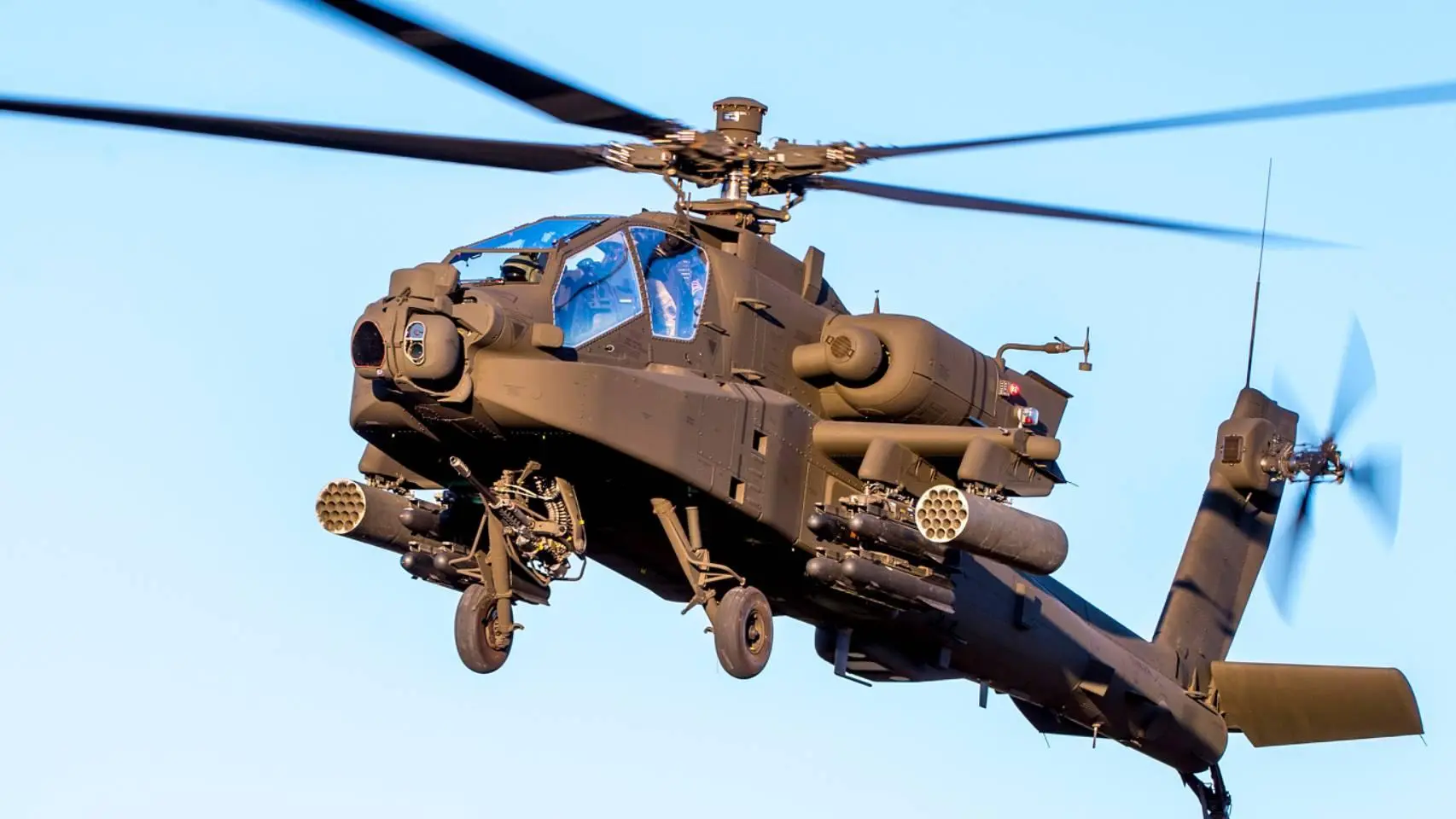
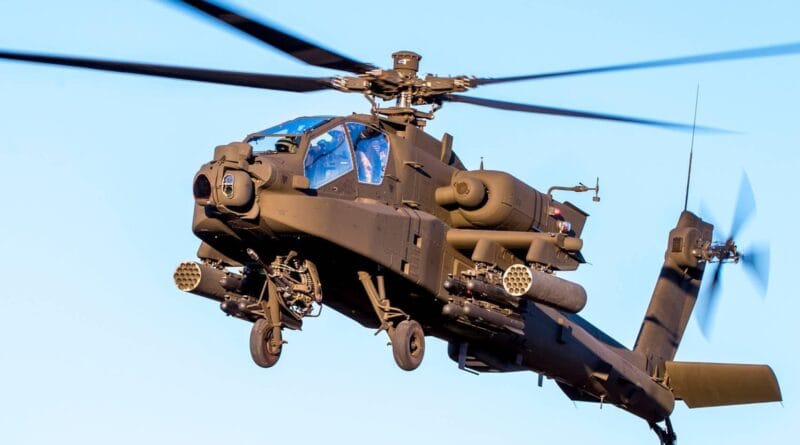
The president of the United States, Donald Trump, had warned this Tuesday that there would be retaliation for the Iranian attack on Monday. “The forces of the US Central Command (Centcom) began to launch self-defense attacks against Iran” at 5:00 p.m. local time in Washington (21:00 GMT) “in response to the downing this Monday of a US Army Apache helicopter,” he explained in a statement, but did not detail which targets were attacked. A US Army AH-64 Apache attack helicopter crashed on Monday while patrolling the Strait of Hormuz. As confirmed by the US Army Central Command in statements to the Reuters agency, the two crew members were located and successfully rescued by a naval drone. After The New York Times published the news citing military sources, President Donald Trump declared to the press that the two pilots were fine. He later confirmed through Truth Social that it was Iranian forces that shot down the “sophisticated” aircraft. “There were two pilots on board; both are safe and unharmed,” the White House tenant reiterated on his social media platform. “However, the United States must necessarily respond to this attack,” he concluded. The event occurs at a time of maximum tension, not only due to the fragility of the truce, but also due to the difficulties that the president is encountering when containing Israeli interventions on Lebanese soil. Iran and Israel exchanged missile attacks this weekend in the wake of bombings of Hezbollah positions in Tire and south of Beirut. The incident is reminiscent of the downing at the beginning of last April of an F-15 in Iran, whose pilots evaded capture and managed to be rescued after a huge military and intelligence operation that lasted several days. Although Trump and his Secretary of Defense, Pete Hegseth, celebrated the mission as a triumph, in the White House it was experienced as a real crisis. The operations in Hormuz The American deployment in the vicinity of the strait is carried out by three assault groups: that of the aircraft carrier USS Abraham Lincoln, the USS Tripoli and the USS George H. Bush. It is difficult to know precisely the total resources displaced to the area. Specialized media estimate there are about 30 ships, 15,000 soldiers and more than 100 aircraft. For the moment, the main activities are focused on observation and attack work against Iranian fast boats and ships that mine the waters of the strait. They also carry out surveillance work to reinforce the blockade on the Omani side and guide the few ships authorized to cross Hormuz. An officer supervises operations on the flight deck of the USS Tripoli in the waters of the Arabian Sea. NA Reuters. The feared AH-64 Apache helicopters are fundamental pieces on the tactical board of combat aviation and assume a key role in operations. Thanks to their versatility, they can participate in attack operations or support other combat resources. They have a 30 mm cannon, two rocket launchers and the famous Stinger air-to-air missiles or the much feared Hellfire, which can reach targets at a distance of more than 10 km with high-precision laser guidance systems. The latter have been involved in the destruction of a dozen fast boats and the neutralization of 6 ships that were trying to circumvent the blockade. The Apache can fly at more than 300 km/h, but their range is limited, it does not reach 500 km. The downed device belonged to the Army, so it must have come from one of the US bases in Saudi Arabia, Kuwait or the United Arab Emirates. In early May, the US Central Command published X-ray images of the commander in chief, Admiral Brad Cooper, flying over the waters of the strait in an Apache as part of the short-lived ‘Project Freedom’ operation. Trump intended to free the nearly 1,000 merchant ships trapped in the Persian Gulf. Less than 48 hours after his announcement, he withdrew. Adm. Brad Cooper, CENTCOM commander, flew over regional waters in and near the Strait of Hormuz in an AH-64 Apache helicopter, May 3, on the eve of US military support for Project Freedom. He interacted with US Army Soldiers after visiting with Sailors and Marines on Saturday… pic.twitter.com/NEc9YCFBPB— US Central Command (@CENTCOM) May 4, 2026 In recent weeks, the Apaches have been seen in action closer to the Iranian coast and the islands that hide military centers of the Islamic Republic. It is part of a more aggressive tactic by the Central Command to pressure the enemy in the context of negotiations for a definitive ceasefire. So far, the US has lost 15 aircraft in the war. Iran has shot down three of them and the rest have been destroyed by accidents, bombings or friendly fire. In addition, it is estimated that around thirty Reaper drones have been destroyed by Iranian defenses. Each of these aircraft has a cost that can reach 30 million dollars. The Apache that fell in Hormuz corresponds to the AH-64E Guardian version, the most advanced. Specialized media speculate with a cost per aircraft of around $50 million, including weapons and the expensive Hellfire missiles incorporated. A good reference would be the last known contract: Poland acquired 96 units in December for a value of $4.7 billion. The Defense media estimates that there are about 1,300 units of this helicopter operating around the world. The agreement that does not arrive The president does not want anything to alter the supposed progress of the negotiations to end this war that is doing so much damage to his popularity. In his informal appearance before leaving New York, he announced that the US and Iran are about to close a “very powerful agreement.” “We are going to sign a paper that will be more powerful than the bombings,” he announced. He said that if they devastated Iran, many people would die. “I don’t want to do that,” he said. “In addition, the strait would be closed for months.” Some media outlets highlight the president’s inability to stop his ally Prime Minister Benjamin Netanyahu. Asked about this question, Trump assured the BBC that “if I tell him to do something, he does it.” When questioned whether Netanyahu had challenged Trump by attacking Iran, the president denied it. “The missiles had already left when he and I spoke,” he told the media. Official sources assure that Trump and Netanyahu spoke this Monday. In an interview with Axios, the US president stated that he had warned the Israeli leader not to attack Iran again. “I told him: Bibi, be careful or very soon you may find yourself alone,” he explained. Iranian military sources announced this Monday that two members of the air defense were killed in the Israeli attack. His funeral is scheduled to be held this Tuesday in Tehran. No casualties have been reported on the Israeli side as a result of the Iranian missile attack. A man in a wheelchair contemplates the result of an Israeli bombing in a neighborhood in southern Beirut. Mohamed Azakir. Reuters. Spokesmen for the Israeli Army declared that they were prepared to continue operations “as long as necessary.” The Iranian authorities also adopted a defiant tone. A military source referred to what was announced by the semi-official Iranian agency Tasnim. He declared that the nation is prepared for a prolonged conflict and could resume attacks on US interests in the region. Iranian Foreign Ministry spokesman Esmaeil Baghaei said Tehran is exchanging messages with Washington in an atmosphere of “extreme mistrust.” Since the beginning of the talks, the Iranian regime has demanded an end to the fighting in Lebanon. Netanyahu does not take any notice. The prime minister wants the conflict to be dealt with outside of peace talks between the US and Iran. Tehran closes the Iranian side of Hormuz. To lift the blockade, he demands an end to attacks on Hezbollah, unfreezing assets held in foreign banks and lifting sanctions. Washington keeps the Omani side in a grip. To reach a peace agreement, he demands Iran’s definitive renunciation of its nuclear program, the destruction of enriched uranium and the total opening of the strait. In his statement to reporters, Trump said that they are close to reaching an agreement. CNN has taken the trouble to count the times that the president has announced what does not end up coming. With this one, there are 38.
International Perspective:
Analysts believe this development may influence future diplomatic, political, or economic discussions internationally.
Global audiences continue following the story closely as regional responses begin to emerge.
Stay tuned for further updates on this developing international story.
Source: This article was originally published by El Español – Home and adapted for our international English-speaking audience.
Read the original article here.