WORLD NEWS: The Canadian province of Alberta begins steps for a possible independence referendum | International
Global Update:
Governments, analysts, and media outlets are continuing to follow this situation closely as additional details become available.
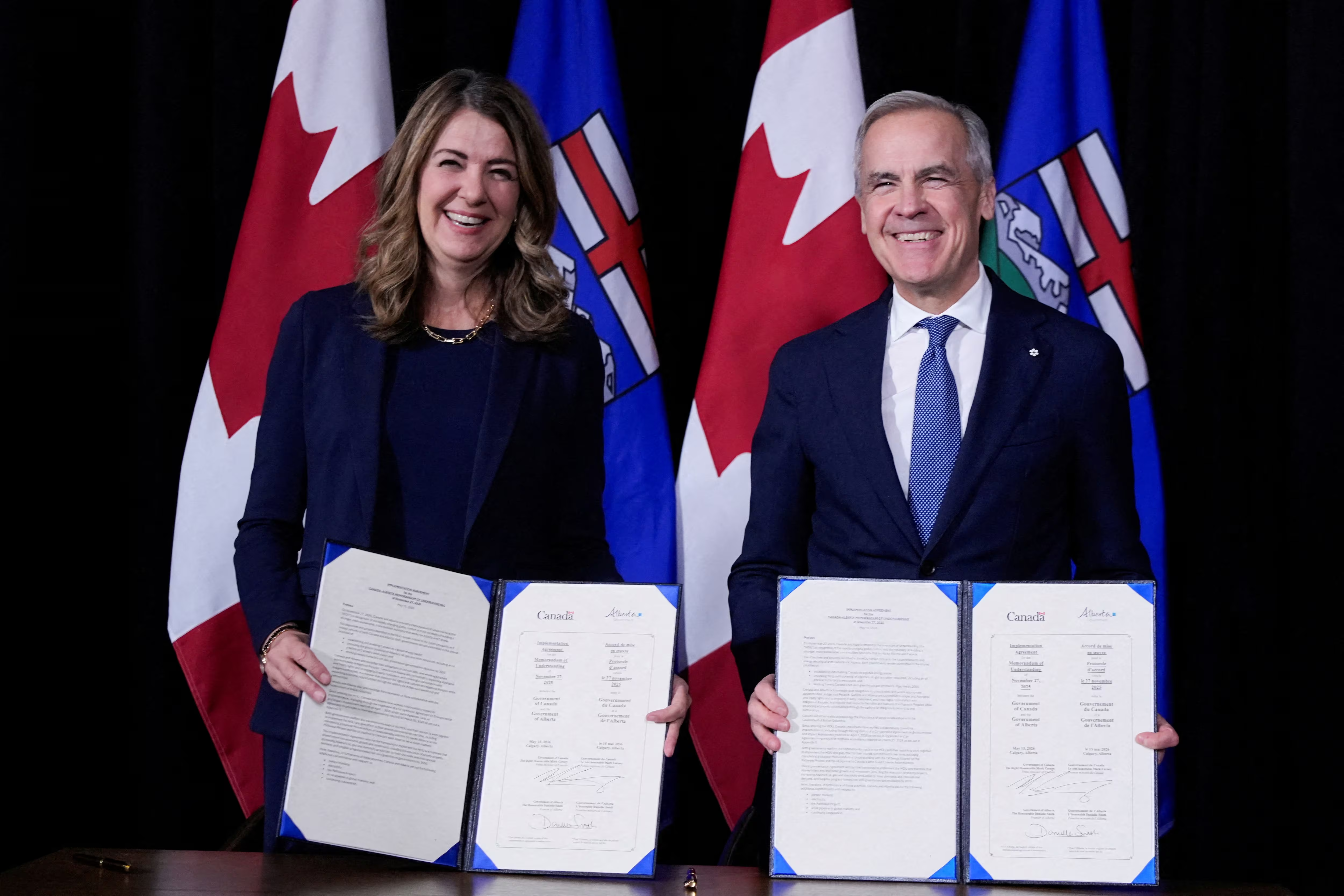
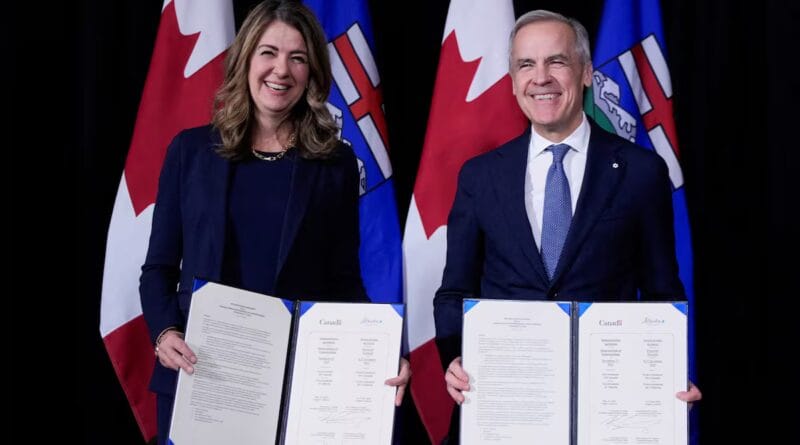
A new challenge opens up to the Prime Minister of Canada, the liberal Mark Carney. Alberta, the most conservative and richest province in the country, is going to test the possibility – for now very remote – of independence. The news was announced in a televised speech by the head of the provincial government. Right-wing populist Danielle Smith has announced a consultation for next October 19 in which the citizens of Alberta will have to decide if they want to start the process to call a referendum that separates them from Ottawa. The promoter of the initiative herself claims to be against independence, but defends that citizens express their opinion. This Friday, a few hours after learning of the decision, Carney responded to the challenge with an outstretched policy and highlighted the importance of this province with five million inhabitants. “Canada is the greatest country in the world, but it can be even better. We are working with Alberta to do better. We are renewing the country. And Alberta is essential in this process,” he said. More aggressive has been Corey Hogan, Liberal MP for Calgary, Alberta’s largest city, who accuses the provincial leader of having caused a constitutional crisis solely for her partisan interests. “The premier may wrap her actions around defending democracy, but she is ignoring the will of the vast majority of Albertans, who do not want to participate in this separatist conversation. The simple reality is that she has pushed this issue only because one group has threatened to remove her from office. Her internal political problems have become our national crisis.” STATEMENT ON PROVINCIAL ADDRESS The Premier of Alberta intervened to lower the threshold for getting a separatist question on the ballot. She then intervened to eliminate a review requiring the question to be constitutional. She intervenes again tonight after yet another court has… pic.twitter.com/k5fMYhMNw6— Corey Hogan (@coreyhoganyyc) May 22, 2026 Smith has made the decision after last week the country’s justice system considered a popular initiative to claim independence unconstitutional. “The future of Alberta will be decided by Albertans, not by the courts,” said the head of government, who plays the balance of declaring herself in favor of the unity of Canada and at the same time trying to win the favor of the most Trumpist sector of the province, which flirts with the idea of the independence of a Canada in the hands of the liberals and increasingly at odds with the Government of the great neighbor to the south. On May 13, a Canadian court annulled a petition with more than 300,000 signatures to call for popular consultations. The argument for knocking it down was that the authors of the petition had not respected the rights of the indigenous peoples of the territory. The vote on October 19 will not be binding. But it aims to become, if the vote is affirmative, the first step towards organizing a binding referendum. If it goes ahead, Alberta would follow the example of the French-speaking province of Quebec, which has held two independence referendums, in 1980 and 1995. In the second, the defenders of unity won by the minimum, just about 53,000 votes. Smith is a tough opponent of Prime Minister Carney. And this, in turn, has become since his arrival to power in March of last year one of the international leaders who speak most clearly in favor of a world based on rules in the face of the rupturism of Donald Trump’s White House. Alberta’s challenge is framed by the growing distance between the population of eastern Canada, with a largely negative opinion of the current president of the United States and his policies, and this western province with rich oil fields. Trump’s threats to the sovereignty of Canada – who has said on several occasions that he aspires to turn the neighboring country into the 51st state and who on several occasions offended the previous prime minister, the also liberal Justin Trudeau, by demoting him to the category of “governor” – have contributed to increasing the distance between the two countries, with Alberta becoming a kind of intermediate point between Washington and Ottawa. Carney’s electoral victory, in fact, is only understood as the result of the anti-Trump vote of a large part of Canadians, who saw their national identity threatened. The Financial Times newspaper published in January that leaders of the Alberta independence movement had held at least three meetings in 2025 with members of the United States Government. Despite Smith’s announcement, polls show that a majority of Albertans reject independence. She herself has said that she will vote in favor of permanence because she believes that Canada “can still function”, in a position reminiscent of the balancing act of former British Prime Minister David Cameron. The conservative politician called the referendum on the United Kingdom’s departure from the European Union in 2013, but assured that he was in favor of remaining. What came next is well known.
Global Impact:
Experts suggest the long-term impact of these developments may become clearer as more information emerges.
Global audiences continue following the story closely as regional responses begin to emerge.
More details may emerge as official sources continue releasing new information.
Source: This article was originally published by Internacional en EL PAÍS and adapted for our international English-speaking audience.
Read the original article here.