WORLD NEWS: Putin calls on Russians to maintain their “sacrifice” in the most bitter celebration of ‘Victory Day’
Sources confirm that the following story has emerged from the international scene.
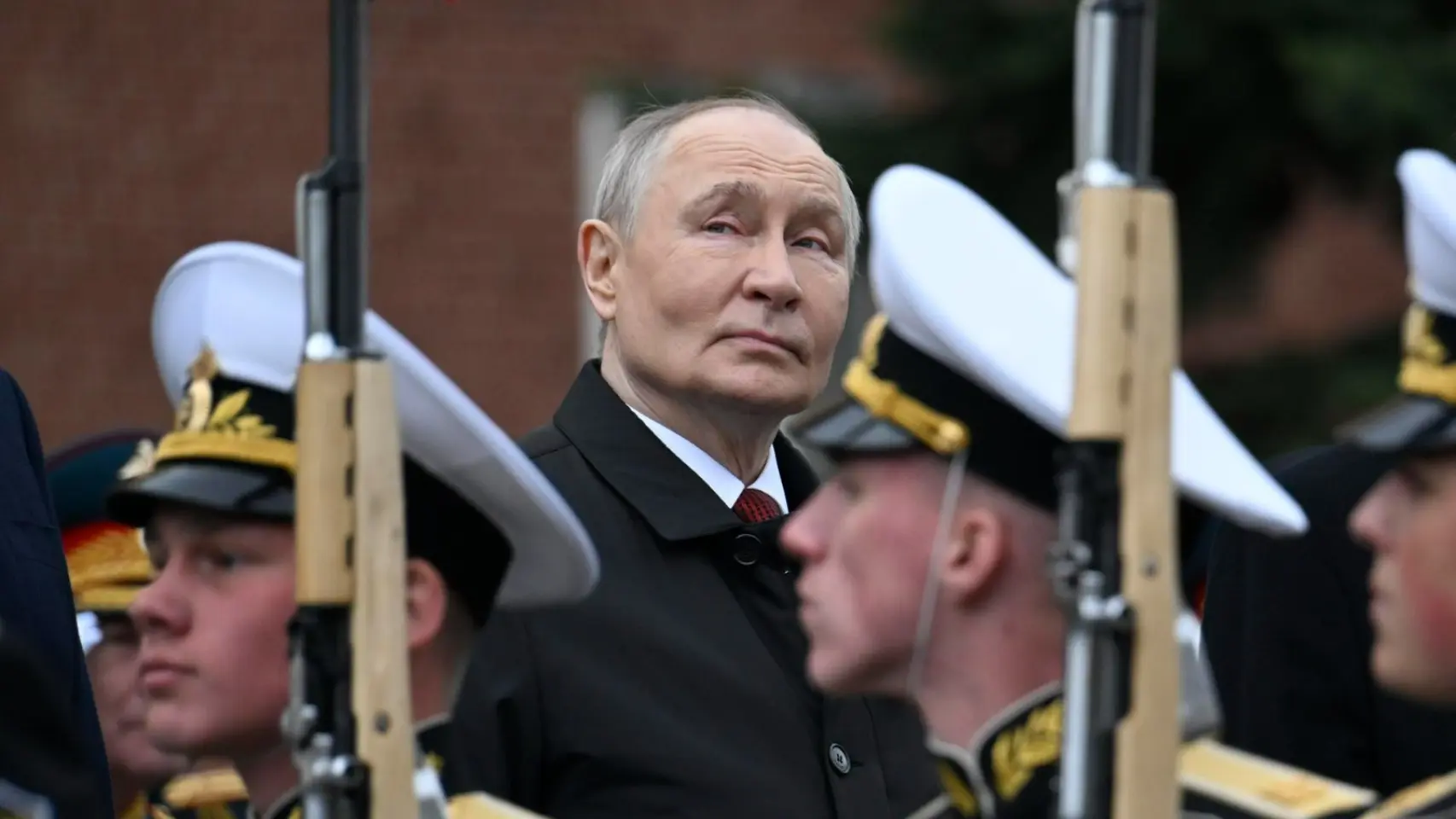
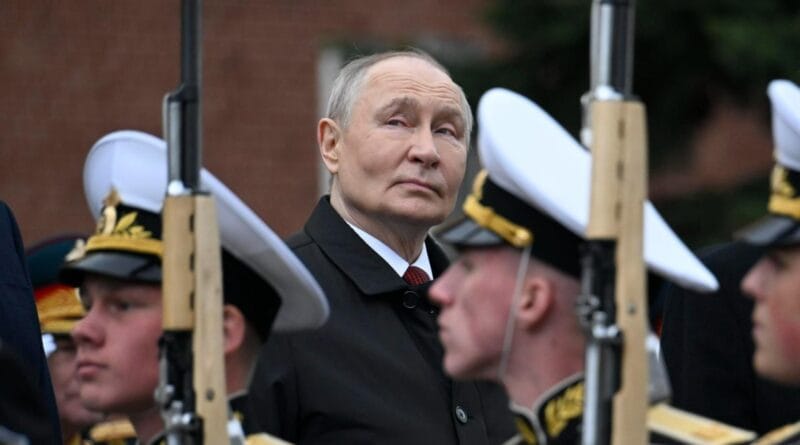
The keys Generated with AI Putin called on the Russians to maintain “sacrifice” as a pillar of the offensive in Ukraine during Victory Day. The Russian president accused NATO of arming Ukraine and presented the conflict as an existential defense against the West. The celebration was austere: without armor or missiles, only with a military march, and it lasted just 45 minutes. Soldiers from the Korean People’s Army participated for the first time, while the traditional march of the Immortal Regiment was omitted. In a speech full of historical symbolism, Vladimir Putin took advantage of ‘Victory Day’ to launch a message of internal resistance. During his speech, he called on the Russians to maintain their “sacrifice” as the fundamental pillar of the offensive in Ukraine. Before his military ranks, he insisted that the intervention in Ukraine is a “just” cause and directly accused NATO of arming an aggressive enemy. While Russia discreetly celebrated its most important milestone of the 20th century, the Kremlin’s message made it clear that confrontation with the West is now the central axis of its policy. Under an unprecedented security deployment, motivated by fear of Ukrainian incursions, the exhibition dispensed with the usual armored vehicles and ballistic missiles, limiting itself to a march of military contingents. This scenario of austerity occurred even after the announcement of a three-day ceasefire mediated by Donald Trump; However, the truce was short-lived. As the event concluded, Moscow accused kyiv of violating the pact. The call to sacrifice For Putin, the link between the past and the present is absolute. During his speech, he stated that the “great feat” of those who defeated Nazism is today the source of inspiration for the soldiers fighting in Ukraine, in a conflict that has already lasted more than four years. According to the president, his troops remain standing despite facing a force “armed and supported by the entire NATO bloc.” However, the recognition was not limited to the battle front. The Russian leader extended the credit to civil society, highlighting the role of scientists, doctors, teachers and industry workers: “No matter how much military tactics change, the future of the country is guaranteed by the people,” he declared before the military music gave way to the parade. The pulse of NATO In his speech, Putin redoubled his criticism against the Atlantic Alliance, positioning it as the true engine behind kyiv’s resistance. The president insisted that the Western bloc not only supplies weapons, but also uses Ukraine as an “aggressive force” to destabilize Russian borders. With this message, the Kremlin leader sought to transform the perception of the war, presenting it not as a territorial invasion, but as an existential defense against the military expansion of NATO. A defeatist atmosphere Although state television tried to cover up the disappointment by showing practically no panoramic view of the square and the stands erected at Lenin’s Mausoleum, the reality is that a defeatist atmosphere accompanied the celebrations in Moscow. The stop lasted only 45 minutes, making it the longest short in many years, since the heavy weapons did not roll, something that had not happened since 2007 and the cadets did not parade either. According to the local press, the main senior officials of the country were invited to the parade, but there was no place for either ministers or deputies. The only novelty in the parade was the presence for the first time of soldiers of the Korean People’s Army, who fought in the ranks of the Russian Army in the battle of Kursk, a Russian region occupied for several months by the troops. Ukrainians. Russian President Vladimir Putin shakes hands with Korean People’s Army Senior Colonel Chae Yun Un. Reuters Because there was not even a march of the known as the Immortal Regiment, in which Russians, including Putin, march through the streets of Moscow, showing photos of relatives who fought in the Great Patriotic War (1941-1945).
Editor’s Insight:
Experts suggest this event marks a turning point that may influence policy decisions worldwide.
The implications of this story extend beyond borders and could affect millions of people globally.
We encourage our readers to follow this developing story for the latest information.
Source: This article was originally published in another language by El Español – Home and has been translated and adapted for our global English-speaking audience. Read the original article here.