WORLD NEWS: Magyar restores the bilateral relationship with Poland after years of rupture due to Orbán’s closeness to Putin | International
Global Update:
Governments, analysts, and media outlets are continuing to follow this situation closely as additional details become available.
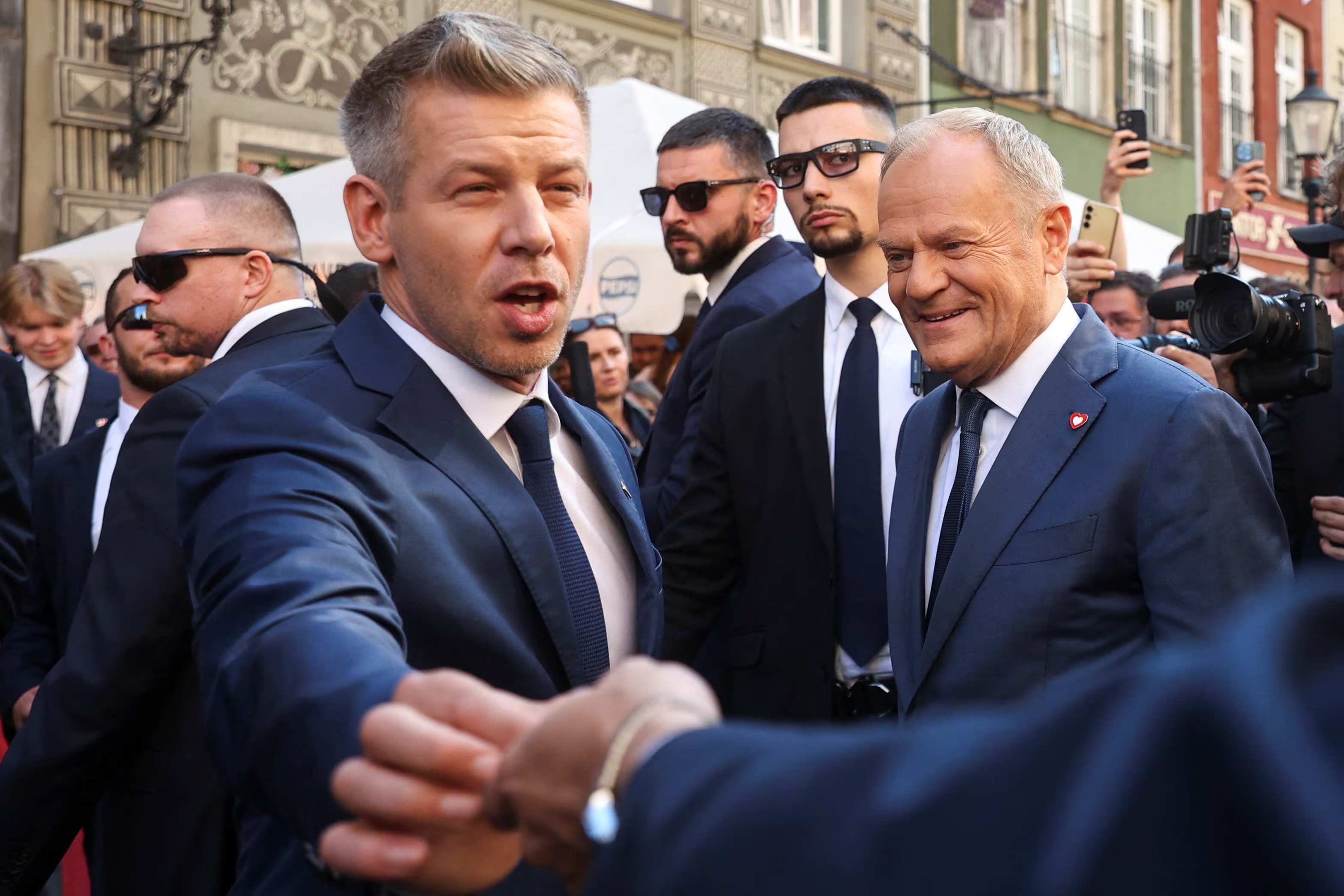
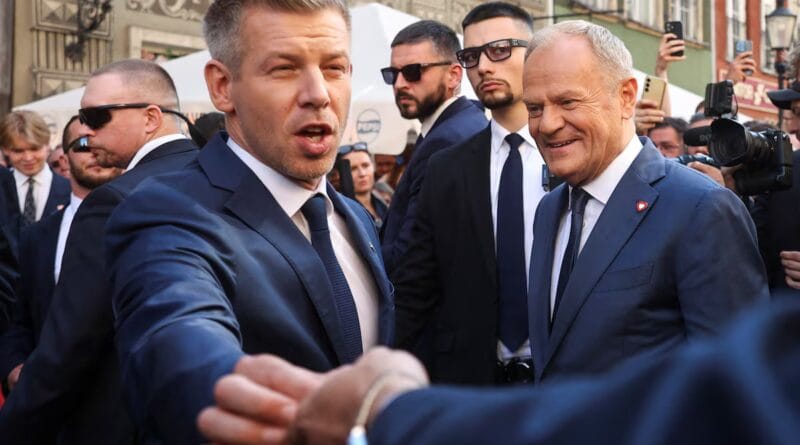
The confrontation between the center-right Polish Government of Donald Tusk and the ultra-conservative Hungarian Executive of Viktor Orbán was permanent and public. The leaders and their foreign ministers frequently clashed on social networks over the former president’s closeness to the Russian president, Vladimir Putin, and his systematic torpedoing of aid to Ukraine. Péter Magyar’s victory opens a new chapter in the bilateral relationship, as shown by the fact that the first official trip abroad of the new Hungarian leader, who took office on May 9, was to Poland. After a warm reception in Warsaw, Tusk celebrated “Hungary’s return to Europe, to high standards, honesty and authentic democracy.” “I thank the Polish people for their support and Donald Tusk for his support, both before and after the victory,” responded Magyar, who has also met with the Polish president, the ultra-conservative Karol Navrocki, who supported Orbán. “Europe must be strong, competitive and based on strong member states that cooperate. That is why it is so important to renew our friendship,” he added. Poles and Hungarians consider each other “brothers”, as the leaders recalled this Wednesday. Their relationship has traditionally been close and has crystallized in alliances such as the Visegrad group, which together with Czechia and Slovakia defended the interests of the region after its accession to the EU in 2004. For much of Orbán’s 16 years in office, Poland was led by the ultra-conservative Law and Justice party (PiS). Together and separately, they became the most problematic partners of the EU due to their authoritarian drift and their constant confrontation with Brussels. Until Russia launched the full-scale invasion of Ukraine in 2022 and Orbán placed himself closer to the aggressor than to the victim and his European partners. Warsaw did not tolerate it and distanced itself from Budapest. Tusk added ideological and party reasons, in addition to geopolitical ones, to the distancing of his predecessors. “I have never hidden that the last years of Viktor Orbán’s Government were not only a problem for Hungary, but also a difficult stage for relations between our countries (…) We simply had different points of view on most important issues,” said the Polish Prime Minister in a joint appearance in Warsaw with Magyar, before traveling to Gdansk, where the agenda includes a meeting with Lech Walesa. “I am very grateful for your willingness to revitalize the Visegrad Group. If you organize a summit in Budapest, I will be happy to attend. For years I have hoped to sit down again with a Hungarian, a Slovak and a Czech to discuss what we can do together,” he said. The veteran Tusk and the neophyte Magyar are separated by decades of political experience, but both share a difficult victory against the parties that led their respective countries to a democratic retreat and isolation in the EU. The result of the Hungarian elections on April 12 are, according to Tusk, a “sign of hope for millions of people in Europe and around the world: that democracy, the rule of law, decency and morality in politics are not lost causes.” The two leaders, who share a political family in the European Parliament (the European People’s Party), have agreed to strengthen bilateral collaboration so that, as Tusk has said, “Central and Eastern Europe is a place where the fate of Europe is also decided. Europe.” Both heads of government, pro-European but conservative, are more sovereignists than federalists and agree on issues such as their anti-immigration agenda. Poland has also offered help to Hungary, dependent on Russian gas and oil, to diversify its energy supplies. “The dependence on a single country – 90% of the fossil fuels that Poland consumed came from Russia – made sovereignty illusory. Today we are completely independent and we offer cooperation so that the entire region is energy autonomous,” said Tusk. The Polish Prime Minister has also announced that they will work on a common position on Ukraine. “We support their accession to the EU, but respecting the rules,” he said. The new Hungarian Foreign Minister, Anita Orbán – no relation to the former prime minister, despite sharing a last name – and her Ukrainian counterpart, Andrii Sybiha, announced this Wednesday the start of bilateral technical consultations that also mark a break with the Orbán era. To begin with, both countries will address the protection of the rights of the minority of Hungarian origin in the Ukrainian region of Transcarpathia.
Why This Matters:
This event is already generating discussion among political analysts and international organizations worldwide.
Observers believe further developments could significantly shape the direction of this story in the near future.
Readers are encouraged to monitor future developments as the situation evolves.
Source: This article was originally published by Internacional en EL PAÍS and adapted for our international English-speaking audience.
Read the original article here.