UPDATE: Israel bombs the suburbs of Beirut despite Trump demanding not to do so | International
International Report:
Global attention remains focused on this evolving story as officials and analysts assess the broader implications.
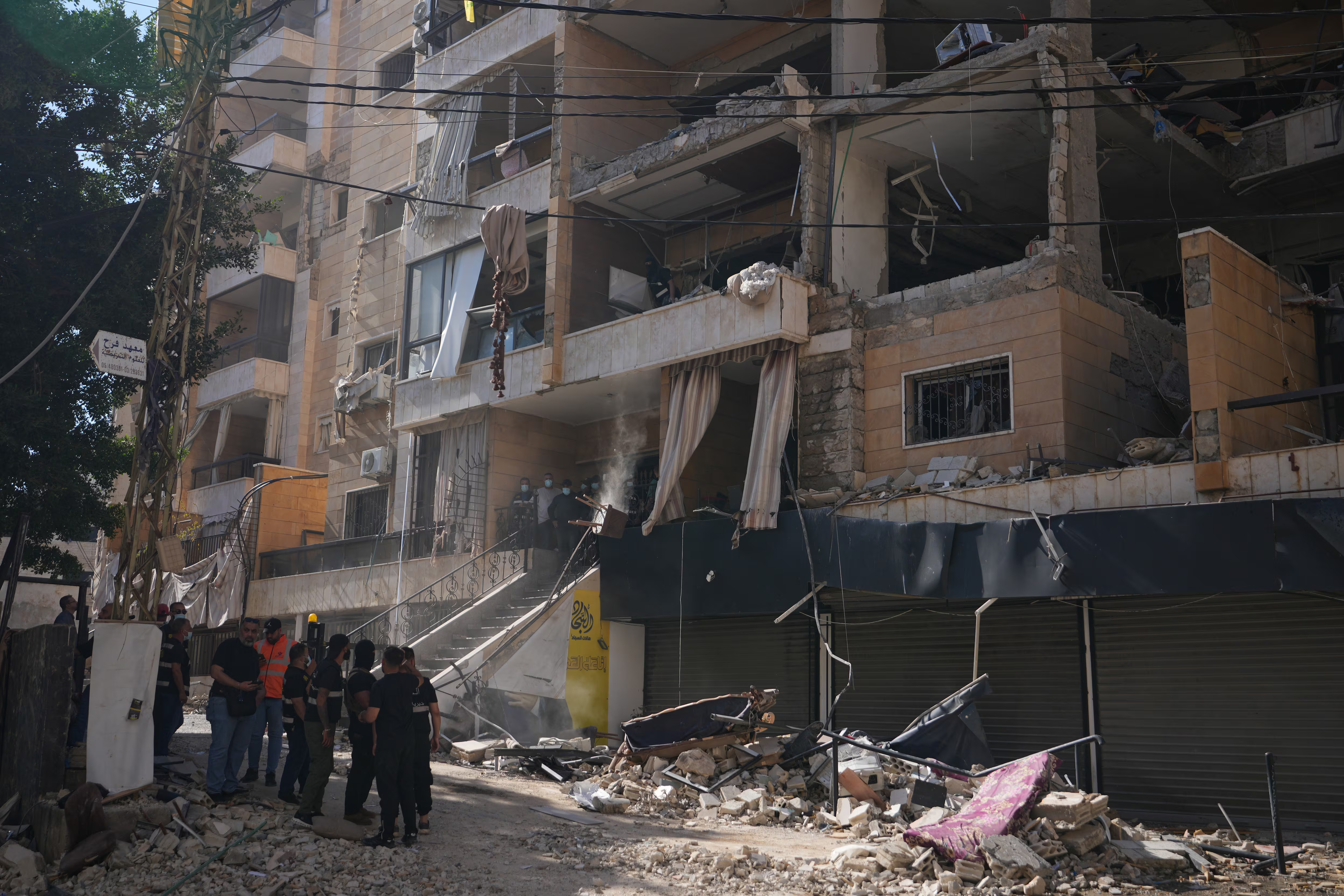
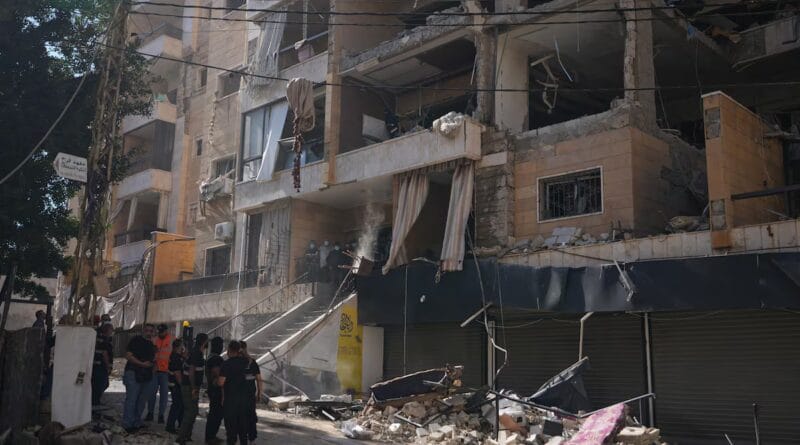
The Prime Minister of Israel, Benjamin Netanyahu, claimed responsibility this Sunday for a bombing against an alleged “terrorist command center” in the suburbs of Beirut, the capital of Lebanon. In a joint statement with the head of Defense, Israel Katz, Netanyahu presented it as a response to the attacks that the Lebanese militia party Hezbollah had launched hours earlier against Israeli territory. The aggression shakes the fragile diplomatic progress between the Governments of Lebanon and Israel, which on Wednesday renewed the supposed truce between the two under the mediation of the United States. It also breaks with the approach that Donald Trump defended on Monday, when he announced that he had ordered Israel to cancel its planned attacks on Beirut in an attempt to safeguard the pre-agreement with Iran, Hezbollah’s main ally. Images of the bombing show a seven-story residential tower with the facade split in half, in an attack that came without prior warning and that has caused two deaths and 11 injuries, according to a preliminary count mentioned by the Lebanese state news agency. Saudi television Al Hadath reported that Israel notified Washington that it was going to carry out the attack, without specifying whether it received the green light. The attacked location is located in the vicinity of Lebanon’s only international airport. The facility surrounds Dahiyeh, the Beirutian periphery where Hezbollah has roots, as well as in the south and east of the country, and where it offers public services. Since 2023, Israeli bombings have wreaked havoc in that area, home to 700,000 people, although it is more than 80 kilometers from Israel and no projectiles have been fired from there. A column of smoke rises over the southern suburbs of Beirut, known as Dahye, after the Israeli bombing this Sunday. EDGAR GUTIERREZ (EFE) “We are fighting terrorism on all fronts,” Netanyahu said at the beginning of a Government meeting. His speech, like the atmosphere in Israel, had an especially aggravated tone this Sunday after a Palestinian assailant with Israeli nationality opened fire in different municipalities, killing one citizen and wounding five others before being killed. “In Lebanon we have eliminated 350 terrorists in the last week alone,” the president stated, without providing evidence. The Lebanese Ministry of Health has recorded 3,613 fatalities since March — 20% of them, 720 people, were women, minors or health workers. “We are completing the elimination of terrorist villages near our border. Hezbollah is fleeing. We will not allow them to fire on our communities,” Netanyahu concluded. “In Gaza, we are cornering Hamas from all sides,” he continued. The Israeli leader has reiterated that they continue to eliminate “the commanders” of the militia, preventing it from rearming. This Sunday, the Palestinian news agency WAFA reports two deadly bombings in Khan Younis and another in al Mawasi, with 10 fatalities in total. The day before, civil defense reported eight deaths after a bombardment on an area of tents for forcibly displaced people. Control of GazaNetanyahu has also assured that the army already controls “60%” of the Gazan territory and that it will soon control 70%. The message, which the Israeli leader already anticipated last week, openly acknowledges the failure to comply with a truce for the Strip that was closed last October, and which limited the Israeli presence to less than half. According to the cessation, that occupation must be lifted gradually as Hamas advances in its disarmament, something that the militia refuses without guarantees of a political process that guarantees Palestinian sovereignty. In fact, Katz recalled at the end of May that Israel continues to visualize what it describes as the “voluntary migration” of Gazans, and that human rights groups classify as a project of ethnic cleansing. Lebanon, on the northern Israeli border, is also stuck in a ceasefire with no practical application or horizon for improvement. Despite the existence of a Lebanese Government – the first – that wants the disarmament of Hezbollah and that is open to negotiating with Israel, presenting itself as a potential ally in the fight against the armed wing of the pro-Iranian movement, Israel maintains a large-scale offensive on the Arab country that makes difficult the disarmament through dialogue that the political and military authorities of Lebanon desire, according to the Lebanese detractors of Hezbollah. On Saturday, Israel killed three soldiers – including a brigadier general – from the regular Lebanese army, which remains neutral in the conflict and which in 2025 managed to seize 10,000 rockets from the militia in southern Lebanon, before the restart of the war in March derailed the project decreed last August to achieve a state monopoly on weapons. Just as it does in Syria, where Netanyahu’s government ignores the hand extended by Ahmed’s authorities al Shara and strengthens its military presence in new territories occupied after the fall of Bashar al Assad, Israel guides its actions in Lebanon through strictly military considerations. After having detected air infiltrations this Sunday over the Israeli communities of Metula and Misgav Am, bordering Lebanon, the Israeli army has announced bombings against alleged Hezbollah missile launchers in southern Lebanon, and has reiterated the evacuation order on Tyre, the largest southern city and the fourth in the country, with 200,000 residents. The order is in addition to the one that Israel maintains on everything that remains south of the Zahrani River, an area with 2,000 square kilometers that represents 14% of Lebanon. The Israeli Government warns that any movement in the area is subject to the danger of being shot. These threats keep 1.4 million people, a quarter of the Lebanese population, forcibly displaced.
Key Developments:
Experts suggest the long-term impact of these developments may become clearer as more information emerges.
International media coverage is expected to intensify as more updates become available from official sources.
Follow our coverage for more global news and international analysis.
Source: This article was originally published by Internacional en EL PAÍS and adapted for our international English-speaking audience.
Read the original article here.