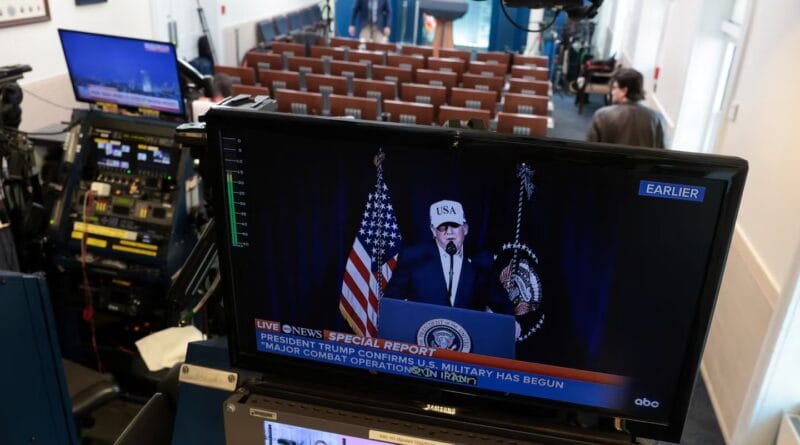
Donald Trump and Brendan Carr accuse media outlets of spreading “hoaxes,” raising concerns over freedom of the press in the US.
Tensions between President Donald Trump and American media outlets have escalated once again, this time fueled by the ongoing Middle East conflict. The latest dispute comes after a series of critical media reports on U.S. military operations, particularly regarding Iran. On March 14, 2026, Brendan Carr, the chairman of the Federal Communications Commission (FCC) and a Trump appointee, warned that broadcasters spreading “hoaxes and distorted information” could lose their broadcasting licenses.
Trump’s War on “Fake News” Intensifies
Carr’s warning followed a familiar pattern in which President Trump has repeatedly labeled unfavorable media coverage as “fake news.” Speaking publicly, Carr stated that media outlets must act in the public interest or face consequences. “The law is clear. Broadcasters must act in the public interest, and they will lose their licenses if they do not,” he said, further intensifying the already fraught relationship between the White House and critical media.
Trump’s rhetoric against the press has been ongoing since his first term, but with the current tensions in the Middle East, it appears the stakes have been raised. The FCC chairman’s comments were met with widespread backlash from free speech advocates. The Foundation for Individual Rights in Education (FIRE), a U.S.-based organization, condemned Carr’s warning as “authoritarian” and a dangerous erosion of press freedom.
“When the government demands that the press become the spokesperson for the state under the threat of sanctions, something is seriously wrong,” said FIRE in a statement posted on X.
This latest attack on the media comes at a time when Trump and his administration are grappling with critical coverage of military operations in the Middle East.
Media Under Fire for Coverage of the Iran Crisis
The White House’s anger was particularly aimed at CNN, which had reported on the potential risks of U.S. military actions disrupting oil traffic in the Strait of Hormuz. The network’s coverage suggested that the U.S. had underestimated Iran’s ability to affect oil shipping routes, a point that sparked a furious response from the administration.
“[This article] is 100% FAKE NEWS,” White House spokesperson Karoline Leavitt tweeted, echoing the president’s longstanding attack on what he deems false or unfavorable media narratives.
This was not the first time Trump’s administration has taken aim at media outlets. In the past, the president has attempted to restrict press access and called out critical reporting on a range of issues, from foreign policy to domestic affairs.
Last year, Carr made headlines by threatening to withdraw ABC’s broadcasting license after host Jimmy Kimmel made comments about far-right activist Charlie Kirk’s assassination. Although ABC briefly suspended Kimmel’s show, public outcry led to the show’s return to air.
As the media landscape continues to evolve, especially in the age of AI and social media, the battle between the White House and the press shows no signs of waning. With the stakes higher than ever, the future of free speech in America may hinge on the ongoing struggle over how media is regulated and held accountable.