UPDATE: A bomb against the Ukrainian oligarch Vadim Ermolaev shakes the peaceful and safe Monaco | International
International Report:
Global attention remains focused on this evolving story as officials and analysts assess the broader implications.
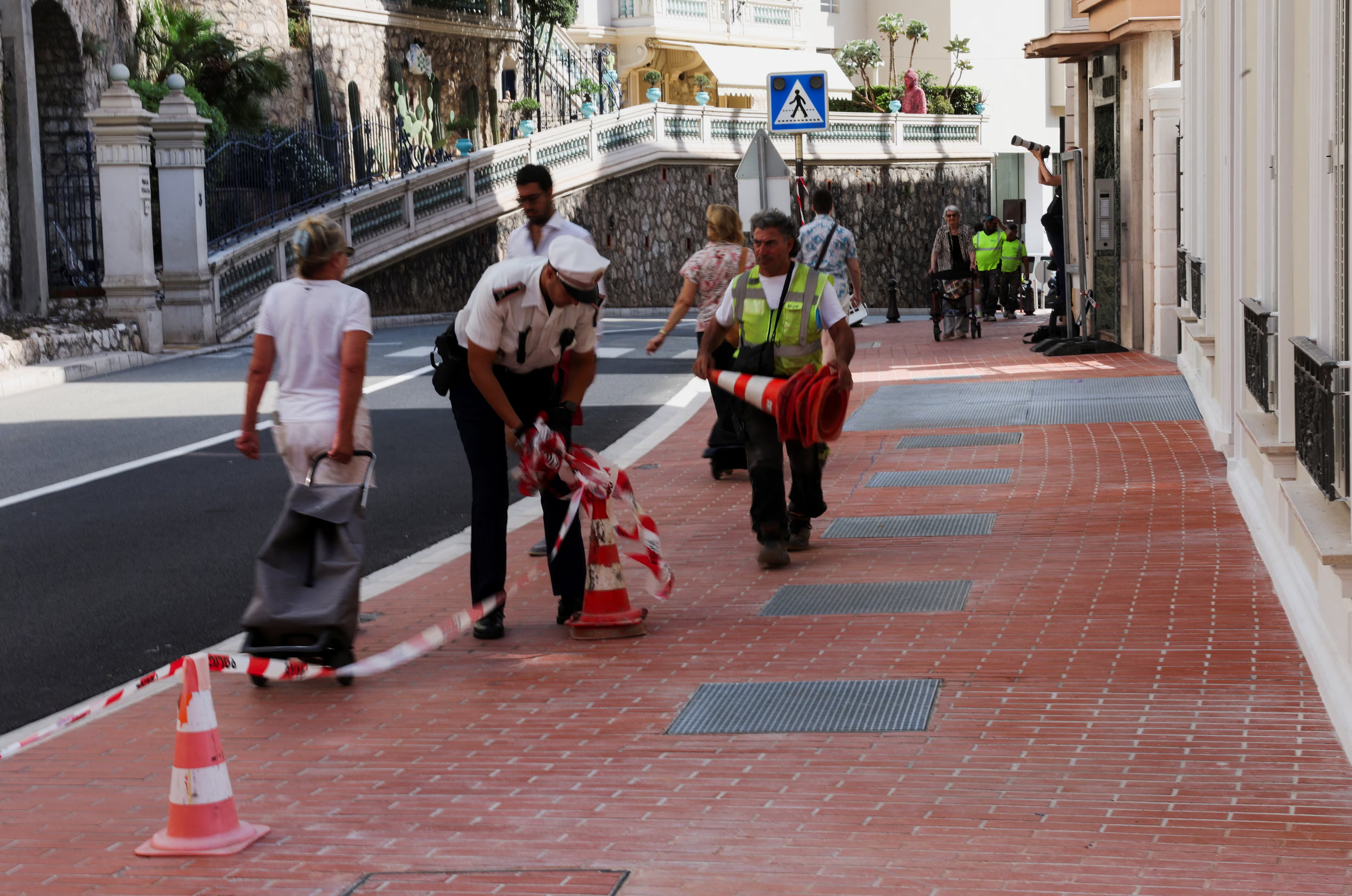
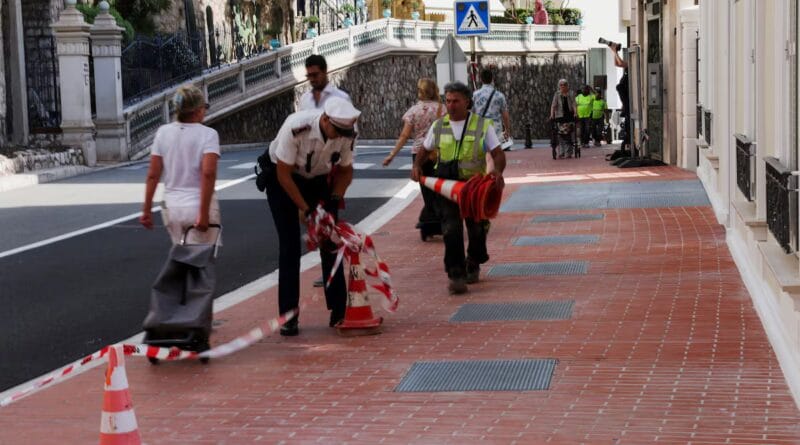
A man wearing a hat and a black T-shirt approaches the entrance of a residential building on Révérend Père Louis Frolla Street, in Monaco, shortly before 9:00 p.m. Without hardly stopping, he leaves a backpack on the ground and flees on foot in the direction of the neighboring municipality of Beausoleil, already in the French Alpes-Maritimes region. After a few seconds, just when two adults and a teenager are about to enter the goal, the backpack, full of screws and shrapnel, explodes and causes serious injuries to the adults and minor injuries to the minor. The father of the family was Vadim Ermolaev, a Ukrainian oligarch persecuted by the authorities of his country. The man who deposited the package bomb is still on the run. The quiet principality is in a state of shock. The Government and the Prosecutor’s Office of Monaco, considered one of the safest states in the world, described the action as an “attack” on Monday night. But the motive for the assassination attempt is not yet known. It seemed evident, however, that Ermolaev was the target of the explosion. Prince Albert II denounced “an atrocious crime” and noted in a statement that it is a shock for the entire Monegasque community, whose stability and extreme security is one of the main demands for the great fortunes installed there. According to 2018 data, 38,367 people of 120 nationalities live in Monaco, of which only around 8,000 have a passport from this State thanks to which they enjoy tax exemptions. Monaco is, in reality, a large business controlled by the Grimaldi family, allergic to this type of noise. Investigators remain cautious regarding the motives for the attack, unprecedented in the Principality of Monaco. In fact, you have to go back to 2004 – when a bomb exploded in the Louis II stadium – to find a similar incident. Damage caused by the explosion in the residential building in front of which the device exploded in the Principality. Manon Cruz (REUTERS) The Ukrainian oligarch, 58, was listed as the country’s 39th fortune, according to Forbes magazine. Ermolaev had obtained Cypriot nationality after disputes with the Government of his country and was a resident of Monaco, but also the owner of a large villa in Saint-Jean-Cap-Ferrat and other luxury properties on the Côte d’Azur. The tycoon, who has been the target of the kyiv Government for years for his opaque financial movements, is part of the members of the so-called “Monaco Battalion”, an expression used ironically to designate the 84 Ukrainian oligarchs and large fortunes installed on the French Riviera and who were in the crosshairs of the State Bureau of Investigation of Ukraine. Ermolaev, according to the Ukrainian press, was “the man who changed the face of Dnipro”, a city to the east. of the country from which it originates. The businessman promoted numerous urban projects. But he diversified his company into the construction materials and steel industry, health services with dental complexes and the agri-food sector, controlling nearly twenty businesses. One of them, at the center of the controversy, was dedicated to the wine sector. The businessman amassed a great fortune with the production of wines made in Crimea, becoming one of the main players in the Ukrainian market. The problem is that after the annexation of Crimea by Russia in 2014, several media outlets accused the billionaire of continuing to market his products in Russia under the label of “Crimean wine with protected geographical indication,” while those destined for the European and American markets were presented as coming from continental Ukraine. All this despite the fact that the grapes used in both production lines came from exactly the same vineyards. A maneuver theoretically intended to evade the sanctions imposed on products originating from the peninsula illegally annexed by Russia. Suspicions about his activities increased. The Ukrainian authorities maintained, among other things, that their companies contributed by paying taxes to the Russian state budget. In 2019, as published by Le Figaro, the businessman announced that he was renouncing his Ukrainian citizenship. But the investigations expanded and pointed to possible money laundering to Russia through the Estonian bank Versobank, of which Ermolaev was a co-owner. According to the regional newspaper Nice-Matin, 87% of deposits made at Versobank counters came from non-resident clients, a circumstance that caught the attention of the specialized anti-money laundering unit of the Estonian police. More than 7,000 million euros would have passed through that banking entity before disappearing to Western Europe.
What Happens Next:
This event is already generating discussion among political analysts and international organizations worldwide.
Global audiences continue following the story closely as regional responses begin to emerge.
Follow our coverage for more global news and international analysis.
Source: This article was originally published by Internacional en EL PAÍS and adapted for our international English-speaking audience.
Read the original article here.