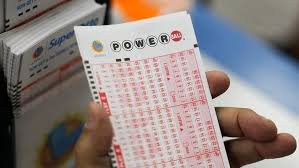
Power ball jackpot: Historic $700M payout in 2026
The power ball jackpot is a critical development that is causing significant Tension among hopeful ticket holders navigating the harsh realities of federal and state tax liabilities in 2026. As news spreads across North America and beyond that the grand prize has climbed toward an eye-watering $700 million, millions of prospective players are tracking the surging stakes. However, veteran financial advisors and tax experts are offering a vital reality check: the headline figure represents an annuity distributed over nearly three decades, whereas the actual cash option—and the immediate tax deductions that follow—fundamentally redefines the take-home fortune.
The cultural fascination with massive lotteries serves as a barometer of discretionary spending and economic optimism. Much like domestic political milestones or legal showdowns—such as the recent public scrutiny surrounding the James Comey charges in Washington—major multi-state lotteries draw intense national attention and spark debates over economics, governance, and household finance. As the power ball jackpot approaches the $700 million mark, lines at physical retail outlets and activity across authorized digital platforms continue to surge. Yet beneath the thrill of potential windfall lies a rigorous matrix of mandatory withholding taxes and state-specific tax rates that slice the grand prize down to a fraction of its advertised glory.
Analyzing the power ball jackpot impact
To fully understand the math that dictates lottery windfalls, observers must analyze the divergence between the annuity value and the upfront lump-sum cash value. When public authorities announce that a prize has reached $700 million, that sum reflects 30 graduated payments over 29 years. However, an overwhelming majority of grand prize winners choose the immediate single-cash payout. For a drawing of this magnitude, the lump sum generally calculates to roughly 50 percent of the advertised headline amount. Consequently, understanding the math behind the power ball jackpot requires evaluating federal income tax rates alongside individual state tax codes from the very start.
According to economic reporting from Reuters, a single winner of the power ball jackpot would face instant, non-negotiable tax withholding obligations at the federal level. The Internal Revenue Service mandates an immediate 24 percent tax deduction on all major lottery winnings exceeding $5,000. Because a payout in excess of $300 million automatically catapults the recipient into the highest federal income tax bracket of 37 percent, the winner remains responsible for an additional 13 percent tax liability when filing their annual tax returns. This federal obligation alone consumes over $120 million of the cash value, drastically narrowing the initial payout long before local taxes are factored in.
State taxation adds another layer of complexity that heavily depends on where the winning ticket was purchased. Jurisdictions such as California, Florida, Texas, and Washington do not impose state income tax on lottery winnings, granting a massive relative advantage to residents in those locations. Conversely, players purchasing tickets in high-tax jurisdictions like New York, New Jersey, or Maryland face combined state and municipal tax rates that can reach upwards of 10 to 13 percent. Consequently, economic commentators evaluating the power ball jackpot stress that lump-sum payouts in high-tax states may ultimately yield a final cash balance that represents less than one-third of the headline prize.
Beyond individual financial strategy, the broader cultural resonance of multi-hundred-million-dollar drawings mirrors other massive media phenomena. Just as high-profile global entertainment moments—such as the massive spectacle surrounding the Jay-Z Super Bowl event—generate immense commercial momentum and multi-platform media engagement, lottery fever functions as a widespread socio-economic indicator. Analysis by the Associated Press demonstrates that ticket sales climb exponentially once jackpots cross psychological thresholds like $500 million, drawing in casual buyers who rarely participate during smaller draws.
For international observers following the power ball jackpot, the staggering numbers highlight the unique architecture of American gaming and wealth creation. Non-U.S. residents who legally purchase tickets while visiting the country are subject to specific tax rules, including a mandatory 30 percent federal withholding rate for foreign nationals prior to any tax treaty adjustments. This global footprint underlines how state lotteries have evolved from modest revenue-raising tools for public education into international economic events that generate millions in public tax revenues while serving as ongoing case studies in personal finance.
Ultimately, unraveling the windfall of the power ball jackpot illustrates the dramatic gap between headline promotion and liquid reality. While taking home over $200 million net remains a transformative financial milestone, wealth managers consistently advise winners to assemble legal, tax, and estate planning counsel before claiming their prize. By carefully evaluating structural choices—weighing the guaranteed long-term stability of an annuity against the immediate liquidity and investment potential of a lump sum—winners can protect their new wealth against inflation, market volatility, and unnecessary tax exposure for decades to come.
Source: This article was originally reported by Forbes (via Google Trends) and independently adapted and contextualized for our international English-speaking audience. Read the original report here.
Pingback: Coastal flood warning: Historic 2026 tides hit