JUST IN: Germany proposes that an EU peacekeeping force replace the UN mission in Lebanon | International
International Report:
The following report highlights an important international development currently attracting worldwide attention.
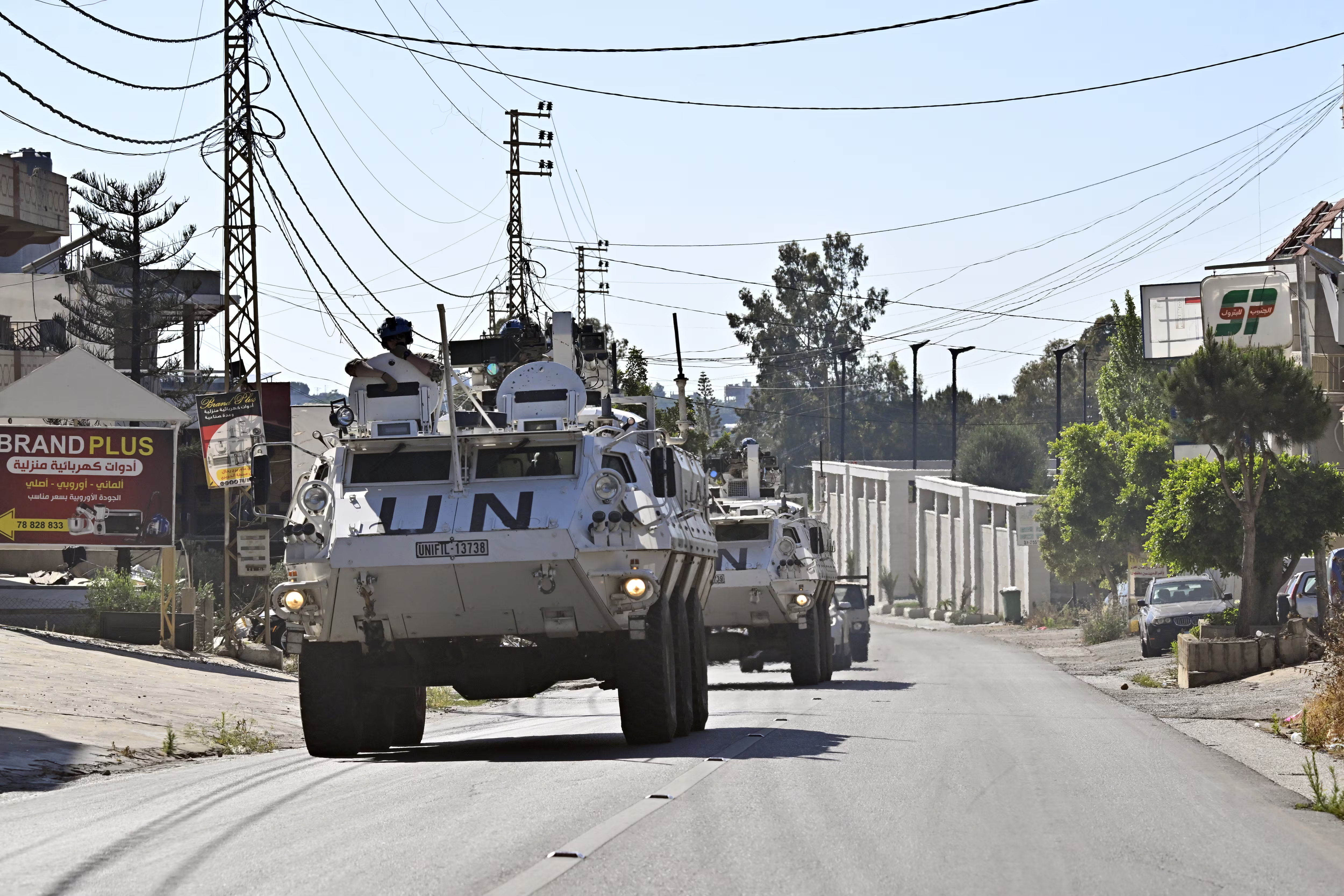
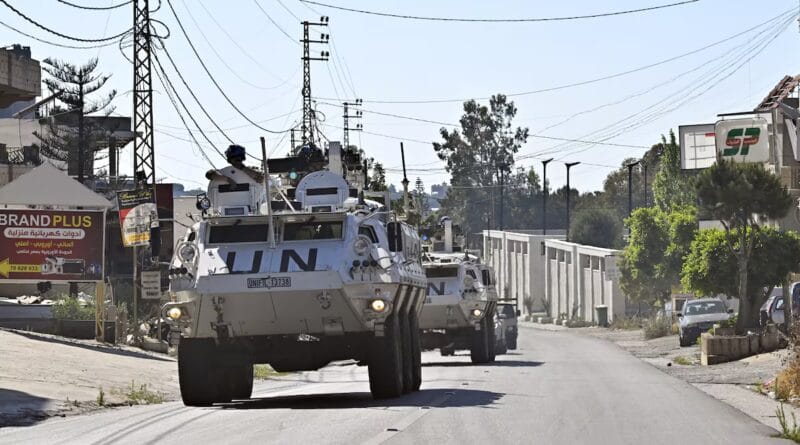
The German government, led by Chancellor Friedrich Merz, proposed on Friday that a European Union-mandated force replace the United Nations Interim Force in Lebanon (UNIFIL) in southern Lebanon to prevent a security vacuum when the UN mission’s mandate expires at the end of 2026.
In an interview with the German media outlet RedaktionsNetzwerk Deutschland (RND), German Foreign Minister Johann Wadephul said a European deployment could create the conditions necessary for the Israeli military to withdraw from southern Lebanon without allowing the Iran-backed Hezbollah militia to resume what he described as “its terrorist activities.”
“Lebanon, with its government in the process of stabilization, represents one of the most hopeful developments in the region,” Wadephul said. “As Europeans, we must do everything possible to ensure that this positive process continues.”
“We should examine within the European Union whether, following the end of the UNIFIL mission, we can guarantee through a European mandate that no security vacuum emerges and create the conditions for the Israeli army to withdraw without Hezbollah returning to its terrorist activities,” he added.
UNIFIL was established in 1978 to oversee the withdrawal of Israeli forces from southern Lebanon following Israel’s invasion that year. The peacekeeping force currently consists of approximately 10,800 troops from 47 countries, including around 650 Spanish soldiers.
Last August, the United Nations Security Council decided not to extend UNIFIL’s mandate beyond December 31, 2026. As a result, peacekeepers are expected to leave Lebanon in January 2027. Under the current plan, the Lebanese government will become the sole authority responsible for security south of the Litani River and north of the UN-demarcated Blue Line separating Lebanon and Israel.
Although Lebanon and Israel have held direct political talks for the first time in decades in an effort to strengthen the ceasefire between Israel and Hezbollah, hostilities continue. Israeli forces remain deployed in parts of southern Lebanon, while exchanges of fire with Hezbollah continue to occur.
European proposals under discussion
The idea of a European mission is not new. During a meeting of EU foreign ministers in Luxembourg last June, Spanish Foreign Minister José Manuel Albares announced that Spain would propose the creation of an EU mission to succeed UNIFIL.
“We need to look beyond the Gulf and consider the entire Middle East. This is a major opportunity to advance peace and stability. We must guarantee Lebanon’s sovereignty and territorial integrity, and the European Union can play a fundamental role. I will propose a European Union mission that can replace UNIFIL once its mandate expires,” Albares said.
The proposal has been debated within the European Union. However, discussions have so far focused primarily on deploying a training mission to strengthen the Lebanese Armed Forces (LAF), rather than sending a new European peacekeeping force.
Germany’s proposal also leaves open the question of what form such a European mission would take, whether military, civilian, or a combination of both.
Security challenges remain
Since Israel launched a renewed military offensive in southern Lebanon on March 2, six UN peacekeepers—four Indonesians and two French soldiers—have been killed during attacks linked to the conflict involving Israel and Hezbollah.
The continuing Israeli military presence, widespread destruction in predominantly Shiite communities aimed at creating a buffer zone similar to the model used along the Gaza border, and ongoing exchanges of fire have severely limited UNIFIL’s ability to carry out its mandate. Peacekeepers have reportedly spent much of their time sheltering in fortified positions rather than conducting patrols.
Despite these difficulties, the United Nations hopes to maintain an international presence in southern Lebanon to help prevent further escalation and monitor developments. Several options are under consideration for a follow-on mission.
Any new UN operation, however, would require approval by the UN Security Council, where the United States holds veto power. As an alternative, the European Union is examining the possibility of launching its own mission focused on training and supporting the Lebanese Armed Forces rather than acting as a buffer force between Israel and Hezbollah.
Spain has expressed support for either option and has indicated its willingness to participate. Spanish officials argue that the long-term solution lies in strengthening the Lebanese Armed Forces so they can fully assume responsibility for security in southern Lebanon, replacing Hezbollah’s influence in areas where the Lebanese state has historically had a limited presence.
Military officials also warn that the Lebanese army faces severe financial difficulties. Many soldiers reportedly go months without receiving their salaries, forcing some to seek second jobs or increasing the risk of corruption. They argue that training alone will not be sufficient and that any European initiative should include substantial financial assistance to strengthen Lebanon’s armed forces.
In an interview with El País on July 5, Spanish Defence Minister Margarita Robles said that both the United Nations and the European Union were considering several options to replace UNIFIL.
“The essential thing is that we all support the Lebanese Armed Forces, because there must be a genuine security force in the area,” Robles said.
Spain currently commands UNIFIL’s southeastern sector, where approximately 650 Spanish troops are deployed alongside personnel from India, Nepal, Serbia, and several other participating countries.
Why This Matters:
Experts suggest the long-term impact of these developments may become clearer as more information emerges.
Political and economic analysts are paying close attention to the potential consequences of these events.
Readers are encouraged to monitor future developments as the situation evolves.
Source: This article was originally published by Internacional en EL PAÍS and adapted for our international English-speaking audience.
Read the original article here.