BREAKING: Iran confirms that its new leader, Mojtaba Khamenei, is slightly injured but “active” | International
Sources confirm that the following story has emerged from the international scene.
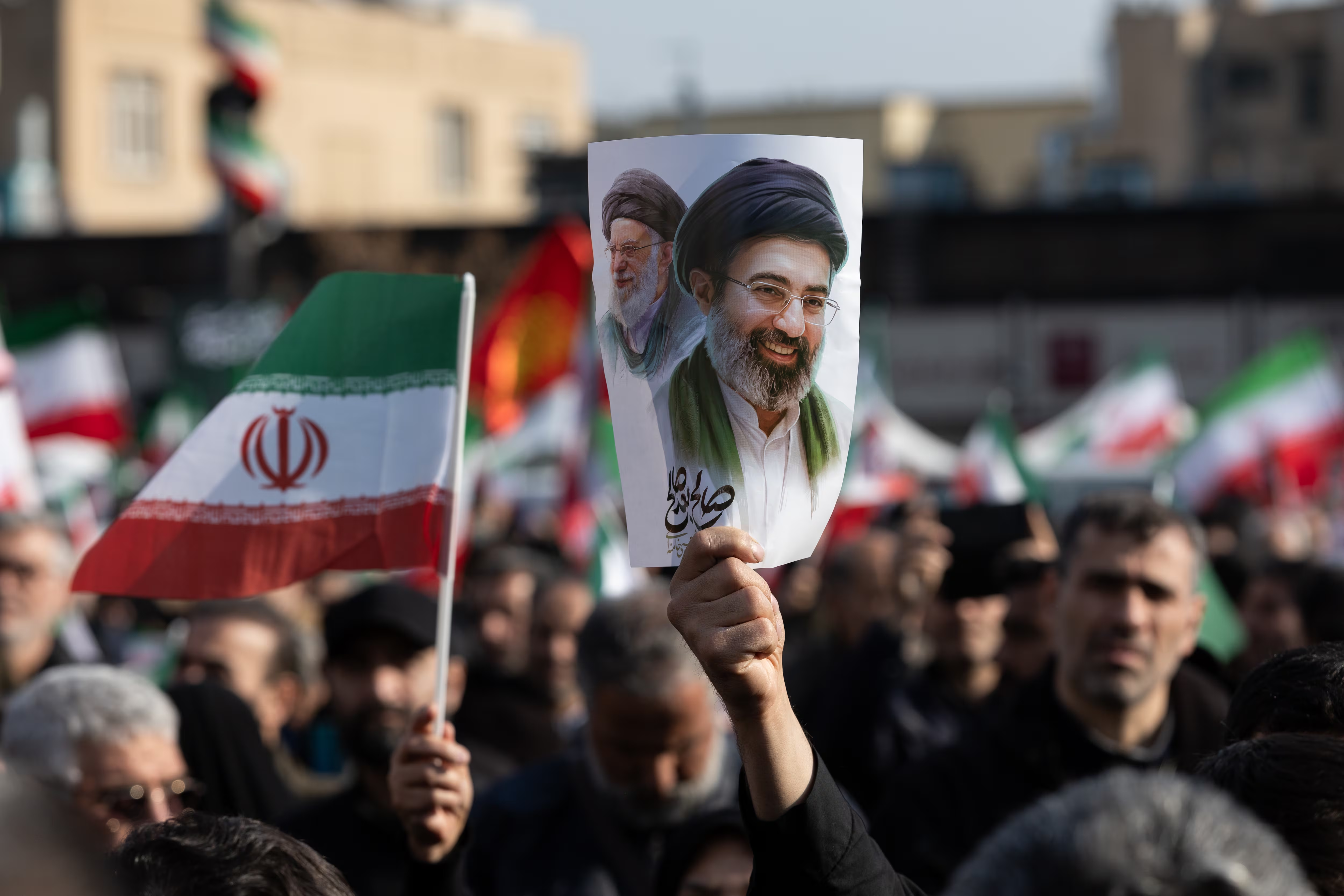
As Mojtaba Khamenei steps into the role of Supreme Leader following his father’s death, uncertainty over his health and his controversial rise to power looms over Iran’s political future.
Mojtaba Khamenei, son of the late Iranian Supreme Leader Ali Khamenei, has become the new figurehead of Iran’s government, but his leadership is already shadowed by uncertainty. Following the bombing that killed his father on February 28, Khamenei’s public absence and reports of his injuries have sparked widespread speculation about his health and future. Despite these uncertainties, his appointment and the lack of any public statements or appearances signal both the dangers and the strategic positioning of the new leader in a time of unprecedented political and military turmoil.
Public Absence Fuels Speculation
Since his appointment was announced last Sunday, Mojtaba Khamenei has remained largely out of the public eye. His silence has only fueled rumors about his health, with several Israeli media outlets reporting that the new leader was injured in the same bombing that killed his father, mother, wife, and one of his children. Iranian officials later confirmed these reports, stating that Khamenei was “slightly injured” but still “active.”
Despite Tehran’s assertions that Khamenei is alive and well, the absence of any official statements from him has led to rampant speculation about his condition. Some regional media outlets even questioned whether he was in a coma, while Iranian state television referred to him as a “wounded Ramadan war veteran” to emphasize his survival during the ongoing conflict, which coincides with the Muslim holy month.
“The necessary conditions for participation [in the World Cup] do not exist,” said Sports Minister Ahmad Donyamali, referencing the devastating bombing that killed the Supreme Leader. “This corrupt regime assassinated our leader.”
Symbolism of a “Living Martyr”
Although Khamenei’s injuries may project an image of fragility, they also provide him with an opportunity to build symbolic capital. His survival in the bombing—coupled with his status as a member of the ruling elite—gives him the aura of a “living martyr,” a concept revered in Shiite Islam. Much like his father, who survived a 1981 assassination attempt that left him partially paralyzed, Mojtaba Khamenei’s physical injuries are now framed as proof of his dedication and sacrifice for his country.
In Iran, martyrs are deeply revered, and Khamenei’s survival in the face of an attack that took the lives of his closest family members could strengthen his legitimacy in the eyes of his supporters. The idea of enduring such violence is seen as an embodiment of sacrifice for God, reinforcing his position as a leader willing to risk everything for the Islamic Republic.
Rising Criticism and Dynastic Concerns
Despite the outpouring of support for Khamenei within Iran’s political establishment, his appointment has been met with criticism, particularly from those who view the ascension of a single family member to the highest office as problematic. The hereditary nature of Khamenei’s rise—especially in a republic that has long prided itself on its resistance to monarchic rule—has prompted concerns about the legitimacy of the new leadership, both among the clerics and broader political circles.
Amwaj, a regional media outlet, described the succession as “dynastic,” a term that resonates deeply in a country that overthrew a monarchy just a few decades ago. Critics argue that this appointment undermines the values of the Islamic Republic, which until now had prided itself on a system that, while theocratic, was theoretically opposed to hereditary power.
One notable voice of dissent comes from Qasem Mohammadi, a reformist member of the Islamic Republic, who has openly criticized Khamenei’s rise. Mohammadi, a veteran of the Iran-Iraq War, questioned the legitimacy of a family-based leadership in a system that promised to be anything but monarchic. He suggested that Khamenei’s election was more about securing the survival of the regime than adhering to ideological principles.
“The election of the son of the previous supreme leader risks undermining the legitimacy of the political establishment, both among clerics, political networks, and in the Shiite world in general,” Amwaj noted.
Future Uncertainty: The Role of War
Amid these internal challenges, external threats only add to the complexity of Khamenei’s position. With tensions escalating between Iran, Israel, and the United States, Khamenei’s survival could depend on the course of the ongoing conflict. Both the US and Israel have indicated that the new Iranian leader is a target. US President Donald Trump has already claimed that Khamenei “won’t last long,” while Israeli officials have repeatedly stated that any new Iranian leader is a legitimate target for elimination.
In such an environment, even the simple act of recording a public message could put Khamenei’s location at risk. With the US and Israel’s extensive intelligence networks, it is possible that they are already tracking the new Supreme Leader’s movements, waiting for the right moment to strike.
While Tehran continues to rally around Khamenei and presents a united front, his leadership remains precarious, caught between the weight of tradition, the realities of war, and the internal divisions within Iran’s ruling establishment. The coming months may prove crucial in determining whether Khamenei can solidify his rule or whether his leadership will crumble under the pressure of both internal dissent and external threats.
What This Means:
Our editorial team will continue to monitor this situation as new details emerge.
This is part of a broader trend that has been reshaping the geopolitical landscape in recent months.
What are your thoughts on this development? Share your views in the comments below.
Source: This article was originally published in another language by Internacional en EL PAÍS and has been translated and adapted for our global English-speaking audience. Read the original article here.