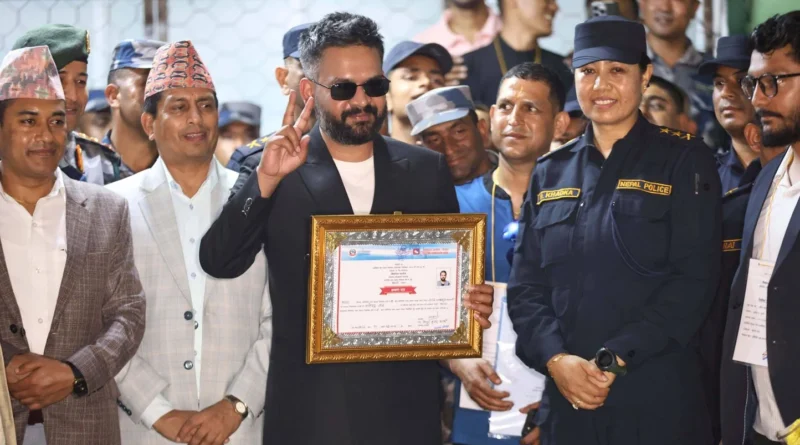
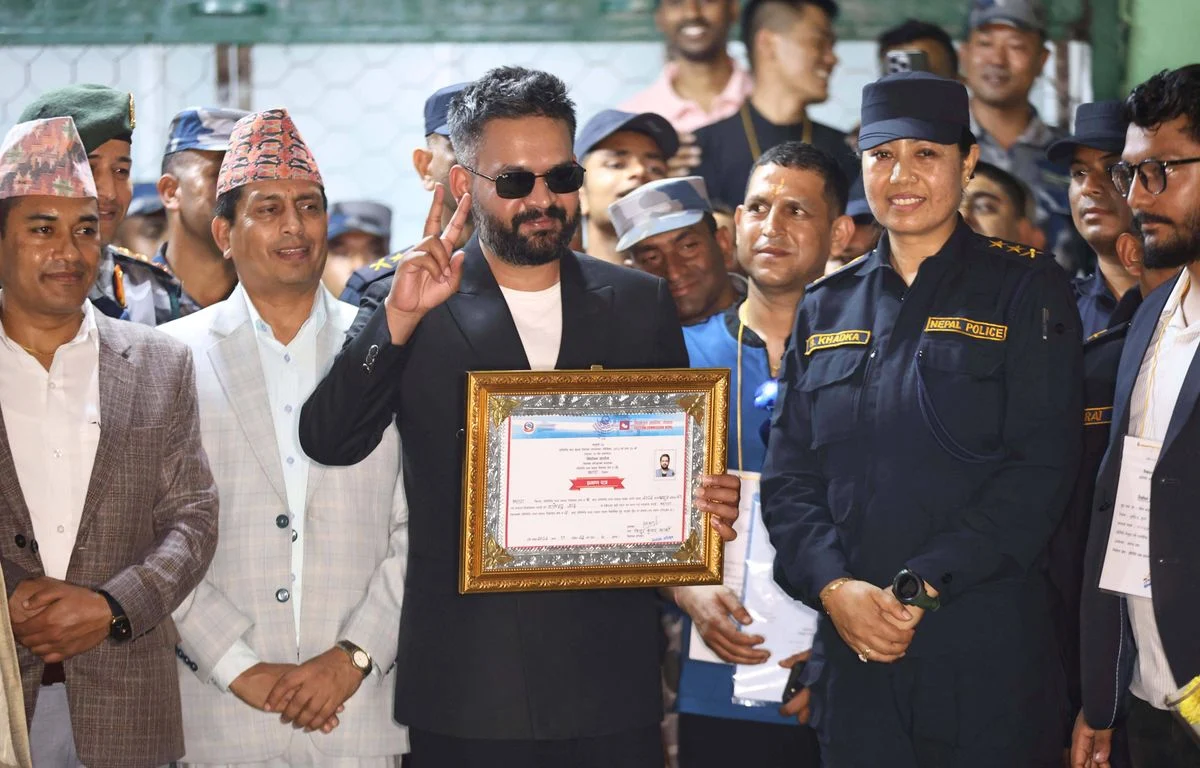
At 35, the Kathmandu mayor turned election frontrunner may soon rise to the nation’s highest office, capturing the imagination of a nation.
Balendra Shah, known as “Balen,” may be Nepal’s next prime minister—a prospect that seemed unimaginable just a few years ago. At 35, the rapper, civil engineer, and current mayor of Kathmandu has shaken the political landscape with an unexpected victory in Nepal’s legislative elections. Securing 68,000 votes to 18,000 from his opponent, the once-powerful Marxist leader KP Sharma Oli, Shah’s win feels less like an election result and more like a generational shift.
A Humble Beginning, A Meteoric Rise
Born in 1990, Balen Shah grew up amid the turmoil of Nepal’s decade-long civil war, a conflict that deeply scarred the nation. A civil engineer by training, Shah initially made a name for himself not in politics but in the underground music scene. His rap songs, laced with sharp critiques of the political elite and social inequality, amassed millions of views, drawing attention not just for his lyrical prowess but for his bold stance against corruption. His message resonated with a generation disillusioned by decades of political instability.
In 2022, Shah stunned the country by becoming the first independent candidate to win the mayoralty of Kathmandu, a post typically dominated by traditional political parties. His tenure as mayor has been marked by a pragmatic approach, focusing on pressing urban issues like garbage collection, traffic, taxes, and education—issues that directly impact the daily lives of the capital’s residents.
“Running against a heavyweight means that I am not choosing the easy way,” Shah said, emphasizing his commitment to taking on the political establishment.
A New Wave of Political Engagement
But it wasn’t just local governance that called to Shah. In January, he made the bold decision to leave his mayoral post and run in the country’s legislative elections. He chose to directly challenge the political titan, KP Sharma Oli, in Oli’s rural stronghold—no easy feat for a young outsider. “It’s a means of expression, I will continue,” Shah said, vowing to use his platform for both political and personal expression.
Shah’s party, the centrist Rastriya Swatantra Party, is now leading the race in many of Nepal’s constituencies, and his path to becoming the next prime minister looks increasingly likely. His platform promises economic liberalism, with a focus on social justice and, notably, free education and healthcare for the country’s most disadvantaged citizens.
Shah’s rise mirrors that of other unexpected political figures who have used social media and grassroots movements to catapult themselves into power. In many ways, he is Nepal’s version of Volodymyr Zelensky, combining the power of youth-driven insurgency with a fresh approach to leadership.
Shah has also promised to continue his music career, blending politics and art in a way that makes him a uniquely modern figure. For a country like Nepal, where tradition and modernity often clash, Shah represents a new era: one where new media, youthful energy, and bold policies meet head-on with the country’s rich, storied history.
In the end, whether he becomes Nepal’s next prime minister or not, Shah’s journey is emblematic of the sweeping changes reshaping the political landscape of Nepal.