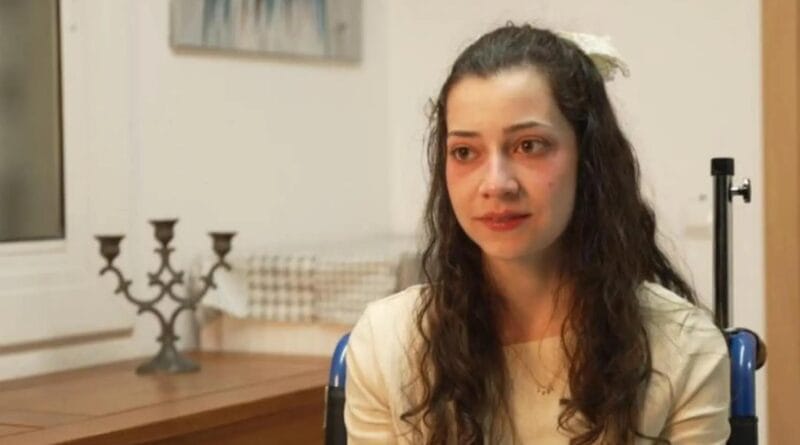
ALERT: notes on a national trauma
According to recent reports, the following story has emerged from the international scene.
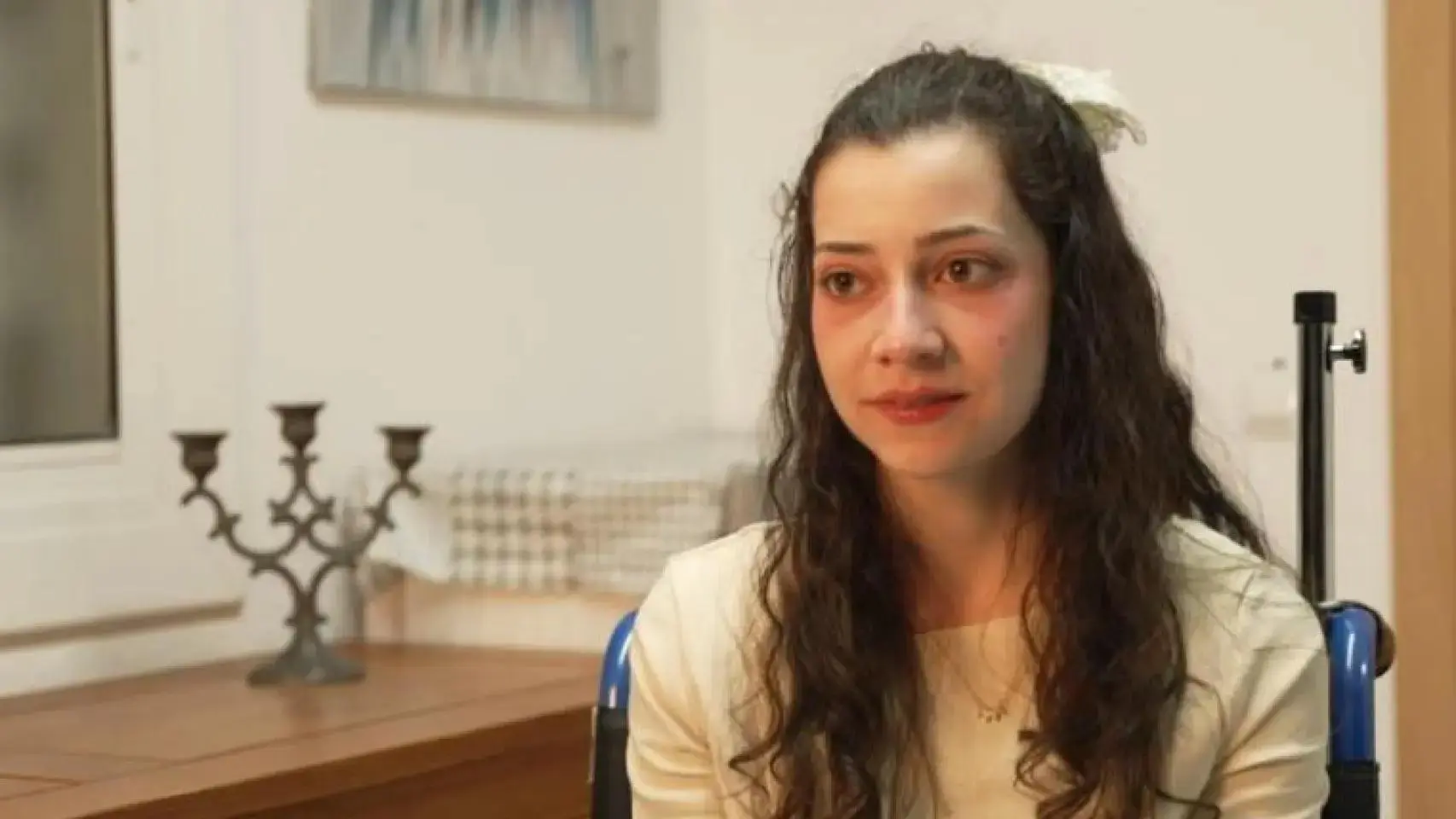
I can’t stop thinking about the ice cream. One of the photos that Noelia wanted to take to the room where she received euthanasia was the one in which she appeared eating ice cream. One of those first times when, as a child, she ate ice cream. And she was happy. Without knowing it, but devilishly happy.
This weekend, just before lunch, breaking my own rules as almost always, I gave my son a couple of spoonfuls of ice cream. And he made that face that I couldn’t put into words even if I had been polishing that paragraph for years. The face of a child eating ice cream almost for the first time is as elusive as music. My son narrowed his eyes, pursed his lips, and then laughed. It was more or less like this.
I haven’t seen Noelia’s photo but, from how she described it in conversation with her mother, I suppose something similar must have happened. And that’s why I can’t stop thinking about ice cream, now that Noelia has been dead for twenty-four hours. Because Noelia was happy one day.
Actually, I guess it’s not that I think about the ice cream, but about what goes from one ice cream to the next. From the first ice cream to the last one she had. On that short path—twenty years are nothing—something went wrong and Noelia wanted to die.
Noelia has generated a national trauma because she was not born with a dark fate. She reached the day of her voluntary death traveling a path where the State and many of those who crossed her life repeatedly failed her.
We have seen her on TV arguing why, in her case, it is better to die than to live. That is what has caused trauma, distress and helplessness in the public. How is it possible that a twenty-five-year-old girl who can walk, who can try a new treatment, who showers and puts on makeup by herself, who can go see the sea, who can make the same plans as almost anyone, wants to die?
That question has affected both those who support the euthanasia law and those who oppose it. Because understanding is impossible. In this case, unlike in others, understanding is impossible.
It is not possible for a human being who chooses to live to understand the ultimate consequences of a human being who chooses to die. They are two minds that work differently. In one of them, the survival instinct has dissolved. In one of them, suffering has erased any trace of hope.
And we don’t understand it because, as we have all suffered—some more, others less, some even a lot—we think that, in a situation like hers, there is always one last chance.
We were used to cases like “The Sea Inside,” to people who could not speak, to people whose suffering was so visible that it silenced any criticism. To much older people, some of whom did not even reach the day because they died naturally along the way.
What happened with Noelia is different and has tightened around the conscience of a country.
Noelia had long believed that it was not possible to live without suffering. An alcoholic father, a broken family, psychiatric hospitals, sexual assaults, repeated suicide attempts, self-harm, abuse by her paternal grandmother, drugs. That is what she said.
The State was with her in death, guaranteeing until the end her right to a dignified death, supported by medical reports that diagnosed her physical and psychiatric condition as disabling and irreversible.
But defending her right to euthanasia at that point raises an unavoidable question: was the State also at her side, with the same determination, during her life?
How many times did that same State fail Noelia? How many times did those who crossed her path fail her? Did the mechanisms of the State work in all those moments when Noelia had not yet decided to die and was still fighting to live?
Noelia was happy. She chose up to four photos of happiness to take with her on her last day on earth.
This is not about blaming anyone specifically, but about reviewing what we might call “final rights”: for example, euthanasia or abortion. They are rights, but they must be the last right. The last of all possible options.
Euthanasia and abortion are both a right and a failure. A sign of sadness. A failure of everything that came before. And also a relief for those who choose them, because no other path remains.
These are necessarily complementary perspectives.
Just as it is also necessary to understand Noelia as her parents might. There is only one thing worse for a parent than seeing a child die: seeing them choose to die.
Because it is inevitable, whether one is to blame or not, to feel responsible for not having been able to give them happiness along the way.
How could Noelia’s parents not hope, until the very last moment, that she would raise her hand and say, “I want to live”?
From the outside, it is easy to think—and I do—that the parents’ position is not fair. Because it tries to avoid future pain at the cost of prolonging Noelia’s present pain, described by doctors as “disabling and irreversible.”
But I also know that I would try to convince my own children to live, to the very end, if I were in that situation.
Euthanasia as an ultimate right can also be defended, as we have seen, from liberal and even religious perspectives. What happens within our own skin is the one domain where we are truly sovereign.
Many self-described liberals now ask: how is it possible for the State to support assisted suicide?
But we can also ask the opposite: can the State force someone to live when life has become unbearable?
From a religious point of view, can we still believe in a God who demands suffering at all costs? Or is it more consistent to believe in a God who accompanies those who seek rest?
Noelia is now part of history. Often, when this is said in the press, it is an exaggeration. But this time, it is not.
Every time there is a debate about euthanasia, we will remember Noelia. We will remember that she had the right to a dignified death.
But we will also remember that things could have been different—that she exercised that right because the State, society, and many individuals failed her along the way.
Analysis and Perspective:
Our editorial team will continue to monitor this situation as new details emerge.
This is part of a broader trend that has been reshaping the geopolitical landscape in recent months.
Follow our coverage for real-time updates on this and other major global stories.
Source: This article was originally published in another language by El Español – Home and has been translated and adapted for our global English-speaking audience. Read the original article here.