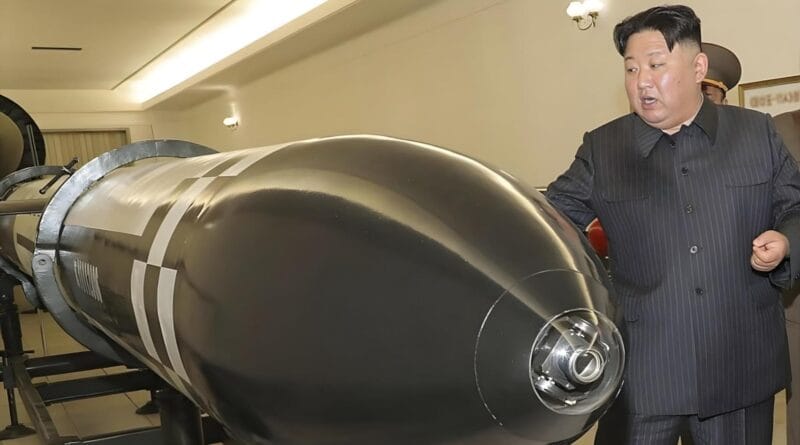
ALERT: Kim Jong-un reactivates his short-range arsenal and challenges the US
According to recent reports, the following story has emerged from the international scene.
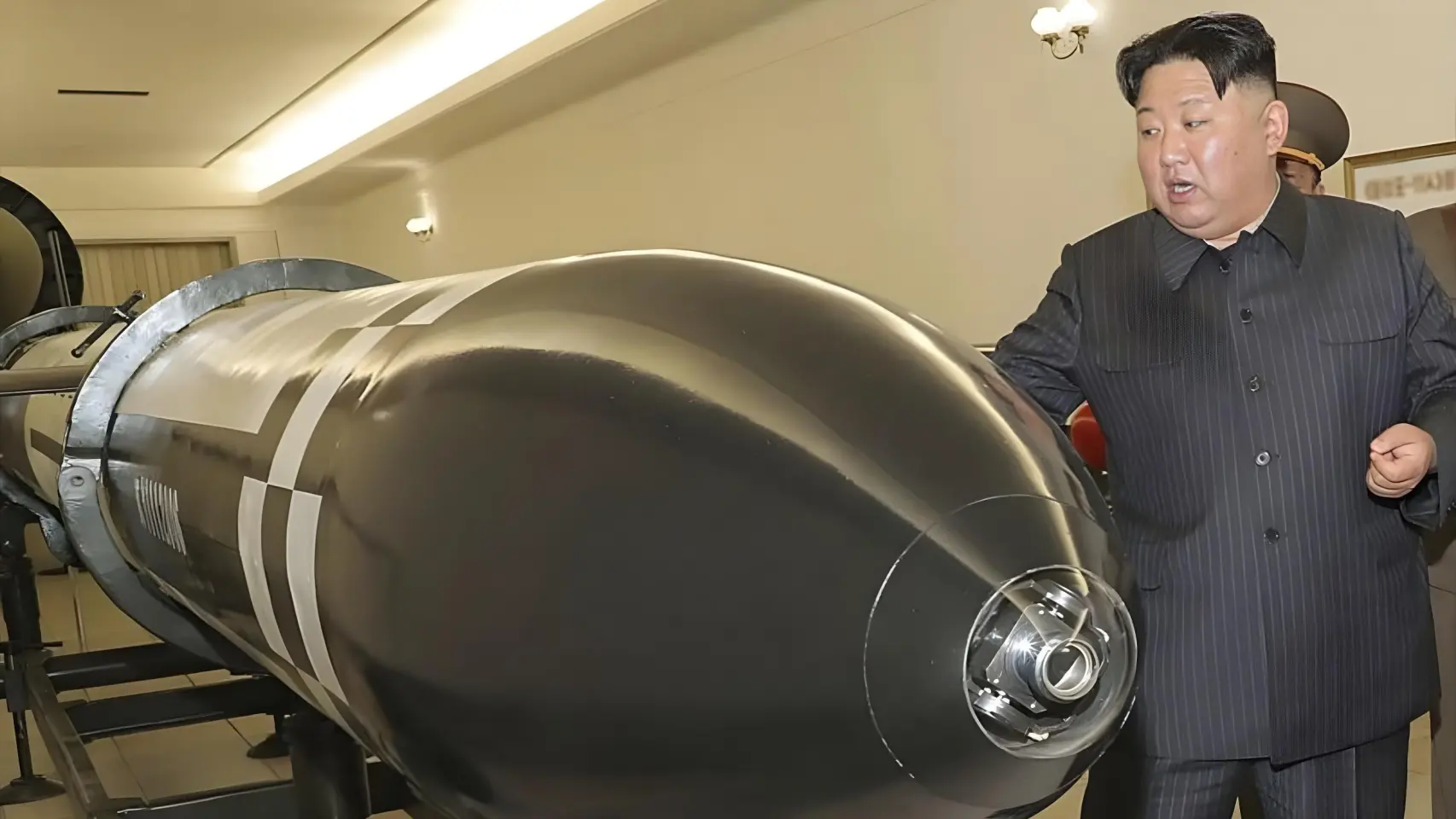
Pyongyang’s missile tests are seen as a direct response to joint military exercises between the US and South Korea, further heightening regional tensions.
North Korea raised alarms in East Asia this Saturday by launching ten short-range ballistic missiles into the Sea of Japan, an act interpreted as a direct countermeasure to the ongoing joint military drills between the United States and South Korea. The missiles, which were fired from the Sunan area near Pyongyang, traveled approximately 350 kilometers before falling into the Sea of Japan. Thankfully, they did not enter Japan’s exclusive economic zone and caused no immediate damage or casualties.
A Response to “Freedom Shield” Exercises
The missile launch took place during the “Freedom Shield” military exercises, a series of drills between the US and South Korea that Pyongyang views as a rehearsal for an invasion. This marks North Korea’s third missile test of the month, underscoring Kim Jong-un’s strategy of aligning military provocations with the movements of Washington and Seoul. The tests are seen as a show of force aimed at reinforcing Pyongyang’s negotiating position while keeping the region on edge.
Japan, which activated its surveillance systems in response, confirmed that the missiles did not pose an immediate threat to its territory. The Ministry of Defense stated that none of the projectiles had entered Japanese airspace or waters. Despite this, the launches serve as a reminder of North Korea’s ability to disrupt regional security and highlight the ongoing volatility of the Korean Peninsula.
“This episode reflects Kim Jong-un’s strategy: combining military displays with veiled threats, which keeps the region on constant alert,” said an international analyst.
The Role of North Korea’s Tactical Missiles
Experts from South Korea and Japan have speculated that the missiles fired could be North Korea’s Hwasong-11 variants, namely the KN-23 and KN-24. These short-range systems are designed to evade detection and interception. The KN-23, modeled after the Russian Iskander, uses solid fuel and has a range of 400 to 700 kilometers, with a trajectory that is hard to track by radar systems. Similarly, the KN-24, capable of carrying conventional or tactical nuclear payloads, has a range of up to 410 kilometers and offers pinpoint accuracy.
Both missile types are seen as an ideal method for North Korea to demonstrate its military strength without escalating to an intercontinental missile test, which would likely provoke harsher international reactions.
The launches also serve as a test of the defensive capabilities of South Korea and Japan, forcing both nations to adjust their radar systems and emergency protocols. By launching multiple missiles in quick succession, North Korea is demonstrating its ability to overwhelm defenses and strike multiple targets at once, further compounding the challenge for regional defense systems.
This action highlights Kim Jong-un’s broader strategy: using military tests to send political messages while increasing pressure on the US and South Korea. As the region watches closely, North Korea continues to position itself as a central figure in the ongoing security crisis in East Asia, further emphasizing the Korean Peninsula’s status as a global flashpoint.
What This Means:
Experts suggest this event marks a turning point that may influence policy decisions worldwide.
As the situation continues to evolve, analysts are closely watching for further developments.
What are your thoughts on this development? Share your views in the comments below.
Source: This article was originally published in another language by El Español – Home and has been translated and adapted for our global English-speaking audience. Read the original article here.