WORLD NEWS: The United States rescues a pilot from the first plane shot down by Iran in the war | International
New information reveals that the following story has emerged from the international scene.
This Friday, the United States received the strongest warning that the war against Iran, despite the promises of President Donald Trump, is far from being won and that Tehran remains a dangerous adversary.
The Islamic Republic shot down a US F-15 fighter plane, with two crew members on board, over its territory this Friday. One of them was rescued a few hours later by helicopters from his country, according to Washington and Israeli media. The whereabouts of the second are still unknown.
It is the first time Iran has shot down a US military plane over its airspace in nearly five weeks of war. According to The New York Times, a second American plane also crashed this Friday in the Persian Gulf area.
Neither the Pentagon nor Central Command, responsible for US forces in the Middle East, have so far officially commented on either incident. In the case of the second, an A-10 Warthog, there was only one crew member on board, the pilot, and he was able to be rescued.
The downing of the first plane over Iranian territory, according to The Washington Post, occurred in the southwest of the country. Although its pilot has also been rescued, the second crew member is still missing. The prospect of a live American airman on the run in hostile Iranian territory highlights the risks of a war that most Americans oppose, according to polls.
Iranian authorities have called on the civilian population to report any information about the crew’s whereabouts and have distributed images on social networks supposedly showing the crash site and remains of the aircraft.
According to CNN, the rescued pilot is alive, in US custody, and receiving medical attention, citing two sources familiar with the situation. The whereabouts of the second crew member remain unknown, although search operations are still underway, according to Axios, citing an Israeli official and another informed source.
This is the fourth F-15 attacked since the United States and Israel launched Operation Epic Fury against Iran on February 28. The other three aircraft were involved in a friendly fire incident in Kuwait in the early days of the conflict, and all crew members were rescued.
In addition, Iran has destroyed other American aircraft, including an E3 spy plane, considered a key aerial command center for coordinating combat operations.
The downing of the F-15 comes just two days after Trump addressed the nation from the White House, asking for patience and stating that the war would last “two or three weeks” longer. During that time, he said, the United States would intensify bombings to “take them to the Stone Age.”
In a message on social media earlier that Friday, Trump asked for “a little more time” and suggested the possibility of controlling the Strait of Hormuz and its oil resources.
Next Monday, April 6, marks the expiration of the ultimatum the president gave Iran to reach a peace agreement—negotiations that Washington claims are ongoing but Tehran denies. If no agreement is reached, Trump has threatened to target Iran’s electrical and oil infrastructure, as well as water desalination plants.
In search and capture
The governor of the southwestern Iranian province of Kohkiluyeh and Buyer Ahmad, where the plane crashed, has offered a reward for information leading to the capture of the crew.
According to the semi-official ISNA agency, the authorities announced “special recognition” for anyone providing information, without specifying the reward. A state television presenter urged residents to hand over the “enemy pilots” to security forces.
Images circulating on social media and broadcast on Iranian television appear to show wreckage of the aircraft, including parts of the fuselage and an ejection seat.
Iran’s Revolutionary Guard has searched the crash area, according to local agencies, which also showed footage of US helicopters and a refueling aircraft conducting what appears to be a rescue mission, along with videos of armed civilians firing weapons.
This is the first confirmed case in five weeks of war of a US fighter jet being shot down by enemy fire.
In Lebanon: the Gaza strategy
On the لبنان front, the Israeli army has begun occupying and evacuating towns in southern Lebanon to counter rocket attacks by Hezbollah on northern Israel.
Troops are being deployed in a buffer zone about 10 kilometers from the border, south of the Litani River, according to Israeli media. The aim is to reduce the threat of anti-tank rockets and give civilians more time to react to attacks.
Despite this offensive, Hezbollah has intensified its rocket fire, launching more than 130 projectiles during Jewish Passover, signaling recovery after heavy losses in recent conflicts.
The Israeli army claims to have killed around a thousand pro-Iran militia fighters in the past month and destroyed 3,500 positions. However, analysts say Hezbollah remains resilient and may require a large-scale invasion to be fully disarmed.
Israeli Defense Minister Israel Katz confirmed the demolition of homes in southern Lebanese villages considered Hezbollah strongholds. He stated that they would be “razed” following a strategy similar to that used in Gaza.
He also said Israel would maintain security control over the area south of the Litani River—about 8% of Lebanon’s territory—and would not allow displaced residents to return until northern Israel is secure.
New threat in southern Lebanon
Residents of Lebanese border towns have appealed to Prime Minister Nawaf Salam for protection and humanitarian assistance so they can remain in their homes.
They fear that leaving could mean losing their land permanently and recall the long Israeli occupation of southern Lebanon in the late 20th century.
The Lebanese Ministry of Health reports that more than 1,200 people, including 124 children, have died due to Israeli bombings since March 2.
Air raid sirens sounded continuously on Friday in northern Israeli cities such as Haifa and across the Galilee region.
The UN peacekeeping mission in Lebanon (UNIFIL) reported an explosion inside one of its border positions, injuring three peacekeepers, two seriously. The incident occurred near a base housing 670 Spanish troops.
In a Passover message, Israeli Prime Minister Benjamin Netanyahu claimed that Israeli airstrikes had destroyed 70% of Iran’s steel production and damaged key infrastructure.
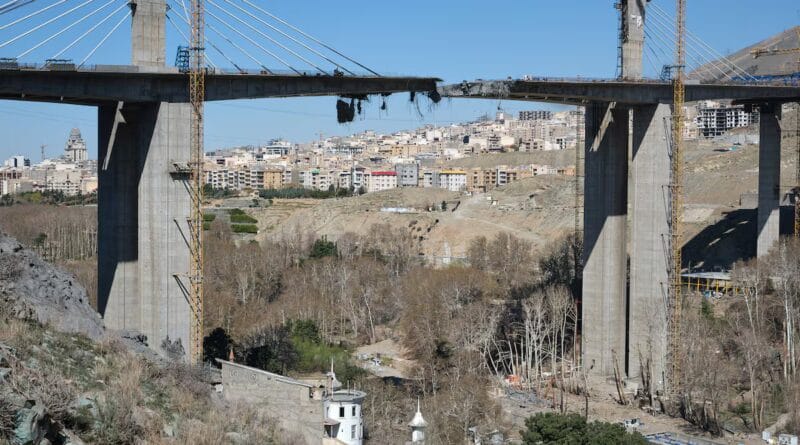
Following the bombing of a major bridge under construction in northern Iran, Iranian authorities warned that further attacks on infrastructure would trigger even more devastating retaliation.
At least 13 people were killed and nearly 100 injured in strikes on the so-called B1 bridge, described by Tehran as “war crimes.”
A drone strike on a Red Cross and Red Crescent warehouse caused severe damage to one of the last functioning humanitarian facilities in the country.
Amid escalating violence, international mediation efforts led by Pakistan appear to have stalled, according to The Wall Street Journal.
Iran has informed mediators it will not meet US representatives in Islamabad and considers Washington’s demands unacceptable. Tehran insists on a guaranteed ceasefire before entering negotiations and has rejected a US proposal for a 48-hour truce, according to Reuters.
Editor’s Insight:
Our editorial team will continue to monitor this situation as new details emerge.
The implications of this story extend beyond borders and could affect millions of people globally.
Follow our coverage for real-time updates on this and other major global stories.
Source: This article was originally published in another language by Internacional en EL PAÍS and has been translated and adapted for our global English-speaking audience. Read the original article here.