WORLD NEWS: The left resists in the large cities of France despite the notable advance of the extreme right | International
According to recent reports, the following story has emerged from the international scene.
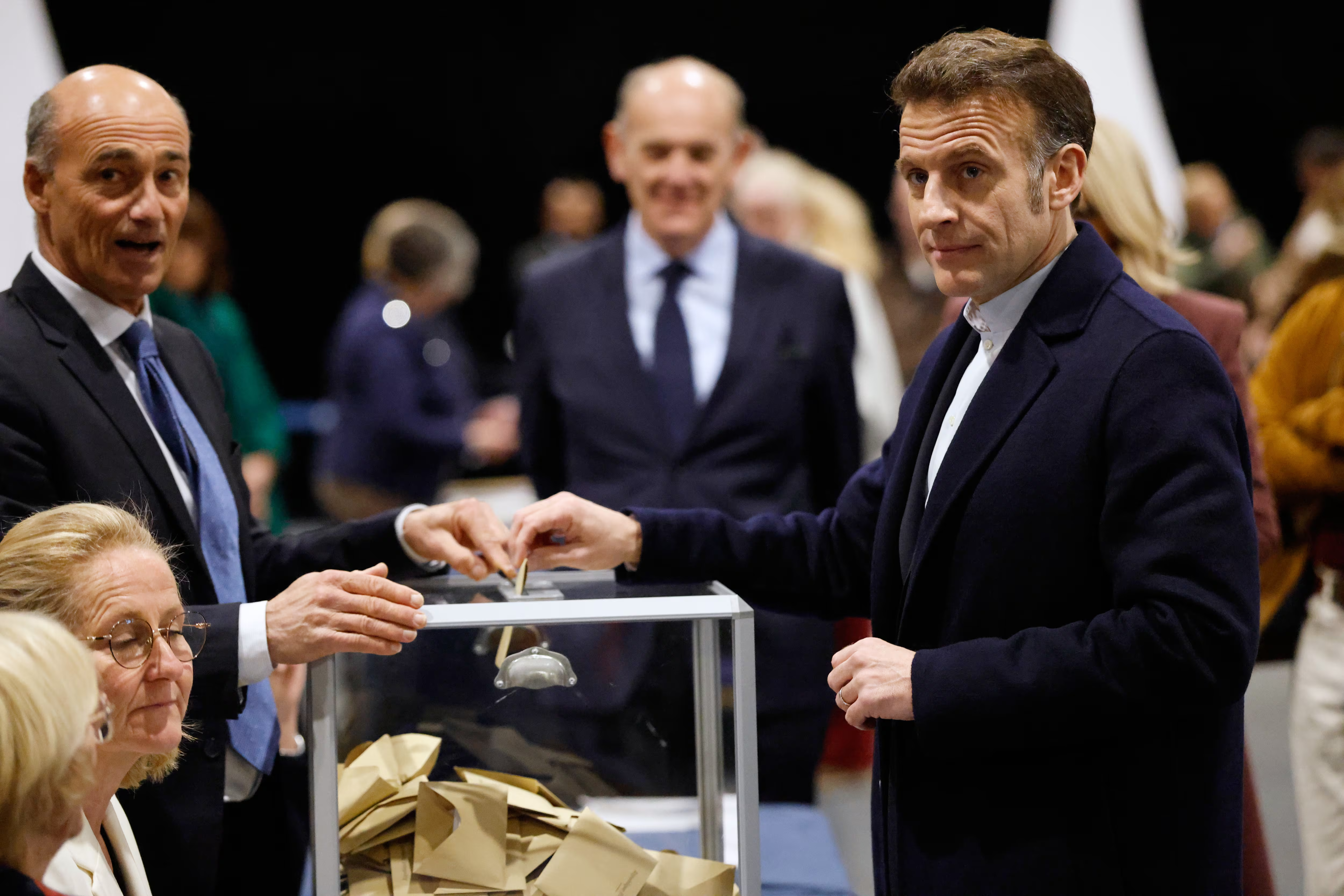
Projections show a strong showing by the far-right National Rally, but key cities like Paris and Marseille remain up for grabs ahead of the second round.
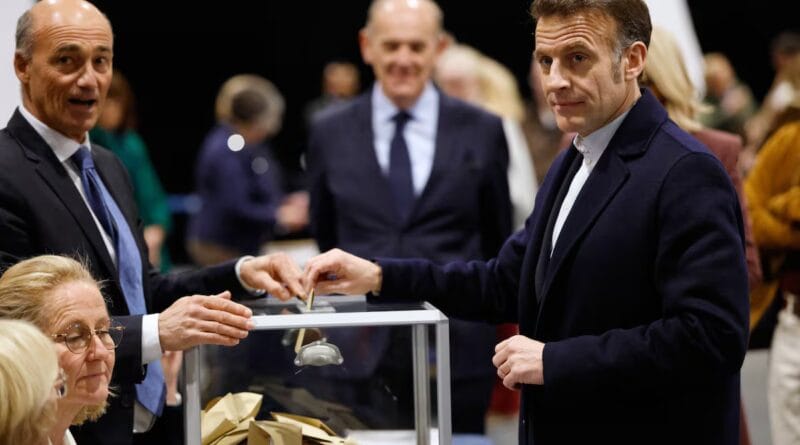
France has returned to the polls for municipal elections, a crucial chapter in a prolonged electoral sequence that began in June 2024 with legislative elections that blocked progress in Parliament. The first round of voting on Sunday, March 15, has set the stage for a fierce showdown in major cities, with results expected to remain uncertain until the second round on March 22. Early projections suggest that while the left has managed to hold firm in key urban areas, the far-right National Rally (RN) has made significant inroads, particularly in localities where the party has historically struggled to gain traction.
The Left Holds Strong in Major Cities
Despite growing opposition from the far-right, the left is holding its ground in France’s largest cities. In Paris, Émmanuel Grégoire, a leading figure in the progressive coalition and heir to outgoing Mayor Anne Hidalgo, has opened up a solid lead of more than ten points over conservative rival Rachida Dati. If these projections hold, Dati’s poor performance will force her to seek an alliance with the far-right in the second round.
In Marseille, the race is tighter, with the left-wing candidate facing a fierce challenge from the extreme right, with just a two-point margin separating them in the polls. Lyon presents another closely contested battleground, where the environmentalist Grégory Doucet is working to overcome early predictions and secure a spot in the second round against the right-wing challenger, Jean-Michel Aulas, the former president of Olympique Lyonnais.
“In numerous municipalities, and not only in the cities where we were the outgoing mayors, the National Rally wins from the first round. It is an immense victory for our movement!” — Marine Le Pen, leader of the National Rally.
National Rally’s Growing Presence
One of the most notable shifts in this election cycle is the rise of the National Rally, which has built a strong local presence, particularly in regions that have traditionally been hostile to the far-right. In Toulon, RN candidate Laure Lavalette has gained a significant lead, with early results putting her at 39.4%. In Nice, Éric Ciotti, a former member of the Republicans and ally of Marine Le Pen, is set to win with a ten-point advantage over his rival from the Horizons party.
This marks a pivotal moment for the RN, which has struggled in municipal elections in the past. Marine Le Pen’s party had seen setbacks in the 2020 elections, losing nearly half of its municipal seats. However, the RN has fielded a record number of candidates in this cycle, aiming to avoid a repeat of that failure. In Perpignan, the RN’s candidate, Louis Aliot, is poised to win re-election in the first round, with nearly 60% of the vote.
A Fragmented Left Faces Uncertainty
While the left maintains a foothold in the major cities, its unity has been fractured by the increasing strength of the far-right and the growing influence of Jean-Luc Mélenchon’s La France Insoumise (LFI). Mélenchon’s party, which has focused on territorial expansion in municipal elections for the first time, is expected to make significant gains. These results could provide LFI with crucial leverage in the second round, especially in cities like Marseille, Lyon, and Paris, where no candidate has secured an outright victory.
LFI’s spokesman, Manuel Bonpart, has called for a broad “anti-fascist list” in the second round to unite the left and stave off the extreme right. His party could prove pivotal in securing victories in key cities if they manage to form strategic alliances with other left-wing factions.
“Today everything is divided between two options: us or the extreme right,” said Bonpart, underlining the stark division between the left and far-right in this crucial electoral battle.
The Road to the Second Round
As the second round of municipal elections draws near, much will depend on the ability of various political factions to form alliances. Candidates who fail to meet the 10% threshold in the first round will be eliminated, but those with more than 5% may still form pacts with other groups. This has set the stage for intense negotiations, particularly as candidates such as Édouard Philippe, the former prime minister and current mayor of Le Havre, look to secure their positions ahead of the 2027 presidential election.
The next few days will be critical in determining how alliances take shape. With the left, right, and far-right all jockeying for position, the second round promises to be a high-stakes contest that will shape France’s political landscape for years to come.
What This Means:
This report highlights significant developments in the international landscape that could reshape diplomatic relations in the coming weeks.
World leaders are expected to respond to these developments in the coming days.
Stay tuned for more updates as this story continues to unfold.
Source: This article was originally published in another language by Internacional en EL PAÍS and has been translated and adapted for our global English-speaking audience. Read the original article here.