ALERT: The war in Iran, a political test for both the isolationist J. D. Vance and the interventionist Marco Rubio
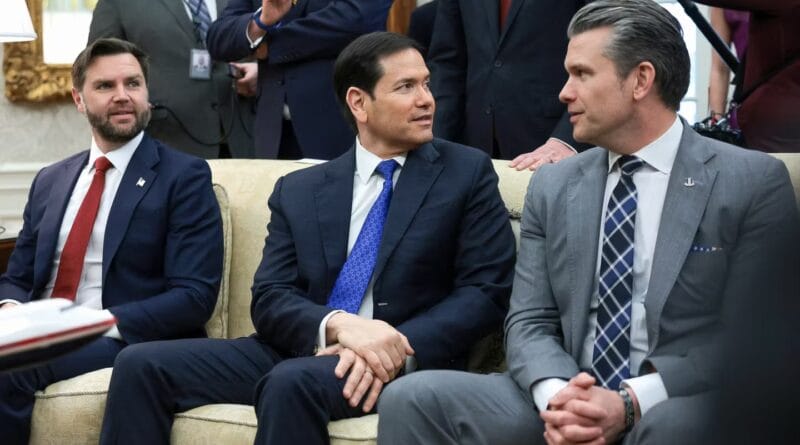
JD Vance and Marco Rubio’s differing approaches to the conflict with Iran highlight growing divisions in Washington’s foreign policy.
As tensions between the United States and Iran continue to escalate, the internal rift among American political leaders has become increasingly apparent. At the heart of the discord are two key figures in the Trumpist wing of the Republican Party: Vice President JD Vance and Secretary of State Marco Rubio. While both men are deeply entrenched in the Trumpian political landscape, their approaches to handling the ongoing confrontation with Iran diverge significantly, reflecting broader divisions within Washington’s foreign policy establishment.
Vance Treads Carefully Amidst Growing War Sentiment
JD Vance, the Vice President of the United States, has taken a cautious stance on the military confrontation with Iran, a position that has set him apart from many of his colleagues. Although Vance is no stranger to the combative rhetoric associated with Trump’s foreign policy, he has seemed notably reluctant to embrace what many perceive as an uncertain and potentially catastrophic military venture. Since taking office, Vance has largely avoided the aggressive posturing that has characterized some of his political allies. His caution comes as both sides of the political spectrum push for more decisive action against Iran, which has only added to the complexity of his position.
“We knew there would be Israeli action, we knew it would precipitate an attack [from Iran] against American forces, and we knew that if we did not preemptively target them before these attacks began, we would suffer more casualties,” Rubio said on March 2, defending his stance on preventive war.
For Vance, the prospect of escalating military conflict has proved difficult to navigate. He is not one to be easily swayed by the hawkish rhetoric often espoused by members of the far-right or even from within his own party, preferring a more restrained approach in this complex international situation.
Rubio’s Aggressive Stance Faces Backlash
In stark contrast to Vance’s measured position, Marco Rubio, Secretary of State and a longtime advocate of aggressive foreign policies, has embraced a far more bellicose strategy. On March 2, Rubio made headlines when he openly supported the idea of a preventive war against Iran. He justified this position by claiming that the United States knew Israeli actions against Iran would provoke an Iranian attack on American forces, and that a preemptive strike was necessary to avoid greater casualties.
Rubio’s comments, made in front of reporters at the U.S. Capitol, immediately sparked outrage among his critics, particularly those aligned with the MAGA (Make America Great Again) movement. Many conservatives were quick to express concerns about the United States being drawn into a conflict by Israeli actions, a move they considered reckless. Rubio’s vocal endorsement of military intervention did not sit well with the party’s base, who questioned the wisdom of entangling the U.S. in yet another unpredictable Middle Eastern conflict.
The backlash from within Rubio’s own political circle has raised questions about his long-term political strategy and the feasibility of his approach. While he remains a staunch supporter of military action against Iran, his comments reveal a deeper, more troubling divide within the Republican Party—one that underscores the growing disillusionment with interventionist policies, even among traditional hawks.
As the conflict between the U.S. and Iran continues to unfold, the divergent approaches of Vance and Rubio highlight the challenges facing the White House. While Vance represents a more cautious, risk-averse faction, Rubio is pushing for a more aggressive stance that could have far-reaching consequences for the U.S. and its allies. The rift between these two powerful figures signals that the United States’ foreign policy toward Iran may be shaped by internal political struggles, with no clear consensus on the path forward.
The Bigger Picture:
This report highlights significant developments in the international landscape that could reshape diplomatic relations in the coming weeks.
This is part of a broader trend that has been reshaping the geopolitical landscape in recent months.
We encourage our readers to follow this developing story for the latest information.
Source: This article was originally published in another language by International : Toute l’actualité sur Le Monde.fr. and has been translated and adapted for our global English-speaking audience. Read the original article here.