BREAKING: The United States torpedoes an Iranian warship in the Indian Ocean | International
In breaking news, the following story has emerged from the international scene.
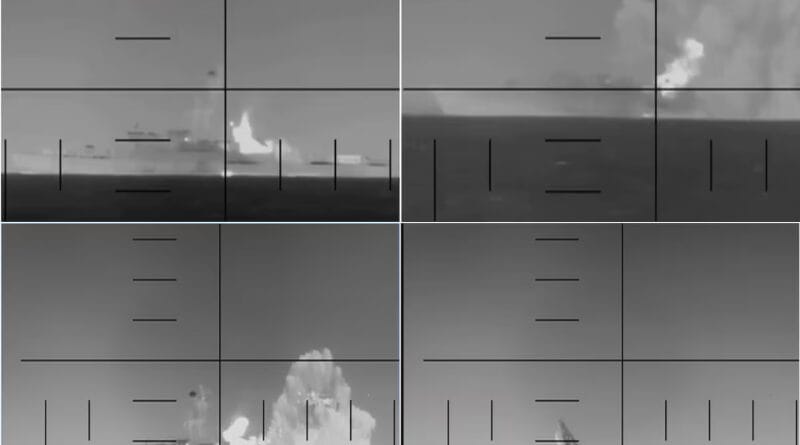
A United States submarine has sunk an Iranian warship in international waters in the Indian Ocean, far from the theater of operations of the offensive, as acknowledged by the Secretary of Defense, Pete Hegseth, this Wednesday at a press conference at the Pentagon. According to the senior official, US forces are on the verge of taking control of Iranian airspace and have already decimated that country’s naval force. “We are winning,” he assured. “Yesterday (this Tuesday) in the Indian Ocean, an American submarine sank an Iranian warship that was believed to be safe in international waters. We sank it with a torpedo. It was a silent death,” declared the head of the Pentagon, who noted that it was the “first sinking of an enemy ship with a torpedo since World War II” — an inaccurate statement: the Argentine cruiser General Belgrano was also sent to the bottom of the sea by the torpedoes of the British submarine Conqueror in the Falklands War in 1982. It would be the first ship sunk by a US submarine since the global conflict. General Dan Caine, Chief of the General Staff, has specified that the Iranian ship was hit by a single torpedo, of the Mark 48 type. “This is an incredible demonstration of the global reach of the United States to pursue, find and kill” at any point in the ocean, he added. Photo gallery The sinking of the ship, identified as the IRNS Dena, represents an extension of the confines of the military offensive that the United States and Israel launched against Iran last Saturday. Sri Lankan authorities had reported the sinking of the ship in international waters near their own early this Wednesday. According to Sri Lankan Foreign Minister Vijitha Herath, there were 180 people on board. Sri Lanka Navy spokesperson Buddhika Sampath said his force received a warning call from an Iranian ship, triggering a search and rescue operation involving ships and aircraft from the island. Upon reaching the point from where the warning had been issued, the rescue boats no longer saw any boat, only a fuel slick. At least 32 people could be rescued and are admitted to a hospital in the coastal city of Galle. Health personnel unload the bodies of the deceased Iranians on the warship ‘IRIS Dena’, after it sank after being attacked by a US submarine near the coast of Sri Lanka. Eranga Jayawardene (AP) At this Wednesday’s press conference, the Pentagon launched a triumphalist message about the progress of Operation Epic Fury, in which it claims to have hit more than 2,000 Iranian targets and sunk twenty Iranian ships. “In a few days, in less than a week, the two most powerful air forces in the world will have complete control of the Iranian skies, they will have no rival in that airspace. That means that we will fly all day, all night over Iran and we will find and destroy the missiles and the defense industrial base of the Iranian army. We will find and destroy the leaders and the military, we will fly over Tehran, over Iran, as long as we want, until we feel like it,” he declared. Hegseth. New wave of bombings A second wave of aerial bombardments will also soon begin to drop 250-kilogram and one-ton bombs against their targets, according to Hegseth. “As President Trump has said, bigger and more intense waves are coming,” he said. “We have just begun. We are accelerating, not slowing down.” In this new phase of the offensive, Caine added, US forces will go from attacking targets mainly on the coast of Iran to focus on the interior of the country, with ninety million inhabitants. US forces “will progressively move deeper into Iranian territory and establish additional freedom of maneuver for US forces,” the head of the US Joint Chiefs of Staff has promised. Caine has also claimed that, as a result of intense US and Israeli bombing, Iran has lost much of its own missile launch capacity. The number of projectiles with which this army has responded to the enemy offensive has fallen drastically since the first day of fighting, on Saturday. “Ballistic missile shots launched from the Iranian field of operations have decreased by 86% since the first day of fighting,” the military high command has revealed. That drop has precipitated in the last few hours. “There is a 23% decrease in the last 24 hours, and their one-way drone attacks have been reduced by 73%,” he noted.00:59Pete Hegseth announces sinking of Iranian submarineSecretary of Defense, Pete Hegseth (left), this Monday at a press conference in Washington.Photo: Ssgt. Madelyn Keech (CONTACT/Europa Press) | Video: EPVIn the days before the start of the war, information had circulated in the American press that pointed to Caine’s concern about the possible shortage of ammunition in the conflict, given that the United States sent a good part of its reserves to Israel during the offensive in Gaza and to Ukraine to respond to the Russian invasion. Those responsible for the Pentagon have assured in their press conference that the United States has more than enough reserves to function for the duration of this offensive, which the president, Donald Trump, has estimated at at least “four or five weeks” but has warned that it could extend beyond that period. “We are going to be the ones who set the tone and pace of this fight,” said a defiant Hegseth. “The only limits we have are President Trump’s desire to achieve specific goals for the American people.”
The Bigger Picture:
This development could have far-reaching consequences for global politics in the months ahead.
This is part of a broader trend that has been reshaping the geopolitical landscape in recent months.
Follow our coverage for real-time updates on this and other major global stories.
Source: This article was originally published in another language by Internacional en EL PAÍS and has been translated and adapted for our global English-speaking audience. Read the original article here.