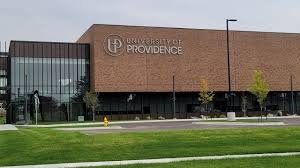
University of Providence: Historic Crisis in 2026
The University of Providence is a critical development that is causing significant Crisis across the higher education sector as the nearly century-old private Roman Catholic institution in Great Falls, Montana, formally announced plans to cease all operations at the end of the 2026-2027 academic year. Founded in 1932 by the Sisters of Providence and the Catholic Bishop of Great Falls, the university has stood as a educational pillar in North-Central Montana for almost 95 years. The announcement marks one of the most significant closures of a private liberal arts institution in the Northern Rockies in recent decades, sparking immediate concern among students, faculty, alumni, and local civic leaders.
The institutional closure reflects compounding headwinds facing small private colleges across North America. Declining birth rates following the 2008 global financial crisis, shifting student demographics, inflationary operational costs, and changes in post-secondary enrollment priorities have placed unprecedented fiscal strains on regional liberal arts colleges. Despite strategic shifts, online expanding initiatives, and corporate partnerships in nursing and healthcare education, financial sustainability proved unachievable over the long horizon.
Analyzing the University of Providence impact
Understanding the full footprint of this announcement requires evaluating both immediate community disruptions and systemic educational trends. The news regarding the closure of the University of Providence comes at a juncture when mid-sized and small private institutions nationwide are re-evaluating their fiscal viability. For decades, the university provided specialized degree programs in nursing, criminal justice, business administration, and liberal studies, serving as a primary provider of qualified healthcare professionals for regional medical networks.
According to coverage by the Associated Press, independent liberal arts colleges with small endowments have faced mounting pressure as tuition revenues contract. The decision to phase out academic programs through a structured teach-out plan through mid-2027 aims to ensure that currently enrolled upperclassmen can complete their degrees without transfer friction. Lowerclassmen and incoming cohorts, however, face complex decisions regarding academic credit transfers to regional public universities or alternative faith-based institutions.
The historical trajectory of the institution is deeply interwoven with Montana’s civic heritage. Originally chartered as Great Falls Normal College, the school underwent several name changes—becoming the College of Great Falls, then the University of Great Falls, and finally adopting the title of University of Providence in 2017 to align with its sponsoring health organization, Providence Health & Services. Throughout these transitions, the founding legacy of the University of Providence maintained a commitment to serving rural populations and non-traditional adult learners.
This institutional shift occurs alongside major global socio-religious adjustments, echoing how religious organisations manage institutional real estate and mission realignment in the modern era. Much like how international bodies evaluate organizational shifts during historic Catholic institutional challenges, Catholic higher education leadership in North America is grappling with diminishing religious vocations and shrinking traditional applicant pools.
Economic Ripples and Higher Education Consolidation
The operational wind-down of the University of Providence creates substantial economic fallout for the city of Great Falls. As one of the municipality’s core non-profit employers, the campus supports hundreds of administrative staff, faculty members, and local service providers. Economic analysts reporting for Reuters have frequently highlighted that university closures in rural metro areas carry disproportionate local consequences, impacting residential rental housing markets, commercial dining revenue, and municipal tax collection.
For current students enrolled at the University of Providence, administrators have committed to maintaining academic rigor and student services through the designated teach-out period ending in 2027. Academic advisors are establishing articulation agreements with partner institutions across the Pacific Northwest and Rocky Mountain regions to facilitate seamless degree completion paths. Nevertheless, academic departments face immediate challenges in maintaining faculty retention as personnel seek long-term stability prior to the final shutdown date.
The broader context of regional economic stabilization mirrors challenges seen internationally, where localized institutional stress triggers widespread regulatory and administrative responses. These dynamics resemble broader structural and legal crises where rapid organizational change demands robust oversight to protect public interest and workforce stability.
A Transforming Sector in the Post-2026 Era
As higher education analysts examine the university’s timeline, the situation emphasizes an acceleration in sector consolidation. As reported by the BBC, global higher education models are shifting dramatically toward cost-effective digital platforms and specialized vocational pathways, leaving traditional broad-curriculum private colleges vulnerable unless backed by billion-dollar endowments.
Civic leaders in Great Falls consider the University of Providence to have been far more than an educational provider; it was an anchor of community culture, athletic competition through the NAIA Frontier Conference, and regional arts programming. The loss of its athletic programs removes a major hub of collegiate sports competition in Montana, impacting regional rivalries and youth sports recruitment networks.
The preservation of institutional history will remain a priority during the multi-year closing process. Historians and university archivists are working to catalog institutional records, athletic honors, and religious artifacts. The preservation of these archives ensures that the century-long narrative of the institution is safeguarded for future generations, comparable to how political and social historians track long-term institutional legacies during periods of major transitional change.
Ultimately, the eventual shutdown of the University of Providence serves as a stark warning for small private colleges across the globe. As demographic realities redefine student recruitment and institutional funding, higher education leaders must navigate an increasingly unforgiving fiscal landscape while attempting to preserve their founding mission and community commitment.
Source: This article was originally reported by KRTV (via Google Trends) and independently adapted and contextualized for our international English-speaking audience. Read the original report here.
Pingback: GEV stock: Historic Power Surge in 2026
Pingback: Spain train crash: Historic rail crisis in 2026