WORLD NEWS: “They imitate techniques from China, Russia or Iran itself”
World News Update:
Governments, analysts, and media outlets are continuing to follow this situation closely as additional details become available.
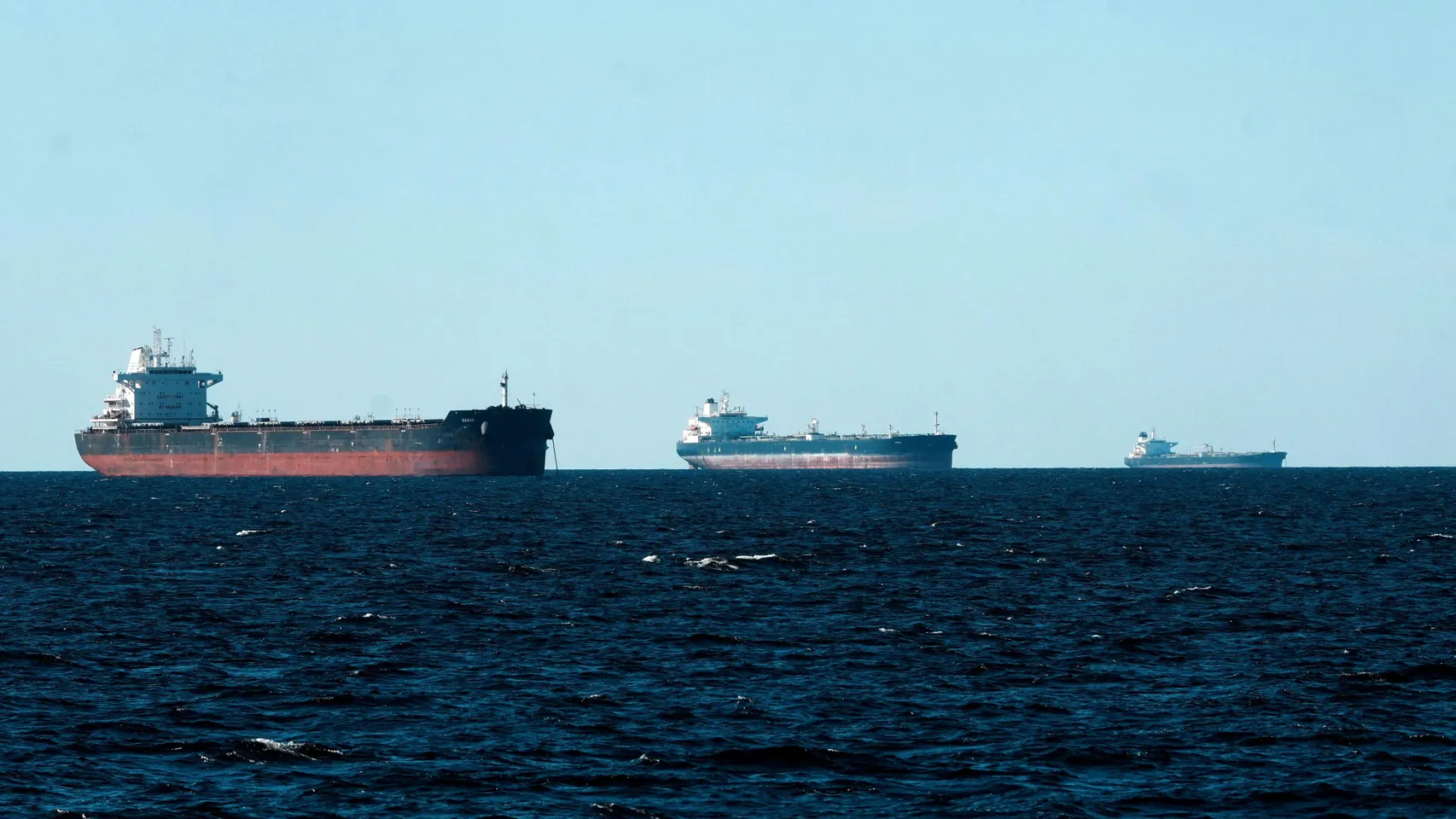
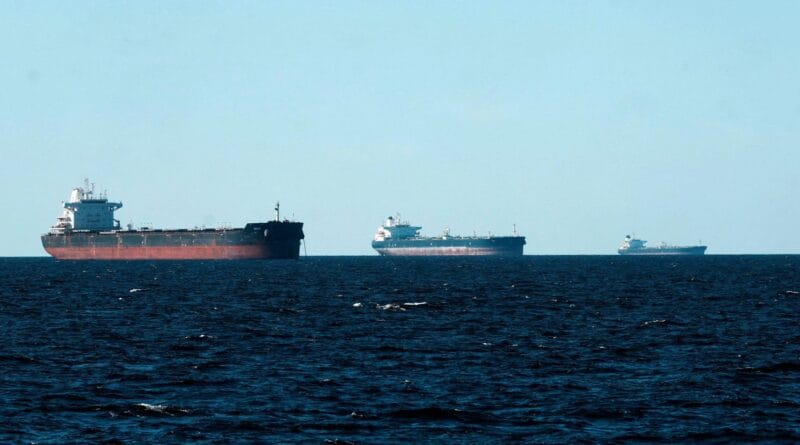
The US military has overseen dozens of clandestine transfers of oil from one ship to another to try to keep exports flowing in the Persian Gulf. This is a tactic copied from the ‘ghost fleets’ used by internationally sanctioned countries such as China, Russia or Iran itself, Reuters reports. The agency has been able to identify the specific points where oil transfers are carried out. According to their sources, the first is located off the coast of Fujairah, in the United Arab Emirates (UAE), and the other is located off the Omani port of Sahar. It began at the beginning of May and at least 92 vessels have been involved in the transfers. The Apache helicopter shot down by Iran on June 9 was participating in the mission providing surveillance for the exchange, according to the military sources consulted. Using satellite images, Reuters counted six pairs of tankers grouped in a small area off the port of Sahar on the day the Apache was shot down. The transfers are located in the Gulf of Oman, near the mouth of the Strait of Hormuz and on the boundary drawn by the Persian Gulf Strait Authority, created by Iran to manage maritime traffic. Ships that do not comply with their instructions risk being attacked with drones and missiles by the Islamic Revolutionary Guard Corps. Last weekend, according to the British maritime risk management group Vanguard, a “projectile of unknown origin” hit an oil tanker off the coast of Oman. The port of Fujairah in the UAE, as well as the oil tankers anchored there, have also been attacked in recent weeks. Ship-to-ship transfers, considered risky and inefficient, appear to be part of the Trump administration’s efforts to restore oil traffic, strangled since the beginning of Operation ‘Epic Fury’ by the ‘de facto’ closure of the Strait of Hormuz by Iran, and the blockade of Iranian ports ordered by the US. A satellite image of several of the paired oil tankers in the Gulf of Oman. Reuters A Reuters investigation published on May 20 revealed that Iran has established its own system to guide ships through the opposite side of the Strait, including checkpoints on islands, diplomatic agreements and, sometimes, the collection of fees. Staggered departures and guided routes American transfer operations are overseen by the US military. The tankers sail to a meeting point at the entrance to the strait, and stagger the crossing to maintain a distance of between 3,000 and 4,000 meters. Their transponders are disconnected and their lights off, according to sources. “The Americans are obviously watching you all the time,” confesses a source familiar with the operation, as the ships pass each waypoint. After leaving Iran’s control zone, the tankers dock with the receiving ships, which are super crude oil carriers (VLCC). The transfer takes between 24 and 40 hours to complete. The empty vessels then return through the strait and the newly loaded VLCCs continue towards their destination. But the operation is risky. “There is simply no telling when Iran might decide to use drones or fast attack boats to prevent even those ships from transiting the strait,” explains Noam Raydan, an analyst at the Washington Institute specializing in maritime risks. The technique of ship-to-ship transfer has been used by Iran for years to avoid sanctions by hiding the origin of the oil. The Iranians usually operate with only a couple of ships, to avoid detection. Furthermore, its pre-war exports were relatively small. The US-led operation, which involves massive transfers, offers Gulf producers better protection from Iranian retaliatory attacks so they can move oil products, crude oil and hydrocarbons to international buyers. Based on the images, Reuters estimated that at least 90 million barrels of crude oil and oil products may have moved through the strait in this way since early May. The volumes, based on the carrying capacity of tankers, remain small compared to the pre-war average of about 20 million barrels a day. “It is ironic that the United States is imitating the playbook of China, Russia, North Korea and even Iran, whose so-called ‘ghost fleets’ pioneered these techniques precisely to evade US and UN sanctions,” Michael Froman, president of the Council on Foreign Relations, wrote on Friday. Satellite image of two oil tankers docked in parallel off the coast of Sohar in Oman. Distribution Airbus DS/Reuters “A temporary and exceptional solution” Several international operators are involved in these maneuvers. One of them, Dynacom Tankers Management, based in Greece, has cited the need to “find creative ways” to continue transporting oil through the strait since the war began on February 28. “Freedom of navigation is essential and no one can impose tolls or any other fees,” George Procopiou, founder of Dynacom, said at a shipping conference in Athens on June 1. “We are here to serve, and Greece has a tradition of breaking blockades since ancient times,” he said. “I don’t want to go into more detail, but I think the hints are enough to understand what I mean.” However, other sources warn, the practice of turning off transponders entails a greater risk of collision between ships, which travel at night with their lights off at speeds that do not allow easy maneuvering. Operators who wish to access the system must undergo a compliance review process before being assigned transit windows. It is processed through the US Navy’s Naval Cooperation and Shipping Guidance office in Bahrain. Two preliminary compliance documents obtained by Reuters required operators to provide complete geospatial tracking histories, full declaration of beneficial ownership, cargo declaration and willingness to allow cargo analysis. If approved, participating vessels are assigned transit windows and remain in contact with the US military office in Bahrain throughout the voyage. Exports from the Emirates account for a substantial part of the operation, according to shipping records seen by Reuters. Sources say the UAE’s state-owned national oil company, ADNOC, has been one of the most active participants in the US-led transfers. The Kuwait Oil Tanker Company has also been actively involved in the transfers. Some 2.3 million barrels of crude oil were pumped from one of its ships off the coast of Sahar on June 6, one of its busiest days. “I don’t see a permanent solution to all this,” Raydan said. “This is a temporary solution for exceptional times.”
What Happens Next:
The situation could have broader implications for regional stability, international relations, and global markets.
Additional reactions from governments and international institutions are expected as the situation evolves.
Follow our coverage for more global news and international analysis.
Source: This article was originally published by El Español – Home and adapted for our international English-speaking audience.
Read the original article here.