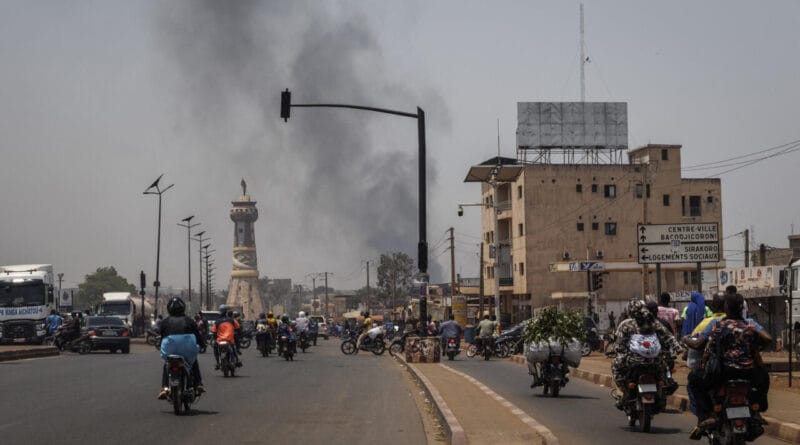
LATEST: Mali: Russian paramilitaries and army withdraw from Kidal, conquered by Tuareg separatist rebels
New information reveals that the following story has emerged from the international scene.
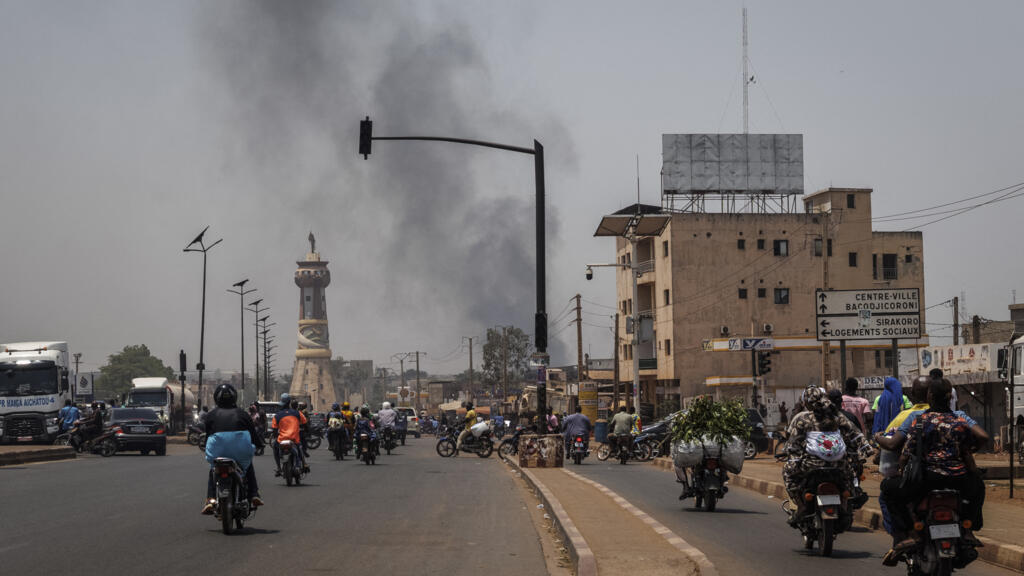
The Russian-controlled paramilitary group Africa Corps announced its withdrawal “along with Malian Army personnel” from the northern city of Kidal, according to a statement posted on its Telegram account on Monday, April 27. A day before, he had agreed on a peaceful withdrawal with the Tuareg separatist rebels, who together with jihadist groups have had the country plunged into terror since Saturday with multiple attacks near the capital and in cities such as Kati, Gao, Mopti, Sévaré and Kidal itself. “The wounded soldiers and heavy equipment were evacuated first. The personnel continue to carry out their assigned combat mission. The situation in the Republic of Mali remains difficult,” explained the Africa Corps, after days of siege by separatist militiamen. The Kremlin’s paramilitary body highlighted that the decision to withdraw from Kidal was agreed together with the Malian leadership. In a statement broadcast on state television late Sunday, the head of the Malian armed forces, General Oumar Diarra, also confirmed that the army had abandoned the city and that its forces were repositioning in Anefis, a town about 100 kilometers south of Kidal. Read alsoThe Malian Army denounces “terrorist” attacks: what is happening in the country? Mali has been governed since 2020 by a military junta under a climate of instability and prolonged violence, driven by the secessionist Azawad Liberation Front (FLA) —dominated by the Tuareg— and the jihadist Group in Support of Islam and Muslims (JNIM) —a subsidiary of Al Qaeda in the Sahel. “Kidal has been declared free,” celebrated FLA spokesperson Mohamed El Maouloud Ramadan, who urged Russia to “reconsider its support for the military junta,” stating that its “actions have contributed to the suffering of the civilian population.” A revealed cooperation and a missing leader The Azawad Liberation Front (FLA) and the jihadist group JNIM launched an offensive against government forces in the north and center of the country on Saturday, the first joint operation announced between both militias, which has led, among other things, to the conquest of the strategic city of Kidal. Having cooperated informally for years, jihadists and separatists are now speaking openly about their alliance for the first time. To display this YouTube content, you must allow advertising and audience measurement cookies. Accept Manage my options An extension in your browser appears to be blocking the video player from loading. In order to view this content, you must disable it on this site. Try again © France 24 In addition to the attacks in multiple cities, the JNIM murdered the Minister of Defense in a car bomb attack on the outskirts of Bamako, as confirmed on Sunday by official sources and the family of the official, who was one of the architects of the alliance with Moscow. As if that were not enough, the JNIM assured this Monday in a statement that “in an unprecedented act and by the grace of God, members of the Malian Army in the Tessit barracks, in the Gao region, both officers and soldiers, have surrendered to the mujahideen of the JNIM in exchange for the guarantee of their safety and a safe withdrawal.” In the absence of official confirmation from the army, the loss of this city in eastern Mali would demonstrate that the insurgent alliance’s offensive is still in full progress in the interior of the country. The militia added that it would allow Malian forces in Tessit to surrender their weapons and withdraw safely, in a statement identical to that which anticipated the withdrawal from Kidal. “We have called on all members of the Malian Army in all remaining camps and barracks in the remaining regions to follow the example of their colleagues in Tessit,” the text reads. The leader of Mali’s military junta, Assimi Goita, staged a coup in 2020 and has not been seen since attacks were launched on junta positions in the early hours of Saturday. © Pavel Bednyakov / POOL/AFP Despite this, Mali’s military government maintains that the situation is under control, although its boss, General Assimi Goita, has not been seen in public or made any statement since Saturday, when explosions and shootings began at the military garrison where he resides. This disappearance has raised multiple questions about his fate and state of health. From an uncertain location, the junta leader declared two days of national mourning across the country starting Monday in tribute to the slain defense minister. During Monday morning, no serious disturbances to public order were reported in the capital. Global concern The loss of territorial control in Mali is an issue that worries the region, since with the fall of Kidal the government forces lose a point of projection towards other towns in the north and the Algerian border, while the armed groups gain strategic depth and freedom of movement. Even some analysts cited by the French-speaking press warn of the possibility of violence spilling over into nearby countries such as Burkina Faso or Niger, also hit by the activity of jihadist groups. To display this YouTube content, you must allow advertising and audience measurement cookies. Accept Manage my options An extension in your browser appears to be blocking the video player from loading. In order to view this content, you must disable it on this site. Retry Clashes in Kidal between rebels and Russian-backed troops © France 24 The Economic Community of West African States (ECOWAS) condemned the attacks carried out on Saturday in Mali and called on “all States, security forces, regional mechanisms and populations of West Africa to unite and mobilize in a coordinated effort to combat this scourge.” Ghana seconded this invitation with a statement in which it expressed “concern” about the “coordinated terrorist attacks” in Mali, as well as “the escalation of the security situation in the Sahel region.” At the same time, the European spokesperson for Foreign Affairs of the European Union, Anouar El Anouni, published a statement to “strongly” condemn the attacks in Mali and express solidarity “with the families of the victims and the national authorities.” A blow to Russia’s image? The Africa Corps inherited the Russian operations in the Sahel from the defunct Wagner group, after the death of Wagner’s leader, Yevgeny Prigozhin, in 2023. Since then, it has collaborated with the Malian government to combat jihadist groups in the area. The duo claimed to have “more than doubled” the territory under government control compared to the stage of presence of French and UN troops. A Malian soldier stands next to a truck during a patrol after the attack on Mali’s main military base, Kati, on the outskirts of the capital, Bamako, on April 27, 2026. © Stringer – Reuters In fact, that alliance managed to regain control of Kidal in 2023, a stronghold of the Tuareg uprising. But, in the same way that this setback for the rebels was translated as a victory for the State of Mali and the Russians, the retaking of the city announced by the Tuareg has been interpreted as a blow of credibility for the alliance between Bamako and Moscow. Following the military coups, the military governing boards of Mali, Niger and Burkina Faso turned to Russia for help fighting Islamic militants, rather than their Western allies. Read alsoFrance and its Western allies confirm the military withdrawal from Mali The last days of violence in Mali are part of a panorama of growing insecurity in the region fueled by the empowerment of illegal armed groups. Even government forces have also been accused of murdering civilians suspected of collaborating with such groups. With information from AFP, Reuters and AP
The Bigger Picture:
This development could have far-reaching consequences for global politics in the months ahead.
This is part of a broader trend that has been reshaping the geopolitical landscape in recent months.
Stay tuned for more updates as this story continues to unfold.
Source: This article was originally published in another language by France 24 – Noticias y actualidad internacional en vivo and has been translated and adapted for our global English-speaking audience. Read the original article here.