UPDATE: Trump makes 15 demands on Iran to stop war as he builds up troops around the Strait of Hormuz
According to recent reports, the following story has emerged from the international scene.
Washington moves another incoherent chip after almost a month of war in Iran. US President Donald Trump has sent Tehran a 15-point plan — 15 demands — to discuss during a month-long ceasefire, with the aim of ending the war in the Middle East.
The tenant of the White House assures that Iran wants to reach a diplomatic agreement and, he says, negotiations have already begun, from which it has obtained a “very large gift” related to the Strait of Hormuz. For its part, Tehran denies that such talks took place.
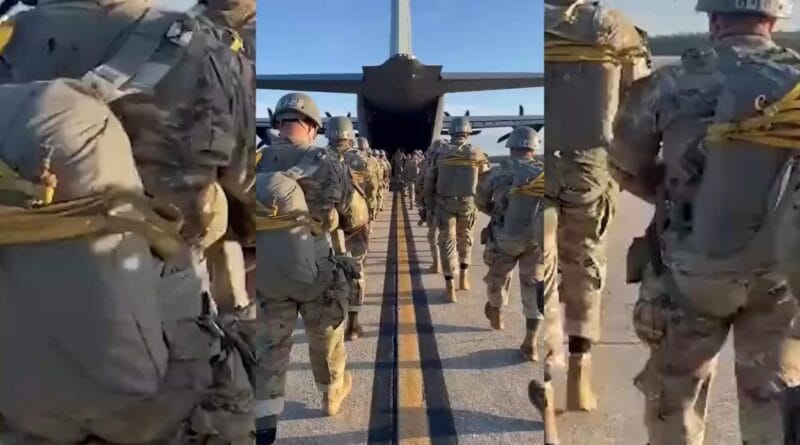
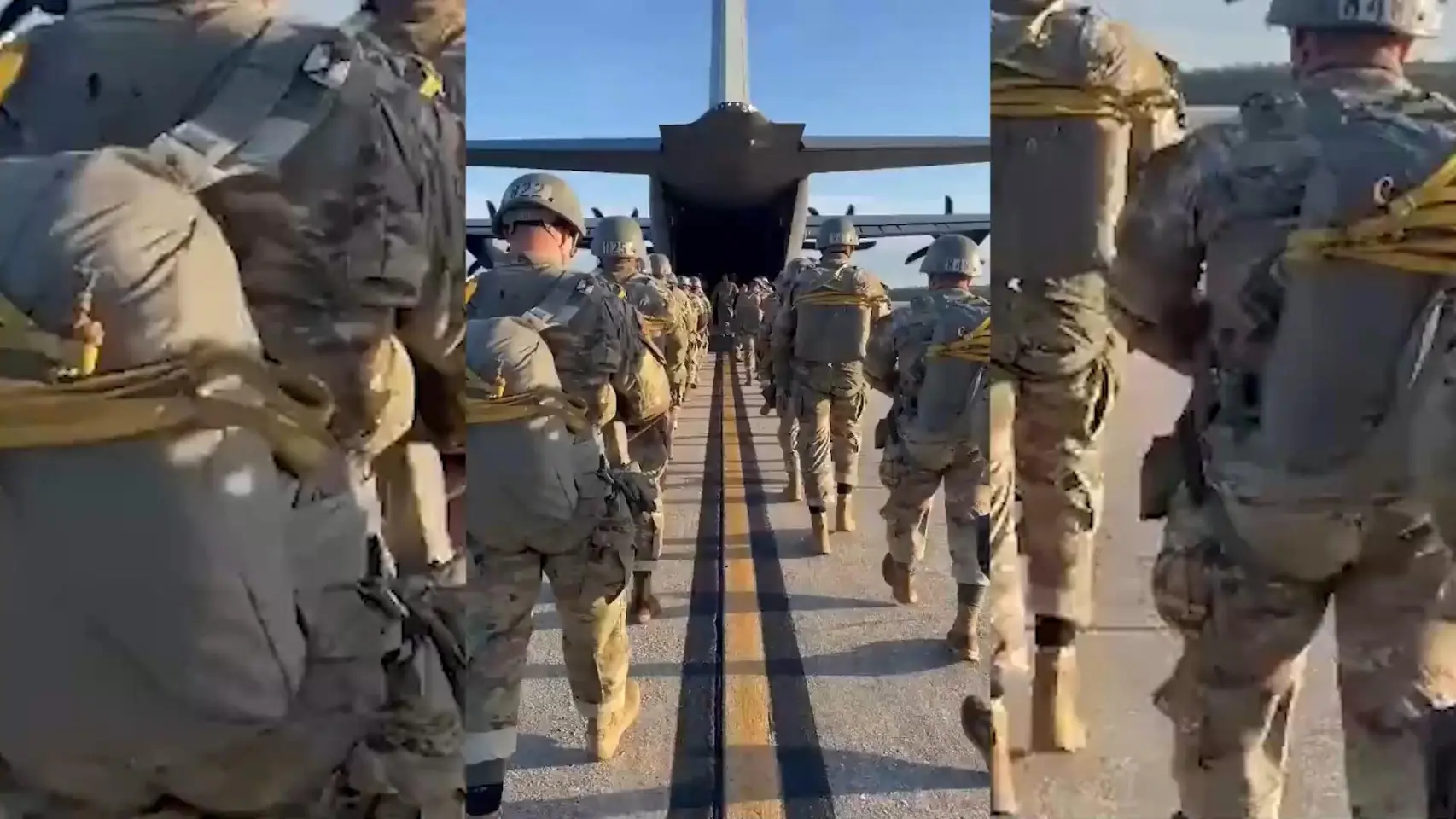
Meanwhile, the Republican continues to increase the military deployment around the oil enclave — already reopened for those ships that Iran considers “non-hostile” — where the Pentagon is going to send nearly 3,000 soldiers from the 82nd Airborne Division, among other reinforcements.
Although Trump seems to be escalating the threat, he already has a plan in mind to reach a peace pact, similar to those that opened a way out of the conflicts in Gaza and Lebanon. In these cases, a framework agreement was reached, the details of which were subsequently discussed.
The 15 points of the peace plan — of which only 14 have emerged — that the Trump Administration has sent to Iran are divided into demands and benefits. According to the Israeli television channel Channel 12 and The New York Times, the US proposes that they be discussed for a month, in which attacks by all parties would cease.
Among the demands are: the dismantlement of the entire Iranian nuclear program, the opening of the Strait of Hormuz, and the end of economic and military support to allied extremist groups in the Middle East. In exchange, Washington offers Tehran the lifting of sanctions and the creation of a civil nuclear program under its supervision.
The points of Trump’s plan:
- Iran must dismantle its current nuclear capabilities.
- Iran must commit to never developing nuclear weapons.
- There will be no uranium enrichment on Iranian territory.
- Iran will have to hand over its stockpile of around 450 kg of 60% enriched uranium to the International Atomic Energy Agency (IAEA) in the near future, according to a schedule to be agreed upon later.
- The nuclear facilities in Natanz, Isfahan, and Fordo must be dismantled.
- The IAEA, the UN nuclear watchdog, must have full access, transparency, and oversight inside Iran.
- Iran must abandon its “paradigm” as a regional ally.
- Iran must cease funding, directing, and arming its regional allies.
- The Strait of Hormuz must remain open and function as a free shipping corridor.
- Iran’s missile program should be limited in both range and quantity, with specific thresholds to be determined at a later stage.
- Any future use of missiles would be limited to self-defense.
- Iran would obtain the complete lifting of the sanctions imposed by the international community.
- The United States would help Iran boost its civil nuclear program, including generating electricity at the Bushehr nuclear plant.
- The so-called “automatic reset” mechanism, which allows the automatic reimposition of sanctions if Iran does not comply, would be eliminated.
Anonymous sources cited by The New York Times (officials familiar with the diplomatic efforts) have indicated that the plan was channeled through Pakistan, after its Prime Minister, Shehbaz Sharif, declared that he was willing to host talks. According to the American newspaper, the head of the Pakistani Army, Syed Asim Munir, plays a key role as a channel of communication between the parties.
However, it is currently unclear to what extent Tehran has considered the document or whether it has Israel’s backing. A Pakistani government source told Reuters this Tuesday that there are talks in which there is discussion of holding a meeting, that these are very advanced, and that, if it comes to fruition (which is unlikely), it would be held within a week.
Direct negotiations
Trump assures that his Government has maintained several “productive” communications with Tehran, so the US is making progress in its efforts to negotiate an end to the war with Iran. “We are in negotiations right now. The other party wants to close an agreement. And who wouldn’t want to, if you were them,” he expressed this Tuesday.
The Republican has stated that the Iranian representatives with whom Washington is talking “have already agreed that they will never have a nuclear weapon,” and, in addition, he had made a valuable concession related to non-nuclear energy and the Strait of Hormuz, without giving further details.
Later, Iran’s mission to the UN reported on its X profile that “non-hostile” ships, that do not participate in or support attacks on Iran, can transit Hormuz. Non-hostile vessels, including those belonging to or associated with other States, may — provided that they neither participate in nor support acts of aggression against Iran and fully comply with the declared safety and security regulations — benefit from safe passage through the… — IRIRAN Mission to UN, NY (@Iran_UN) March 24, 2026.
Likewise, the Republican president has insisted on the 25th day of the war that there is already a regime change: he has stressed that, after killing several senior figures — among them Supreme Leader Ali Khamenei — the current Iranian representatives “are very different compared to the ones we started negotiating with and who created all these problems.” Although, he points out, he doesn’t trust them.
In these conversations, in addition to his usual envoys (his friend Steve Witkoff and his son-in-law, Jared Kushner), Marco Rubio, the Secretary of State, and JD Vance, the country’s vice president, are also involved. According to CNN, Tehran has warned Trump that it will not negotiate with Witkoff or Kushner, but only with JD Vance: the vice president was the most reluctant of the Administration to participate in the joint offensive with Israel on February 28.
Despite this, Iran has denied on several occasions that there have been any types of direct talks, and assures that it is Washington that has sought to contact Tehran. The influential speaker of the Iranian Parliament, Mohammad Baqer Qalibaf, described Trump’s claims as “fake news” on Monday.
It should be remembered that the bombings began during a round of dialogue on the Iranian nuclear program at the end of February. Then, the US argued that the Islamic Republic posed a direct and imminent threat in this regard. However, several experts have raised doubts about how close Tehran was to developing an atomic bomb, while the White House’s reasoning has been confusing and even contradictory. Meanwhile, Israel remains silent in this attempt to end a conflict that is putting the world economy in check and has already cost the lives of more than a thousand people.
Contradictory actions in 24 hours
While the US president is proud and enthusiastic about the progress in his plan to reduce the escalation of the war, the attacks continue, and the Pentagon accelerates pressure on the territory by sending more troops, despite the fact that it already has nearly 50,000 deployed in the region.
On Friday, the amphibious assault ship USS Tripoli, with 2,500 Marines on board, will arrive in the Gulf of Oman, the entrance to the Persian Gulf through the Strait of Hormuz, escorted by the cruiser USS New Orleans. This will provide Osprey helicopters, amphibious vehicles, and F-35 Lightning II and AV-8 Harrier fighters.
Also arriving in the coming days are 3,000 paratroopers from the 82nd Airborne Division, capable of deploying as a Rapid Response Force. In addition, in the last few hours, the US has also mobilized troops from the Delta Force, the Navy SEALs, Army Rangers, and the 5th Airborne Forces Group, among other reinforcements.
Analysis and Perspective:
Understanding these events is crucial for anyone following international affairs closely.
As the situation continues to evolve, analysts are closely watching for further developments.
Follow our coverage for real-time updates on this and other major global stories.
Source: This article was originally published in another language by El Español – Home and has been translated and adapted for our global English-speaking audience. Read the original article here.