ALERT: China advises Tehran to “negotiate” with the United States and Israel
New information reveals that the following story has emerged from the international scene.

China no longer wants to hear the guns talk in the Middle East — between, on the one hand, the United States and Israel, and, on the other, Iran. Beijing is, in fact, banking on the relaunch of diplomacy, while Donald Trump, at the same time, seems since Monday to be moving towards de-escalation.
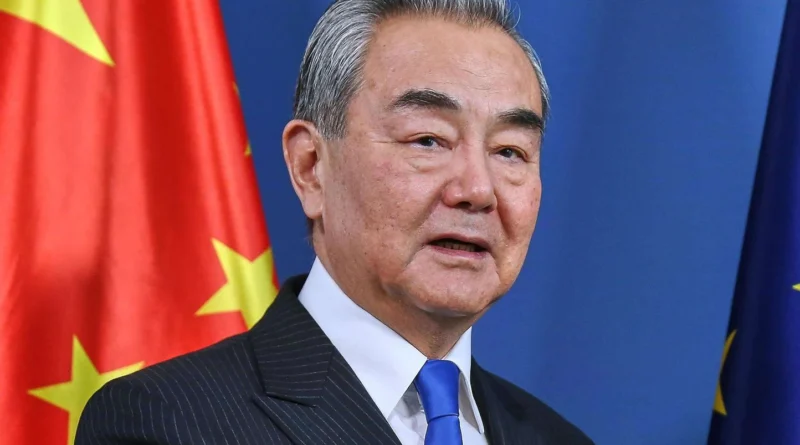
Beijing sent this message to Tehran on Tuesday. The Chinese Minister of Foreign Affairs, Wang Yi, affirmed that “it is better to negotiate than to confront,” during a telephone call with his Iranian counterpart, Abbas Araghchi. “We hope that all parties will seize every opportunity that arises to begin peace talks as quickly as possible,” added Wang Yi, according to a statement from Chinese diplomacy, specifying that the call took place at the request of the Iranian side.
Beijing opposes strikes against Gulf countries
Abbas Araghchi, for his part, declared to the Chinese minister that “the Iranian side is determined to achieve a complete end to the war, and not just a temporary ceasefire.” He also added that ships could “safely pass through” the Strait of Hormuz, vital for global hydrocarbon trade, except for those belonging to “countries currently engaged in war.”
The Iranian Minister of Foreign Affairs also took the opportunity to thank China for the humanitarian aid provided. China is an important partner of Iran but reiterated that it “does not condone” Tehran’s strikes against Gulf States hosting American military bases and called for a ceasefire.
Trump postpones his visit to China
This telephone exchange took place while a tenuous hope is emerging on possible negotiations between Tehran and Washington. Donald Trump says his administration is speaking with an unidentified “senior leader,” and has given itself five days to make progress before resuming bombing.
But Mohammad Bagher Ghalibaf, the speaker of the Iranian Parliament, presented by the news site Axios as the interlocutor, forcefully denied the existence of discussions, while the conflict has entered its fourth week and paralyzes part of the global transport of hydrocarbons.
The American president was also due to go to Beijing in March, but he delayed this trip, citing the need to stay in the United States due to the ongoing war.
The Bigger Picture:
Understanding these events is crucial for anyone following international affairs closely.
This is part of a broader trend that has been reshaping the geopolitical landscape in recent months.
Stay tuned for more updates as this story continues to unfold.
Source: This article was originally published in another language by 20Minutes – Actu Monde and has been translated and adapted for our global English-speaking audience. Read the original article here.