ALERT: EU leaders now say they will help reopen the Strait of Hormuz but only “when the conditions are right”
According to recent reports, the following story has emerged from the international scene.
EU Leaders Move to De-escalate Hormuz Tensions Amid Trump’s Demands for Support
Europe’s Conditional Support for Hormuz Reopening: A Diplomatic Balancing Act
March 20, 2026, Brussels
In a dramatic attempt to address Donald Trump’s growing frustrations, the European Union heads of state and government have assured the United States that they are willing to assist in reopening the critical Strait of Hormuz, which handles nearly 20% of the world’s oil. However, the EU’s support comes with significant conditions.
The European leaders made it clear during a European Council meeting in Brussels that while they are prepared to engage diplomatically, they will not be drawn into military conflict with Iran. Their offer to assist in ensuring freedom of navigation through the strait is contingent upon military hostilities ceasing.
“The European Council welcomes the increased efforts announced by Member States, including through greater coordination with partners in the region, to ensure freedom of navigation in the Strait of Hormuz, once conditions are met,” the leaders stated in a last-minute addition to their summit conclusions.
EU Leaders Address Trump’s Ultimatum: No Military Involvement, For Now
Trump had previously threatened to withdraw the U.S. from NATO if European allies failed to support his stance on the Hormuz crisis. Despite these pressures, the EU is firm on its stance. The European Council explicitly stated that it has no intention of launching military interventions. Instead, EU leaders are focusing on providing support once a post-conflict phase is in place, with the goal of ensuring maritime security in the region.
“No one is thinking about a military mission to force the unblocking of the Strait of Hormuz. What we are considering is – when the conditions are met, reasonably in a post-conflict phase – what contributions we can offer to defend freedom of navigation,” explained Giorgia Meloni, Italy’s Prime Minister.
A joint statement issued by the United Kingdom, France, Germany, Italy, the Netherlands, and Japan echoed this sentiment. The statement confirmed their readiness to contribute diplomatically to the stability of the region but reaffirmed that military intervention would not be on the table.
Spain and Poland Stand Apart: Strong Opposition to the War
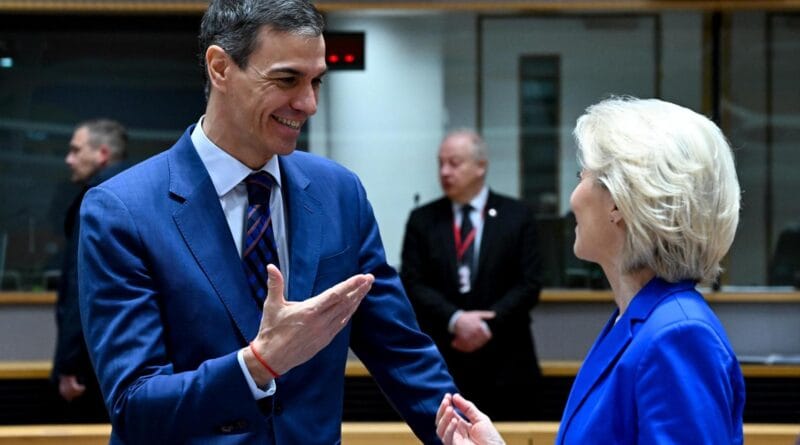
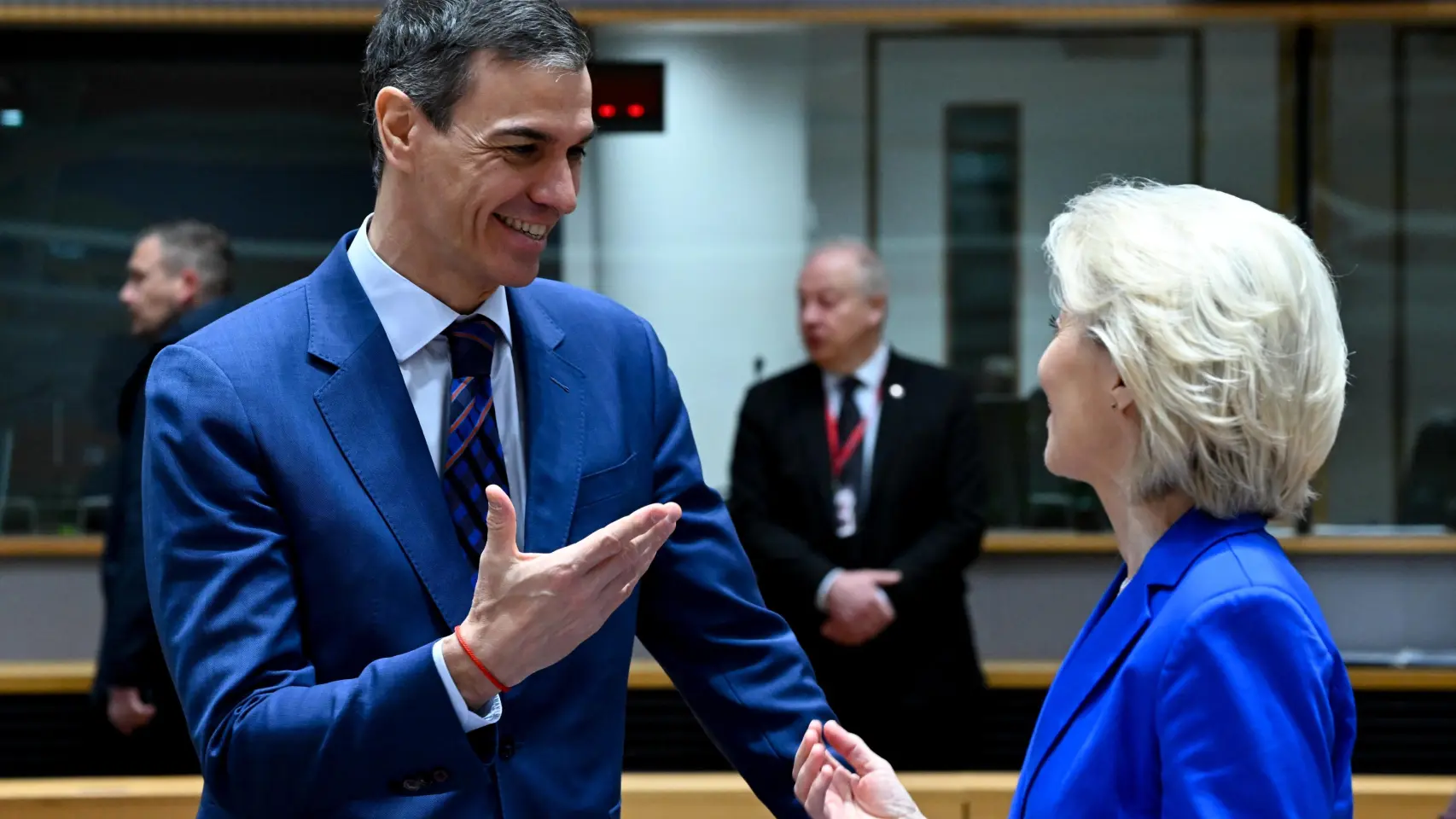
Among the EU leaders, Spain‘s President Pedro Sánchez has been vocal in his opposition to the Iran war, which he condemns as “illegal.” He also emphasized the war’s devastating impact on civilians and refugees. However, Spain did not sign the joint European statement on the Strait of Hormuz, standing in stark contrast to the majority of EU members.
“We are against this war because it is illegal, there is no reason to justify it, and it is causing great damage to civilian victims and refugees,” Sánchez said as he arrived for the summit in Brussels.
Poland also refrained from signing the statement, reflecting the divided perspectives on the EU’s role in the ongoing conflict. Despite the clear differences, European leaders were unified in calling for de-escalation and respect for international law.
“Member states have no appetite to get involved in this war,” said Kaja Kallas, Estonia’s Prime Minister and head of EU diplomacy. “I have not heard anyone (in the European Council) who has indicated their willingness to enter into this conflict: on the contrary.”
Condemnation of Iran’s Attacks, But a Call for Diplomatic Efforts
While the EU leaders condemned Iran’s indiscriminate military attacks on regional countries, they stressed that their focus is on diplomatic solutions. European leaders made it clear that they strongly support efforts to reduce tensions and prevent Iran from acquiring a nuclear weapon while ensuring its ballistic missile activities are curbed.
The European Council reaffirmed its commitment to contributing to all diplomatic efforts aimed at a peaceful and lasting solution, which would ultimately lead to the cessation of hostilities in the region.
“We want to see the end of this war. We clearly see the chaos it is causing in the Middle East, but also the repercussions it has for the rest of the world,” Kallas added.
Meanwhile, French President Emmanuel Macron reiterated the EU’s stance, stating, “Our position, which consists of defending international law, acting as reliable partners for our allies, and helping de-escalation and freedom of navigation, is a fair, proportionate position and is the best we can do.”
EU Calls for Immediate Ceasefire and a Moratorium on Attacks
As global energy prices continue to spike, with oil and gas costs rising due to the conflict, EU leaders are urging an immediate moratorium on attacks against energy and water facilities. They are seeking to avoid further economic instability that could exacerbate the rising costs of gas and oil.
The EU has called on the European Commission to monitor the impact of the Iran conflict on energy security, supply chains, and migration. They also urge for the development of contingency plans to prevent further economic and humanitarian crises.
“Although the conflict has not resulted in immediate migration flows towards the EU, the European Council underlines the importance of maintaining a high level of vigilance,” the leaders said in their statement.
The EU is determined to prevent a repeat of the 2015 migration crisis, signaling its readiness to use all available diplomatic and operational tools to manage potential migratory flows that could result from the ongoing conflict.
Europe’s Stance: Diplomacy First, Military Action Not an Option
The European Union, while acknowledging the immense pressure from the United States and the volatility of the situation, has drawn a clear line: diplomatic solutions and peaceful engagement are the way forward. Military escalation in the region is not an option, and any future action will only be considered once hostilities cease and conditions for peace have been met.
With energy security at the forefront of concerns and global oil prices continuing to rise, the EU’s role as a stabilizing force in the region remains uncertain. However, European leaders are committed to pursuing diplomatic measures to end the conflict, all while safeguarding their nations from the ripple effects of a war that has already disrupted the global order.
“We are ready to contribute to all diplomatic efforts to reduce tensions and achieve a lasting solution that puts an end to hostilities,” the EU declared, reaffirming its commitment to peace and stability.
The Bigger Picture:
Experts suggest this event marks a turning point that may influence policy decisions worldwide.
As the situation continues to evolve, analysts are closely watching for further developments.
We encourage our readers to follow this developing story for the latest information.
Source: This article was originally published in another language by El Español – Home and has been translated and adapted for our global English-speaking audience. Read the original article here.