ormer French president challenges his conviction for illicit association linked to illegal funding of his 2007 election campaign.
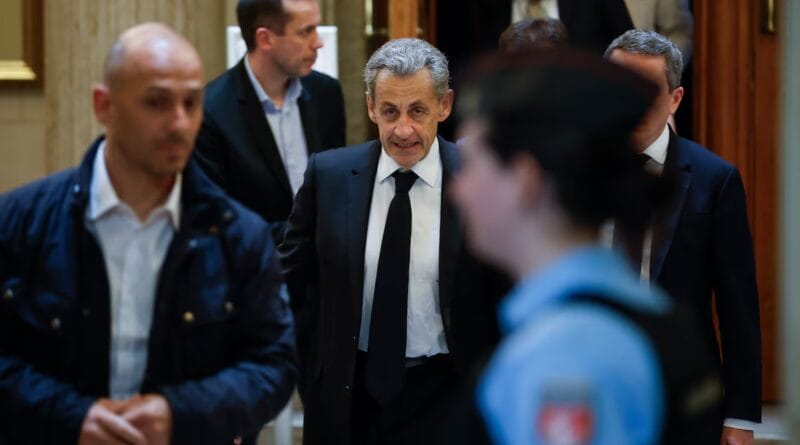
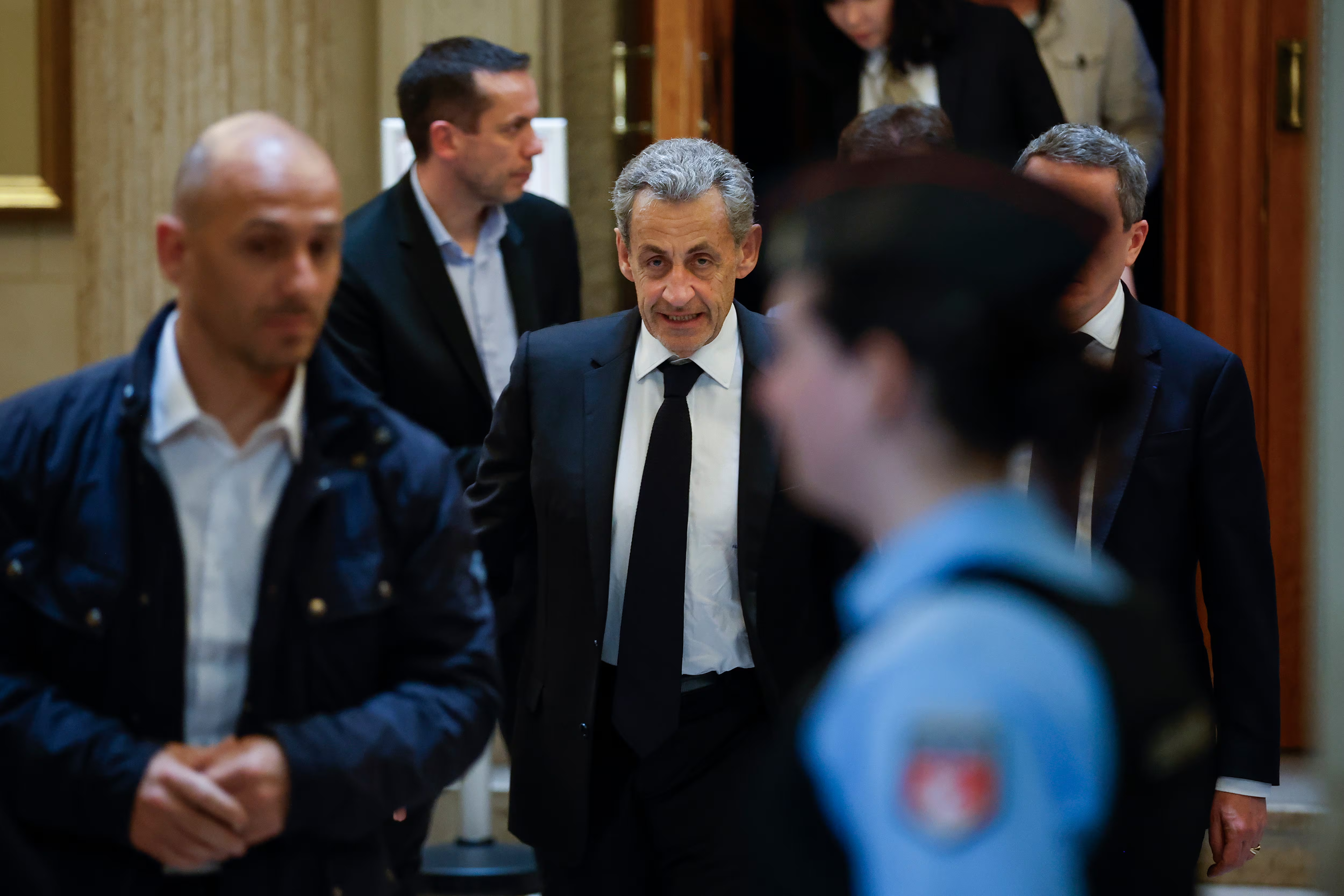
Former French President Nicolas Sarkozy returned to court on Monday for an appeal trial over allegations that his 2007 presidential campaign was financed by the Libyan regime of the late Muammar Gaddafi. Sarkozy, 71, was sentenced in September 2025 to five years in prison for illicit association, with a 20-day prison term, marking a historic first: no French president had ever been incarcerated before. Although released shortly after his brief imprisonment, Sarkozy is now contesting the conviction, determined to prove his innocence.
A High-Stakes Appeal
Sarkozy arrived at the Paris Court of Justice alone, without his wife, former model and singer Carla Bruni, or their children, who had attended the initial trial in late 2025. His 2025 imprisonment had sent shockwaves through French society, as the former head of state had spent a few days in a cell before publishing a book in which he detailed his experience behind bars. Despite several ongoing legal battles, Sarkozy maintains a certain level of public support, and his legal team is eager to overturn the conviction.
In the first trial, the court found that Sarkozy, along with several of his collaborators, had orchestrated a plan to secure illicit funds from the Gaddafi regime to finance his 2007 election campaign. The case, which has taken years to investigate, has far-reaching implications, involving many figures connected to Sarkozy’s inner circle. However, the court did not find sufficient evidence to prove that the money had directly reached Sarkozy’s hands, which is why he was convicted of “illicit association” rather than corruption.
“What could not be proven is that the money finally reached his hands,” the court noted in its ruling.
Although the case’s outcome could have been more severe, Sarkozy’s conviction still stands as a landmark moment, one that questions the integrity of his successful presidential bid.
The Legal Ramifications and Sarkozy’s Other Trials
Sarkozy is not only facing legal scrutiny over his 2007 campaign. The former president also has two other major cases pending. On March 9, the Paris correctional court rejected his request to have his sentences commuted in the Bygmalion case, which centers on illegal financing of his 2012 re-election campaign, a race he lost to François Hollande. Additionally, he is involved in the Bismuth case, a corruption and influence-peddling scandal in which he was found guilty of attempting to use his influence to obtain confidential information from a magistrate.
Sarkozy was sentenced to three years in prison for the Bismuth case, a ruling that had political consequences: for the first time in French history, a former president was forced to wear an electronic bracelet as part of his sentence.
In the current appeal, which will continue through early June, all evidence will be re-examined and witnesses, including key figures from Sarkozy’s inner circle, will be questioned. The long-standing investigation into the alleged Libyan funding continues to ripple through French political circles, with some of Sarkozy’s former close collaborators—such as Claude Guéant, his former Interior Minister, and Brice Hortefeux, former Minister of Labour—also convicted and appealing the rulings. Some key witnesses in the case have passed away before reaching trial, including businessman Ziad Takieddine, who died shortly before the appeal hearing began. Saif al-Islam Gaddafi, the son of the late Libyan dictator, was shot dead last February, further complicating efforts to gather testimony from those directly involved.
Sarkozy’s legal battles, intertwined with political drama, continue to capture the attention of both the French public and international observers, as the former president fights to clear his name while navigating multiple criminal charges.