
ALERT: Nearly 400 dead since Monday in Israeli strikes in Lebanon…
New information reveals that the following story has emerged from the international scene.
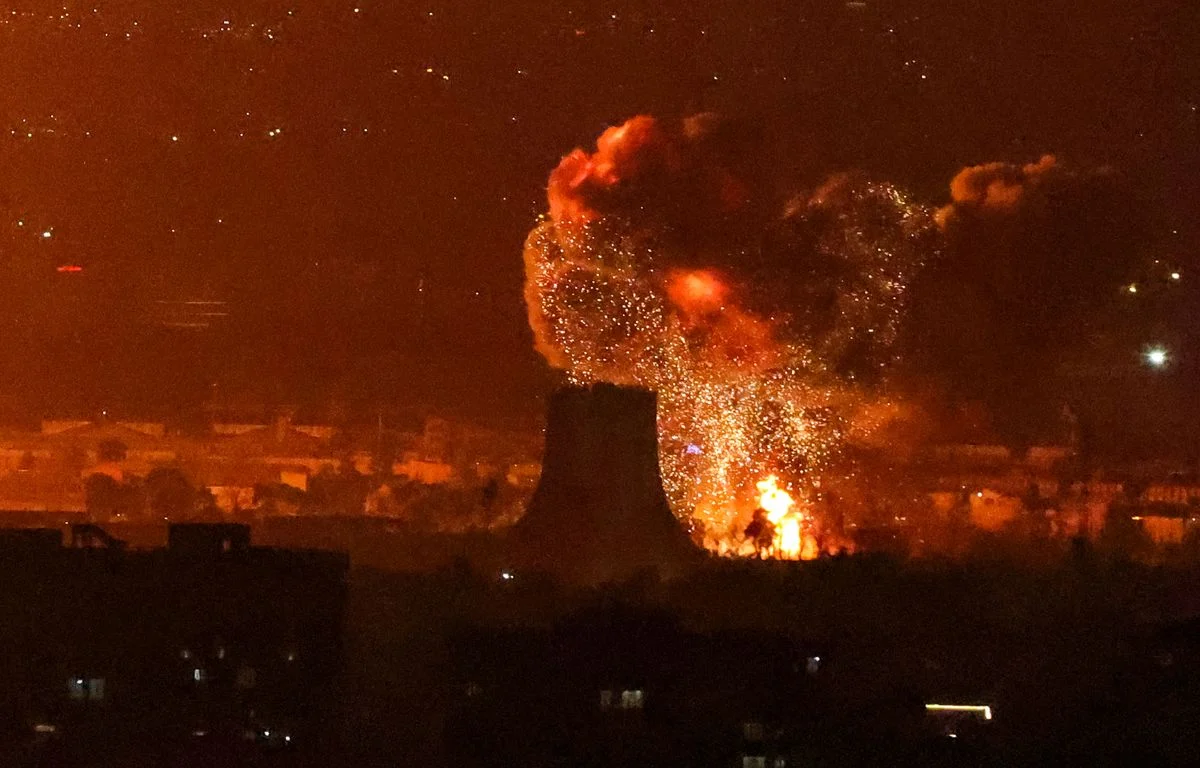
As missile strikes target cities across the region, diplomatic efforts grow to prevent wider escalation
The Middle East remains engulfed in conflict, with Iranian missile strikes hitting key locations in Israel and beyond, while global powers ramp up diplomatic and military responses. On Sunday, Iran’s defense minister stated that Iran’s missiles could not reach American soil, though tensions continue to escalate as missile fire and drone attacks wreak havoc across the region.
Iranian Missiles Hit Tel Aviv and Abu Dhabi
On Sunday, Iranian missile fire hit Tel Aviv, leaving six people injured, according to Israeli emergency services. The attack, which came after a new missile alert, damaged several areas in the city. “We are still unknown at this stage the extent of the damage and the number of potential victims,” said an Israeli spokesperson. The Israeli army confirmed that missiles launched from Iran were intercepted by defense systems, though the full scale of the destruction remains unclear.
Meanwhile, explosions in Abu Dhabi, the capital of the United Arab Emirates, were reported after a volley of 17 missiles was fired at the country. While 16 of these were intercepted, one missile fell into the sea. The UAE also faced a barrage of 117 drones, with four hitting the country’s territory. The Iranian strikes, which have targeted a growing list of countries, have drawn condemnation from the Arab League.
“These attacks are an irresponsible policy,” said Ahmed Aboul Gheit, secretary general of the Arab League. “They cannot be justified by any pretext or excuse.”
Continued Strikes in Lebanon and New Israeli Attacks
Lebanon has seen over 394 people killed in Israeli strikes since Monday, with 83 children and 42 women among the casualties. Health officials in Lebanon confirmed that 1,130 people were also injured as the violence has spread across the capital, Beirut, and into southern and eastern Lebanon. According to Lebanese authorities, Israel’s claim that only military targets were being hit does not match the reality on the ground, where civilians appear to be the primary victims.
Meanwhile, Israel launched a new wave of strikes on Sunday, targeting a hotel in Beirut, killing at least four people. The attack is part of Israel’s ongoing campaign against Hezbollah, the pro-Iranian militia that has intensified its attacks on Israel.
Iran’s Growing Military Response and International Reactions
Iran’s defense capabilities have also been a focal point of growing concern. Iran’s Revolutionary Guards have declared they are capable of engaging in “at least six months of intense war” with the United States and Israel. The Guards also claim to have already struck over 200 American and Israeli targets in the region.
In a notable statement, Iranian President Massoud Pezeshkian warned that Iran would retaliate against any neighboring country used as a base for attacks against it. His message was clear: “If the enemy attempts to use a country’s territory to launch aggression against our territory, we will be forced to retaliate.”
International Efforts to Contain the Crisis
The United States, meanwhile, is focused on preventing further disruption to global oil supplies, which have been severely impacted by the ongoing hostilities. Energy Secretary Chris Wright stated that oil and gas disruptions from the Middle East conflict would last, at worst, “only a few weeks.” While the U.S. has been careful to distance itself from directly targeting Iran’s oil infrastructure, Israeli strikes have already hit key depots in Tehran, destroying several sites. Fuel distribution in Tehran has reportedly been interrupted, while strikes on oil depots have caused significant damage but not extended fires.
In a show of solidarity, French President Emmanuel Macron spoke with Qatar’s Emir on Sunday, reaffirming France’s commitment to securing energy supplies in the region. Macron also pledged military support, particularly to safeguard shipping lanes through the Strait of Hormuz, a critical passage for global oil shipments.
Macron’s next stop will be Cyprus, where he is set to meet with the country’s leadership to discuss how France can help de-escalate tensions in the Eastern Mediterranean, a region increasingly caught in the crossfire of the ongoing conflict.
Broader Global Impacts
In Bangladesh, the conflict has led to fuel shortages, with the government beginning to ration oil distribution as the Middle East war continues to disrupt supply lines. The small but significant disruption has caused violent protests and widespread traffic congestion across the country. Meanwhile, three Indonesian nationals remain missing after an Emirati tugboat was sunk in the Strait of Hormuz. The tugboat, which had suffered an explosion, is thought to have been involved in the ongoing regional tensions.
In Norway, an explosion at the U.S. embassy in Oslo has raised alarms about the potential for wider anti-American sentiment to spark further violence. Though no one was injured in the blast, authorities are investigating the possibility of a targeted attack. While no links have been confirmed to the Iranian conflict, speculation about its potential ties to U.S. military actions in the region is growing.
Domestic Politics and the Global Response
As the conflict continues to unfold, the U.S. has raised the possibility of deploying troops to Iran to control the country’s enriched uranium stockpiles. President Donald Trump hinted at the prospect of a future military ground presence in the country, though he stressed that it was not an immediate plan.
For now, global leaders are focused on navigating the complexities of this fast-evolving situation, balancing the need for immediate humanitarian support with long-term strategies to de-escalate tensions and prevent further regional destabilization.
With the Middle East now at the center of an increasingly volatile geopolitical landscape, the international community’s ability to contain the crisis will be put to the test in the coming weeks.
Editor’s Insight:
Our editorial team will continue to monitor this situation as new details emerge.
This is part of a broader trend that has been reshaping the geopolitical landscape in recent months.
Follow our coverage for real-time updates on this and other major global stories.
Source: This article was originally published in another language by 20Minutes – Actu Monde and has been translated and adapted for our global English-speaking audience. Read the original article here.